
What Is the Solar Panel Manufacturing Plant Cost in India?
Ask five people in the industry what a solar panel manufacturing plant costs in India, and you’ll get five different answers. That’s not evasiveness, it’s just how the numbers work. Production scale, location, automation level, and the type of solar module manufacturing technology chosen all pull the budget in different directions. A 5 MW assembly line and a 500 MW integrated facility barely belong in the same conversation, cost-wise. So rather than chase a single figure, it’s more useful to break the investment into categories and work through each one. What Factors Affect Solar Panel Manufacturing Plant Cost? A few line items do most of the heavy lifting: Land and factory infrastructure Manufacturing machinery and automation level Intended production capacity (MW per year) Raw materials such as solar cells, glass, EVA sheets, and backsheets Electrical and utility infrastructure Testing and quality-control equipment Labour and skilled manpower Certifications and compliance requirements Logistics and transportation Working capital for ongoing operations State policy matters more than people expect. Land rates, power tariffs, labour costs, and how fast a single-window clearance actually moves, these vary state to state and can move a solar panel factory setup budget by a fair margin before a single machine is installed. Solar Panel Manufacturing Plant Cost Breakdown Cost Category Investment Level Land and building Project-dependent Machinery and automation High Raw materials (initial stock) Moderate to High Utilities and power setup Moderate Testing and QC equipment Moderate Certifications and compliance Low to Moderate Working capital Project-dependent Use this as a starting framework, not a quote. Capacity, automation, and state all move these numbers. How Manufacturing Capacity Changes the Investment Capacity decides almost everything else. A small unit gets by with a modest shed and a handful of machines. Scale up to hundreds of megawatts and suddenly you’re talking about a much bigger building, multiple production lines, and a testing lab that can keep pace with output. Get the capacity target right first, and the rest of the budget tends to fall into place around it. Machinery Required for a Solar Panel Manufacturing Plant A standard solar cell manufacturing plant or module line runs on equipment for cell sorting, tabbing and stringing, lamination, framing, and electroluminescence (EL) testing. How much of this is automated is really the main lever on solar plant machinery cost. Semi-automated lines are cheaper to set up but lean on labour long-term. Fully automated lines cost more on day one but usually pay that back in consistency and throughput. Other Costs to Consider Before Setting Up a Solar Manufacturing Plant The costs that catch people off guard are rarely the big ones. It’s the smaller, recurring items: Installation and commissioning Power consumption during production Ongoing maintenance Quality testing at multiple stages Packaging for finished panels Transportation and logistics Initial raw material inventory Employee training Working capital to cover the first few operating cycles Budget for these from the start. They’re easy to forget in a spreadsheet and hard to ignore once the plant is running. Is Setting Up a Solar Panel Manufacturing Plant a Good Business Opportunity? There’s no blanket yes or no here. It comes down to market demand in the region you’re targeting, the scale you can actually sustain, the technology you go with, product quality, how reliable your supply chain is, what the competition looks like, financing, state and central regulatory requirements, manufacturing efficiency, and what it costs to keep the lights on long after launch. None of this guarantees a return. It just tells you what to check before you commit capital. How to Estimate Your Solar Panel Manufacturing Plant Cost A simple way to frame the budget: Total project cost = Land + Building + Machinery + Utilities + Testing + Installation + Compliance + Initial Inventory + Working Capital + Other Project Expenses Run each of these against your intended capacity and manufacturing model, whether that’s a basic assembly setup or a fully integrated cell-to-module operation. Why Choose KLK India for Solar Solutions? KLK runs manufacturing facilities in Noida and Bihar, producing Mono c-Si PERC solar modules, LiFePO₄ batteries, and solar streetlights, with products approved by the Ministry of New and Renewable Energy (MNRE) and listed in the ALMM. That’s a company with an actual production footprint, not just a services desk, which means real familiarity with what setting up and running a solar manufacturing operation in India involves. If you’re weighing a similar project or just trying to make sense of the requirements, that kind of on-ground experience is worth tapping into. Get in touch with the KLK India team to talk through your project and figure out a realistic budget. Frequently Asked Questions What is the solar panel manufacturing plant cost in India? It varies significantly based on production capacity, automation level, and location, so it’s best worked out on a per-project basis rather than quoted as a fixed figure. What factors affect the cost of setting up a solar panel manufacturing plant? Land and infrastructure, machinery and automation, raw material sourcing, utilities, labour, certifications, logistics, and working capital all play a part. How much land is required for a solar panel manufacturing plant? It depends on the production capacity and plant layout you’re planning for. Larger, more automated facilities generally need more space than smaller assembly units. What machinery is required to manufacture solar panels? Core equipment includes cell sorting, tabbing and stringing, lamination, framing, and electroluminescence testing machines, with automation level driving both cost and output consistency. What should be included in a solar panel manufacturing plant project budget? Land, building, machinery, utilities, testing equipment, installation, compliance, initial inventory, and working capital should all be accounted for. RESOURCES:- Ministry of New and Renewable Energy (MNRE) https://mnre.gov.in Official ministry site, for the ALMM and compliance mentions. What is ALMM — CEEW explainer https://www.ceew.in/cef/quick-reads/explains/what-is-almm Plain-language background on the Approved List of Models and Manufacturers.
Solar Panel Maintenance Cost in India: What You’ll Actually Pay in 2026
Most people ask about solar panel maintenance cost right around the time their first year of ownership is ending and the panels look visibly dustier than expected. Fair question. Solar systems are easier to live with than a diesel genset or an old inverter setup, but “low maintenance” doesn’t mean “no maintenance.” Cleaning, inspection and the odd electrical check keep a system generating close to what it’s rated for. What you’ll actually pay depends on a handful of things: system size, where you live, how much dust and pollution your panels deal with, whether your roof is easy or awkward to access, the type of system you’re running (on-grid, off-grid or hybrid), how often you clean, the current shape your equipment is in, which provider you go with, and whether you sign up for an AMC or just call someone when something goes wrong. What Is the Solar Panel Maintenance Cost in India? There isn’t one number that works for everyone. A homeowner’s rooftop setup in Ghaziabad won’t have the same servicing bill as a factory’s rooftop installation in Coimbatore, and neither will look like a ground-mounted plant out in Rajasthan. Maintenance needs shift across: Residential rooftop systems Commercial rooftop systems Industrial solar installations Ground-mounted solar plants On-grid systems Off-grid systems Hybrid systems More panels, more inverters, transformers and monitoring gear all mean longer inspection cycles. Off-grid and hybrid systems add batteries into the mix too, which is its own maintenance line item. What Does Solar Panel Maintenance Include? Solar Panel Cleaning Dust settles fast, especially in North India. Add bird droppings, dry leaves, general pollution and the hard-water spots that show up after sprinkler cleaning, and you’ve got a layer sitting between your panels and the sun. That layer cuts into how much power gets generated, which is exactly why cleaning tends to be the most frequent job on any maintenance list. System Inspection This is the panels, mounting structures, wiring, connectors, junction boxes, earthing and other electrical bits. A technician walking the site can catch a loose connection or a bit of corrosion before it turns into an actual fault. Inverter Maintenance The inverter does the unglamorous work of turning DC into usable AC, and it needs checking too: ventilation, error codes on the display, the wiring going in and out. An inverter that’s quietly underperforming won’t always throw an obvious warning sign. Battery Maintenance This one only applies if you’re running off-grid or hybrid. Battery health, charge cycles, connections, that sort of thing. Performance Monitoring Keeping an eye on daily or monthly generation numbers is often how you spot a problem before it becomes visible on the roof. Consistent monitoring is also the practice that industry operations specialists point to as key for catching output loss from dust and component wear early. Factors That Affect Solar Panel Maintenance Cost System Size — A 5 kW home system and a multi-MW commercial plant just don’t need the same hours or hands. Location — Dust, humidity, rainfall and general pollution decide how often you’ll need cleaning and inspection. Accessibility — A rooftop that’s tricky or unsafe to get to may need extra equipment or safety measures, which adds to the job. Cleaning Frequency — Dustier regions need cleaning more often than cleaner ones. Not complicated, just true. System Condition — Older systems, or ones already showing faults, tend to need more extensive servicing. Maintenance Scope — A basic clean and a full AMC covering inspection, monitoring, prevention and repairs are two very different services. Solar Panel Maintenance Cost Breakdown Maintenance Service What It Covers Cost Consideration Panel Cleaning Dust, dirt and debris removal Frequency and system size System Inspection Panels, wiring and mounting System complexity Inverter Check Performance and electrical checks Equipment type Electrical Inspection Connections, cables and protection System condition AMC Scheduled maintenance and support Scope and contract terms Repairs Fault diagnosis and component replacement Depends on fault Real pricing is project-specific. Whatever number you’re quoted should come after someone’s actually looked at your site, not before. How Often Should Solar Panels Be Maintained? A workable routine usually looks like this: keep an eye on the panels visually, clean them on a regular schedule, get a periodic technical inspection, and have at least one thorough check done annually. If you’re somewhere dusty or heavily polluted, that schedule tightens up. There’s no single frequency that fits every roof. It comes down to location, weather, pollution levels, system size and type, what the manufacturer recommends, and the specifics of your site. India’s rooftop solar programme guidelines from the Ministry of New and Renewable Energy also point installers and owners toward regular upkeep to protect long-term system performance. Solar AMC vs One-Time Maintenance One-Time Maintenance is what you call when something specific needs handling, a cleaning, an inspection, a fault that needs diagnosing, a repair. Annual Maintenance Contract (AMC) rolls scheduled cleaning, inspections, preventive maintenance, performance checks, troubleshooting and repair support into one ongoing arrangement. KLK Ventures’ AMC covers maintenance, cleaning, performance tests, inspections and scheduled troubleshooting, which is meant to cut down on the unplanned downtime that a reactive, call-when-broken approach tends to bring. How to Reduce Solar Panel Maintenance Costs Stick to a cleaning schedule instead of waiting until the panels look dusty Check generation data regularly so a dip doesn’t go unnoticed Deal with inverter warnings as soon as they show up, not weeks later Get wiring and mounting structures inspected periodically Skip abrasive cleaning methods that can scratch the glass Leave electrical work to someone qualified Look at an AMC if you’re running a larger residential, commercial or industrial system Keep some record of what’s been done and how the system’s been performing Is Solar Panel Maintenance Worth the Cost? Preventive maintenance tends to catch faults earlier, keeps output closer to what the system was designed for, and cuts down on downtime you didn’t plan for. It also protects the equipment itself and can reduce the odds of an unexpected repair bill. What it won’t do
Solar Panel Installation Cost Per kWh in India
Ask three installers for a quote and you’ll probably get three different ways of explaining the price. One talks in rupees per kW, another quotes per watt, and somewhere in that back-and-forth nobody tells you what a single unit of solar electricity is actually costing you over the life of the system. That’s the number that matters. The solar panel installation cost per kWh in India comes down to your system size, the panels and inverter you pick, how much sun your roof actually gets, and whether you’re claiming the subsidy. Work that out first, and comparing quotes gets a lot less confusing. How Solar Panel Installation Cost Per kWh in India Is Actually Calculated Installers usually lead with a price per kW of capacity. In 2026 that runs somewhere between Rs. 55,000 and Rs. 85,000 per kW for a typical residential rooftop, before subsidy. That’s not your cost per kWh, though — you need the total system cost after subsidy, divided by everything the system will generate over its working life, call it 25 years. A 1 kW rooftop system in most Indian cities generates close to 4 units a day, so around 1,400 to 1,500 units a year. Run that across 25 years, factor in the panels losing a bit of efficiency as they age, and you’ve got the system’s lifetime output. Divide the net cost by that number and the solar panel installation cost per kWh in India usually lands somewhere between Rs. 1.80 and Rs. 3 per unit. That’s a fraction of what most households and businesses currently pay their electricity board. A Worked Example Numbers are easier to trust when you can see them worked through. Take a 3 kW rooftop system — a fairly standard size for a mid-sized home. Particulars Details Gross cost Rs. 55,000-85,000 per kW x 3 kW = roughly Rs. 1,65,000-2,55,000 Subsidy (PM Surya Ghar Muft Bijli Yojana) Rs. 30,000/kW for the first 2 kW + Rs. 18,000 for the 3rd kW, capped at Rs. 78,000 Net cost after subsidy roughly Rs. 87,000-1,77,000, depending on the installer’s rate Annual generation 3 kW x ~1,450 units/kW/year = about 4,350 units a year Lifetime generation (25 years) roughly 95,000-1,00,000 units, after efficiency loss Cost per unit about Rs. 0.90-1.90/kWh on the lower end, or Rs. 2-2.50 with a higher base price and an inverter swap Two 3 kW systems, same size on paper, can land in very different places. It usually comes down to the installer’s base price and whether the subsidy slab got applied correctly. Why the Cost Per kWh Varies From One Home to Another Two homes with what look like identical systems can still end up with different numbers. Fixed costs are one reason. Wiring, labour, net-metering paperwork — these cost roughly the same whether you’re installing 2 kW or 6 kW, so spreading them across more capacity, 5 kW and up, tends to pull the per-unit cost down. Panel and inverter quality matters even more. Premium monocrystalline or TOPCon panels cost more upfront, but they degrade more slowly and keep producing closer to their rated output for longer. Over 25 years, that often beats a cheaper panel that looked like a good deal on day one but loses efficiency faster than expected. Geography plays a role too, and not always the way people expect. A rooftop in Rajasthan or Gujarat sees more peak sun hours over a year than one on a cloudier coastline. Two identical 3 kW systems in different cities simply won’t generate the same number of units. Then there’s the subsidy slab — worth understanding rather than just assuming. The PM Surya Ghar Muft Bijli Yojana, launched in 2024 to bring free electricity to Indian households through rooftop solar, covers 60% of system cost up to 2 kW and 40% of the additional cost between 2 and 3 kW, with the subsidy capped at 3 kW overall. In rupee terms that’s Rs. 30,000 per kW for the first 2 kW and Rs. 18,000 for the third, up to Rs. 78,000 max, paid straight into the homeowner’s bank account rather than knocked off by the installer. That subsidy is the number you’re subtracting before doing the per-unit math, so it has an outsized effect on your final cost. Worth double-checking your installer is applying the correct slab and not just offering a flat discount instead. Installation Quality Installation quality is the hardest thing to catch at the quote stage, but it shows up for years afterward. A slightly off mounting angle, some shading from a neighbouring structure, undersized cabling — none of it kills the system outright. It just chips away at output year after year, so the real cost per unit ends up higher than whatever number was promised on paper. What This Means for Your Electricity Bill Generating power at roughly Rs. 1 to Rs. 3 per unit while grid tariffs in most cities sit at Rs. 6 to Rs. 9 per unit changes the math on your electricity bill fast. Most rooftop installations recover their net cost within 3 to 5 years after subsidy. After that, running costs stay low: occasional panel cleaning, and typically one inverter replacement somewhere around year 10 to 12, since inverters tend to carry shorter warranties than panels and cost roughly Rs. 8,000 to Rs. 25,000 to replace depending on system size. Even accounting for that, the electricity you generate for the rest of the 25-year window is close to free. That’s a better way to judge a quote than the sticker price alone. An installer offering a lower per-kW rate isn’t automatically the better deal if the panels, warranty, or expected output don’t hold up over the long haul. This is exactly where KLK can help. Instead of chasing multiple installers for confusing per-kW quotes, KLK works out the subsidy-adjusted cost per unit for your roof upfront, so you know your real payback period before you commit. From checking your rooftop’s sun exposure to making sure
Small Solar Panel Cost in India: A Practical Buying Guide (2026)
Small solar panel cost in India typically runs from a few hundred rupees for a 10W unit up to roughly ₹3,500–₹10,000 for a 100W panel, depending on cell type and brand, with 200W panels priced higher still. Exact pricing depends on wattage, technology, and seller, so treat any number here as a starting point, not a final quote. What Counts as a Small Solar Panel Somewhere between a 10W trickle charger and a 200W module, you’re in “small panel” territory. Nobody’s running a whole house off one of these. They’re for a room’s lighting, keeping a phone alive through the day, a fan during load-shedding, maybe a small pump out in the field. Cramped city roofs, small shop owners, farmers, hostel students, they all land here sooner or later. And because small solar panel cost is a fraction of what a full rooftop setup runs, it’s often the first real step someone takes into solar before deciding whether to go further. If you’re eyeing a full rooftop solar system, that’s a different budget conversation altogether. The Broad Picture Small solar panel cost in India shifts with the wattage you choose, whether you’re looking at monocrystalline or polycrystalline cells, how much weight the brand carries, and whether GST and accessories get bundled in upfront or tacked on later. As an indicative reference point, a 100W polycrystalline panel from a known brand often falls somewhere between ₹3,500 and ₹7,000, while monocrystalline versions can run up toward ₹10,000. Smaller 10W to 50W panels sit well below that, and 200W panels sit above it, though the exact multiple depends heavily on which brand and cell type you’re comparing. Every figure in this article is indicative. Small solar panel price in India varies by city, seller, and season, so use these numbers for comparison shopping, not as a quote you can hold a shop to. Cost by Wattage Wattage Typical Use Case Price Range (Indicative) 10W–20W LED lights, small chargers Lowest end of the market, a few hundred rupees upward 50W Fans, phone charging, small setups Below the 100W range, scales roughly with wattage 100W Home backup, rural lighting, small shops Roughly ₹3,500–₹7,000 (poly), up to ₹10,000 (mono) 200W Small home systems, multiple devices Higher than 100W, but usually a better cost per watt Monocrystalline will almost always cost more than polycrystalline at the same wattage. That premium buys better efficiency and a longer working life, which matters more than people think in states that don’t get reliable sun year-round. A battery and charge controller usually cost extra, and that’s exactly where budgets quietly blow past what people expected. Factors Affecting Small Solar Panel Cost A few things do most of the heavy lifting on price. Cell technology is the obvious one; monocrystalline costs more per watt but shrugs off cloudy days better than polycrystalline does. Brand reputation plays its part too, a company backing its panel with a real warranty and service network prices that confidence into the tag. GST and freight have a habit of hiding outside the headline figure, so ask before you assume. Accessories, your mounting hardware, controllers, batteries, are often billed separately rather than thrown in. And demand has a seasonal rhythm of its own; prices tend to firm up right before summer, when everyone suddenly remembers they wanted backup power six months ago and didn’t buy it. None of this reduces to a clean formula you can calculate at home. The only honest move is asking your supplier, KLK India included, for a full cost breakup instead of trusting whatever number is printed largest. If certification is on your checklist, the Bureau of Indian Standards lays out the quality benchmarks PV modules sold in India are supposed to meet. Where Small Solar Panels Are Used Walk through most residential colonies and you’ll spot these quietly at work, a balcony light here, a terrace security camera there, a shop awning keeping the lights on through a power cut. Out in rural areas, the use case leans agricultural, often paired with solar water pump solutions where grid power simply can’t be relied on. Campers and travelers carry portable solar panel kits for much the same reason city folks keep a power bank in their bag. And in hostels or PG rooms, a small solar panel for home use is sometimes the only thing standing between a student and a dead phone during exam week. How to Choose the Right Size Resist the urge to just buy the biggest wattage your budget allows. Sit down first, list out what you actually want to run, the wattage of each device, and roughly how many hours a day it’s on. A phone charger and one bulb barely register on the load calculation. A fan running most of the evening is a different story entirely. Undersize it and you’ll be caught short exactly when monsoon clouds knock out grid power for hours. Oversize it and you’ve spent money on capacity that mostly sits idle. Buying Considerations Before You Purchase Before any money changes hands, check the certification marks properly, actually read the warranty terms instead of skimming them, and ask whether installation is included or billed on top. Get quotes from two or three sellers rather than locking in with the first one, because small solar panel price in India can swing more than you’d guess between vendors selling what look like identical specs on paper. Push for the solar panel cost per watt specifically, since that’s the only fair way to line up a 100W panel against a 200W one. And if a full household system is somewhere on your future radar, know that schemes like PM Surya Ghar: Muft Bijli Yojana are built around larger rooftop installations, not standalone small panels, so don’t assume a subsidy will apply here. Frequently Asked Questions What is the average small solar panel cost in India? It depends heavily on wattage and cell type. A 100W panel
Solar Panel Installation Cost in India 2026
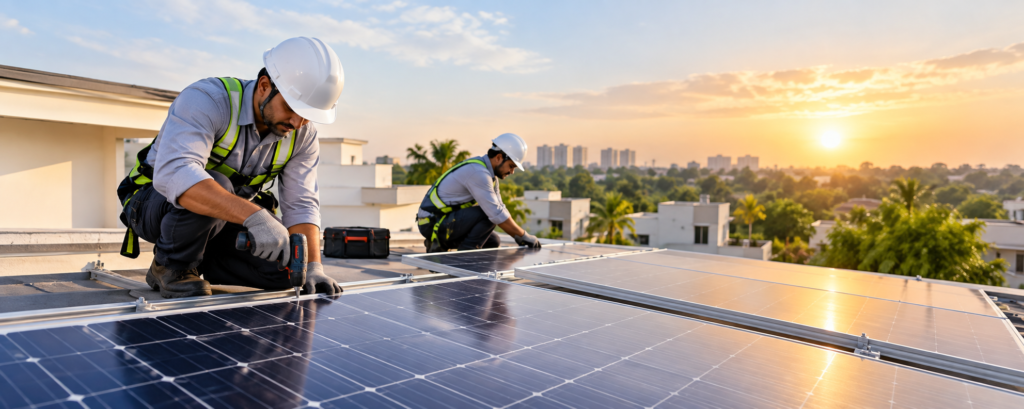
A 3 kW home system runs about ₹1.8–2.25 lakh before subsidy. After the ₹78,000 central subsidy and any state top-up, most households pay ₹1–1.5 lakh out of pocket. A 1 kW setup nets around ₹30,000; a 5 kW system settles near ₹2.1–2.6 lakh after subsidy. That’s the number most people call about. But when looking at Solar Panel Installation Cost in India, it also matters which subsidy bracket you fall into, what your city adds on top, and the line items that tend to appear on the invoice weeks after the “final” quote. This guide covers the real 2026 numbers, how the PM Surya Ghar subsidy is calculated, what quotes usually miss, and how long it takes to earn the money back. What Actually Determines Solar Panel Installation Cost in India? For reliable solar power backup for home, consider system size, battery needs, installation costs, and subsidies. Actual usage — not what a neighbour installed. A 2–3 kW system covers most 2–3BHK homes; running two ACs and a geyser through summer usually needs 5 kW or more. Panel type — monocrystalline PERC costs more per watt but needs less roof space. Polycrystalline is cheaper if roof area isn’t a constraint. System configuration — on-grid (no battery) is cheapest and most common. Hybrid or off-grid with batteries adds roughly ₹50,000–80,000. Roof structure — a standard frame is usually included. An elevated structure to keep the roof usable underneath adds ₹10,000–25,000. Location — labour rates, local EPC competition, and net metering rules shift the final cost, sometimes meaningfully between nearby cities. Solar Panel Price by System Size (2026) System Size Cost Before Subsidy Approx. Subsidy Net Cost After Subsidy 1 kW ₹60,000 – ₹70,000 ₹30,000 ₹30,000 – ₹40,000 2 kW ₹1,20,000 – ₹1,35,000 ₹60,000 ₹60,000 – ₹75,000 3 kW ₹1,80,000 – ₹2,25,000 ₹78,000 + state top-up ₹1,00,000 – ₹1,50,000 5 kW ₹2,90,000 – ₹3,35,000 ₹78,000 (fixed) ₹2,10,000 – ₹2,60,000 10 kW ₹5,50,000 – ₹6,50,000 ₹78,000 (fixed, residential cap) ₹4,70,000 – ₹5,70,000 As a sanity check: published rate guidance puts per-kW cost near ₹60,000 up to 5 kW, around ₹55,000 between 6–10 kW, and near ₹50,000 beyond that. Systems above 5 kW fall outside the standard residential subsidy slab — the ₹78,000 figure does not scale up automatically. Not sure where your home falls on this table? That’s usually the first question answered on a site visit, not guessed over the phone. KLK Ventures offers a free rooftop assessment, sizing the system around real consumption before quoting anything. Understanding the PM Surya Ghar Subsidy and Solar Panel Installation Cost in India Central Financial Assistance lands directly in the bank account once the net meter is commissioned — no middleman, no bill adjustment. Up to 2 kW, it’s ₹30,000 per kW. From 3 kW onward, it caps at a flat ₹78,000 and doesn’t grow further, even on larger systems. Some states add their own top-up. Delhi and Uttar Pradesh currently offer up to ₹30,000 extra for residential consumers — a big reason the Solar Panel Installation Cost in India can be lower in Delhi NCR than in a state without a matching scheme. These add-ons are tied to yearly budgets, so it’s worth checking the relevant state solar portal before locking in a final price. What Quotes Usually Leave Out for Solar Panel Installation Cost in India Electrical upgrades — older wiring sometimes can’t handle the new load, adding a switchboard upgrade mid-project. Net metering fees — DISCOM paperwork typically costs ₹2,500–5,000 and can take a few weeks to clear. Roof repairs — issues that surface once the installer is actually up there. Inverter replacement — panels run 25 years; inverters usually need swapping every 8–12. Monitoring fees — some vendors quietly charge a monthly app fee. None are dealbreakers — they’re just easier to plan for before the contract is signed. Payback Period Most homes recover their investment in 3–4 years. After that, it’s free electricity for the remaining 20-plus years the panels are rated for — a tax-free return that’s hard to match against a fixed deposit or debt fund. The exact number depends on the current bill, applicable subsidy, and how much sun the roof gets — not a generic average. Picking an Installer Don’t let price alone decide. Ask for an itemised quote separating panel, inverter, structure, and labour. Confirm the workmanship warranty is in writing. Find out whether net metering paperwork is handled by the installer or left to you. KLK Ventures runs a site survey first, an itemised quote instead of one lump figure, and handles net metering and subsidy paperwork directly — no line items appear after signing, and systems aren’t oversized beyond actual usage. Frequently Asked Questions What is the average cost of solar installation for a home in India? A typical 3 kW system runs ₹1.8–2.25 lakh before subsidy, dropping to roughly ₹1–1.5 lakh after the central subsidy and any state top-up. Does the subsidy apply to every system size? The PM Surya Ghar residential subsidy applies up to 3 kW at a fixed ₹78,000, with smaller amounts for 1 kW and 2 kW. Larger systems still qualify, but the subsidy itself doesn’t increase past the 3 kW cap. How long does the subsidy take to arrive after installation? Once the net meter is commissioned and inspected, it’s usually credited within 30–45 days via Direct Benefit Transfer. Is an on-grid or off-grid system cheaper? On-grid is cheaper since it relies on the grid rather than batteries. Off-grid and hybrid systems cost more but make sense where power cuts are frequent. Do prices vary by city? Yes — labour rates, local installer competition, and state subsidy differences mean the same size system can cost differently in Delhi, Lucknow, or Bengaluru. What’s the typical payback period? Most homeowners recover their investment in 3–4 years, then keep generating savings for the remaining 20-plus years of the system’s working life. What should I check before signing a contract? Confirm the exact panel and inverter brand, get the warranty
Solar Power Backup for Home: How It Works and What You Actually Need
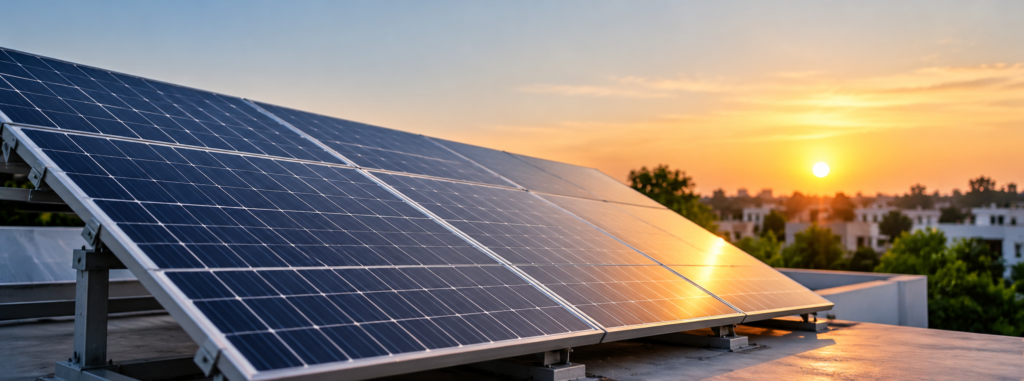
Power cuts have a habit of showing up at the worst possible time. The fan cuts out mid-afternoon, the fridge goes silent overnight, or the inverter gives up right as a work call starts. For more and more Indian households, the fix isn’t a bigger diesel generator or yet another battery replacement. It’s solar power backup for home a setup that makes its own electricity and stores it for exactly these moments. If you’re trying to figure out whether solar backup is worth it for your house, here’s what it actually involves, how it’s different from a regular inverter, and what to think through before you commit to anything. What Is Solar Power Backup for Home? A home solar power backup system uses rooftop panels to generate electricity through the day and stores whatever’s left over in a battery, so it’s there whenever the grid drops, day or night. A regular inverter only recharges off grid electricity. A solar backup system for home charges mainly (sometimes entirely) from sunlight instead, which is why it can keep going through longer outages as long as the battery still has charge left in it. That’s not the same thing as just having panels on your roof. A home solar battery backup pairs the panels with a battery bank, an inverter, and a charge controller, so the energy you’ve stored is actually usable on demand rather than only while the sun’s out. How Does a Home Solar Backup System Work? A few core pieces need to work together for any of this to function: Solar panels capture sunlight and turn it into DC electricity. Charge controller regulates how much current flows into the battery, which protects battery life over time. Battery storage holds onto surplus solar energy. Lithium batteries are the common choice here, mostly because they’re compact and last longer through charge cycles. Solar inverter with battery converts stored DC power into the AC power your appliances actually use, and handles the switching between solar, battery, and grid. Through the day, panels usually produce more than the house needs, so that surplus goes into the battery. Come evening, or whenever the grid fails, the system pulls from the battery instead of leaving you sitting in the dark. Can Solar Panels Provide Backup During a Power Cut? Only if there’s battery storage involved. A pure grid-tied (on-grid) system can’t supply power during a blackout at all, since it’s built to sync with grid electricity and shuts off automatically for safety the moment the grid goes down. If backup during outages actually matters to you, you’re looking at either an off-grid solar system or a hybrid solar system for home, one that brings solar, battery, and grid connectivity together. Is Solar Backup Better Than a Normal Inverter? A regular inverter is, at the end of the day, just a battery with a switch attached. It stores grid electricity and lets it out during a cut, so everything it delivers has already come off the grid once. Solar backup generates its own electricity instead, which means a real chunk of what you use during an outage never touched the grid at all. A few things worth weighing here: Where the charge comes from. Normal inverters pull entirely from the grid. Solar backup pulls mainly from sunlight, with grid charging kept as a fallback in hybrid setups. What it saves you over time. Solar backup also offsets your daytime grid use rather than sitting idle waiting for a cut, so it earns its keep in a way a plain inverter doesn’t. How it handles a long outage. A properly sized solar battery backup for home can recharge itself the next day even if the power stays out, something a grid-only inverter simply can’t do. How Much Solar Battery Capacity Does a Home Need? Honestly, it comes down to which appliances you want backed up and for how long. Someone backing up lights, fans, and a Wi-Fi router needs a much smaller setup than someone who also wants the fridge, an AC or two, and a water pump running through a cut. A reasonably practical way to think about sizing: Write down the appliances you want on backup, along with roughly how much wattage each draws. Figure out how many hours a day they’re actually in use. Decide how many backup hours you want without any sunlight, an evening, overnight, or longer. Get the battery and panel capacity sized against that load, ideally with a professional assessment to confirm it before you buy anything. Guessing at capacity is probably the single biggest reason homeowners end up with a system that either can’t keep up during an outage or costs way more than it needed to. A site-specific assessment is worth doing before you finalize anything. Can Solar Backup Run Fans, Lights, Refrigerators and Other Appliances? Yes, solar backup can run the usual home essentials, fans, lights, fridges, routers, TVs, even air conditioners, as long as the battery and inverter are actually sized for that load. A lot of homeowners choose to back up just the “essential loads” (lighting, fans, refrigeration, communication devices) to keep the battery size and cost reasonable, and only run heavier appliances like ACs on backup if the system has been specifically built for that. On-Grid, Off-Grid, and Hybrid Solar Systems: What’s the Difference? An on-grid solar system stays connected to the utility grid and feeds any excess power back into it, but it offers zero backup during a power cut since it shuts down with the grid for safety reasons. An off-grid solar system runs completely independent of the grid, generating, storing, and supplying its own electricity. It works well in areas where grid access is unreliable or missing altogether. A hybrid solar system for home combines generation, battery storage, and a grid connection, pulling from whichever source makes sense at the time and switching over to battery automatically the moment the grid drops. For most urban Indian homes dealing with power cuts, a
The Smart Way to Power Your Business in India
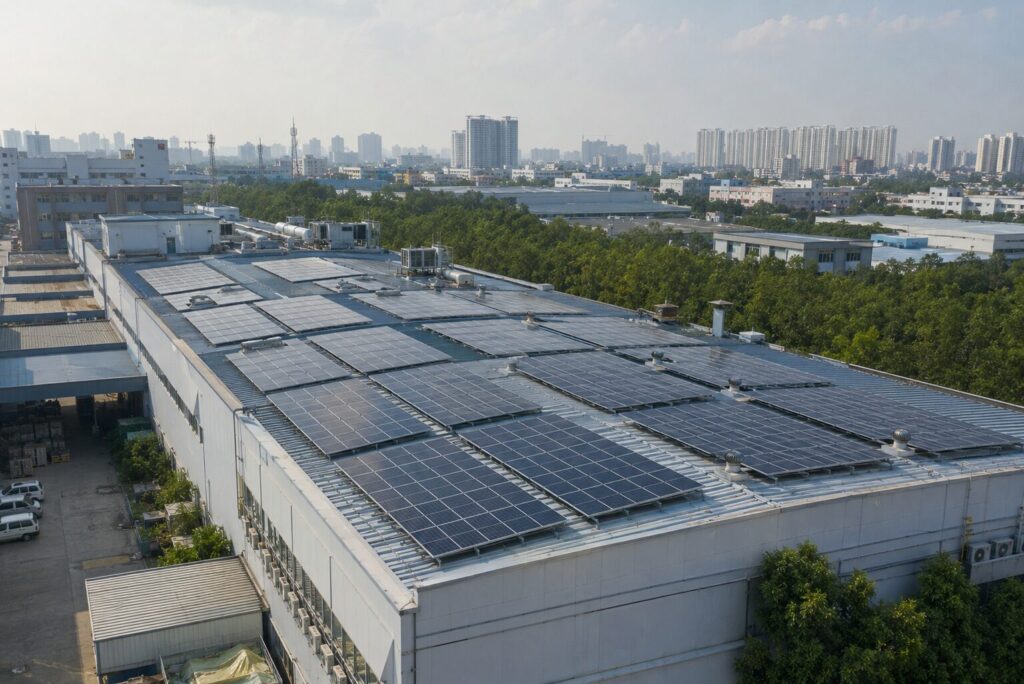
Solar installation services cover the design, approval, and setup of a commercial solar power system on a business’s rooftop or land, so a company can generate its own electricity instead of paying full commercial tariffs. For manufacturing units, warehouses, retail chains, and agro-processing facilities around Delhi-NCR, that usually means a rooftop or ground-mounted plant sized to your actual daytime load, with net metering approval and, where it applies, accelerated depreciation worked into the numbers from the start. KLK Ventures designs and delivers commercial solar systems for manufacturing, warehousing, retail, and agro-industrial businesses across Delhi-NCR — from the first load audit through to commissioning and net metering sign-off. What follows is based on what we run into on-site, not a sales brochure. Here’s how it usually starts, if we’re being honest about it. You’re running a factory, a warehouse, an office park — doesn’t matter which — and one month you actually look at the power bill instead of just paying it, and realize it’s crept up every year without you noticing. It’s eating into margins that should be staying in the business. That’s usually the point where someone finally picks up the phone and asks what it would take to put solar on the roof. That’s where professional solar installation services in India can help businesses reduce their dependence on expensive grid power instead of writing a bigger cheque to the discom next month too. This isn’t an early-adopter move anymore. It’s just what serious operations do now. India’s installed solar capacity crossed 162 GW as of June 2026, according to MNRE data shared in the Rajya Sabha, and the country added a record 44.6 GW of new solar PV capacity in FY 2026 alone. Open access commercial and industrial projects were a big part of that, per JMK Research. The grid infrastructure is there. The policy backing is there. The financing is there. Whether your business actually uses any of it is really the only open question left. Why Businesses Are Choosing Solar Over Grid Power Commercial and industrial power costs a lot more than residential power in most states — sometimes close to double. A properly sized solar system knocks out a big chunk of your daytime draw, which happens to be exactly when factories, offices, and shops pull the most current anyway. Stretch that over 25 years of panel life and you’re not looking at a one-off discount. You’re looking at a genuinely different cost base for as long as the plant is running. Then there’s depreciation, which doesn’t come up in these conversations nearly as often as it should. Businesses that invest in solar assets can claim accelerated depreciation under the Income Tax Act, and that alone can shave a year or two off your payback compared to a plain cost comparison. Add modules that are cheaper than they were five years ago, plus easier bank or NBFC financing, and the math on a commercial installation gets better basically every quarter you sit on it. PM-KUSUM and Accelerated Depreciation, Sorted Out Quick thing worth clearing up, because it trips people up constantly. PM-KUSUM is written mostly for farmers, and most of what’s online about it assumes that audience. But there’s a piece worth knowing if your business touches agriculture at all. Component A of PM-KUSUM lets farmers, cooperatives, panchayats, and rural entrepreneurs set up decentralised solar plants up to 2 MW on their own land and sell that power straight to the discom under a long-term PPA. Running a cold storage unit, an agro-processing plant, or working through an FPO? Worth a look — don’t write it off just because you’re not a farmer yourself. For a regular factory, warehouse, or retail business, though, PM-KUSUM doesn’t apply. What matters for you is the 40% accelerated depreciation under Section 32 of the Income Tax Act, since PM Surya Ghar subsidies are for residential rooftops only — commercial consumers don’t qualify there. Stack that depreciation on top of net metering and today’s lower equipment prices, and payback often lands under five years. It’s the one thing worth pushing your vendor to talk about, even if they don’t bring it up first. What Solar Installation Services Should Actually Include 01 Site audit and load analysisWhat you’re actually consuming, what your roof or land can structurally handle, how much shadow-free area you really have — before anyone touches a design. 02 System design and net metering paperworkSizing the plant right, then pushing the discom approvals through so you’re not stuck chasing files for three months. 03 Component sourcingPanels and inverters on that ALMM approved list, because that affects both performance and whether the plant is even compliant. 04 Installation and commissioningStructural mounting, wiring, safety checks — done properly, not rushed to hit someone’s deadline. 05 Monitoring and maintenanceSomeone actually watching the numbers afterward, so you find out if the plant is underperforming instead of just wondering why the bill didn’t drop as much as expected. Most commercial solar projects that go sideways skip one of these five somewhere. It’s why the installer matters a lot more than the number on the quote. How to Pick the Right Partner Not every installer who sends you a proposal has actually built something at commercial scale before. A few things worth confirming before you sign anything. References from businesses roughly your size and load profile matter more than you’d think — three homes with rooftop panels don’t tell you much about how a vendor handles a factory. Make sure they’re handling the net metering application with the discom themselves too, instead of quietly handing that back to you halfway through. And read the warranty carefully: panel performance and workmanship are two different guarantees, and vendors like to blur that line when it suits them. Last thing — ask if monitoring is included after installation. A plant nobody’s watching quietly loses output, and you usually don’t notice until the bill arrives. A team that’s actually done commercial solar work
Solar Irrigation System: The Complete Guide for Indian Farmers (2026)
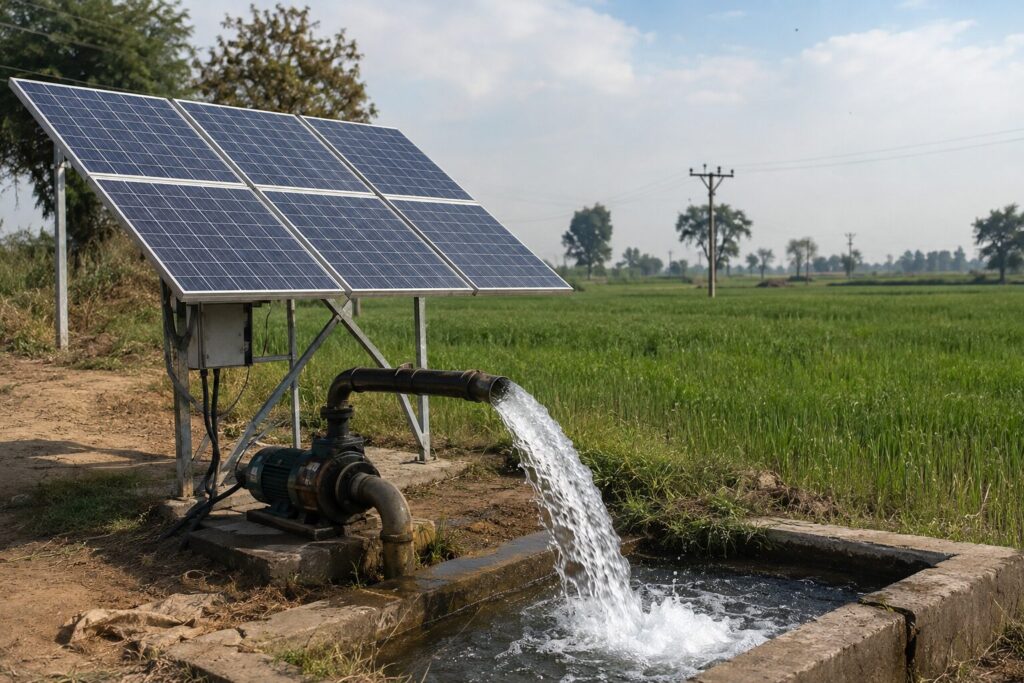
Talk to almost any farmer during sowing season and the conversation eventually lands on diesel prices — that, and the power cuts that always seem to strike right when the field is thirstiest. It’s a strange way to run irrigation: shaping your watering schedule around the discom’s timetable instead of the crop’s actual needs. A solar irrigation system gets you out of that bind. Rather than sitting around for grid power to come back or setting aside cash for the next diesel top-up, the pump simply draws power generated right on your own land. No fuel to buy. No phone calls to the lineman asking when the supply’s coming back. This guide covers how these setups actually function, what they run you, the subsidy support available through India’s PM Kusum Yojana, and how to land on the right configuration for your land — using concrete figures rather than the usual “it depends” non-answer. Want the technical specs first? KLK’s solar water pumping system page breaks down the equipment options in more detail. There’s more farmer-focused reading over on the KLK blog as well. What Exactly Is a Solar Irrigation System? In plain terms, it’s a pumping setup powered by sunlight rather than diesel or grid electricity. Solar panels absorb sunlight and convert it into electric current, which drives a pump that draws water from a borewell, canal, pond, or river and delivers it to the field – via flood irrigation, sprinklers, or drip lines, depending on your setup. Because sunlight doesn’t come with a bill, the ongoing running cost after you’ve installed the system is nearly zero. That’s the core appeal, and it explains why so many farmers are moving over regardless of where diesel prices happen to be sitting this month. You’ll also see this referred to as a solar water pumping system for agriculture or a solar-powered irrigation pump — same setup, different name. How Does a Solar Irrigation System Work? Five components carry most of the workload. Solar panels sit at the front of the process, absorbing sunlight and turning it into DC electricity. Next comes the pump controller — also known as a VFD — which acts as the system’s brain,regulating how much power reaches the pump and buffering against voltage spikes that could otherwise damage the motor. Then there’s the pump itself, either submerged in the water source or mounted above ground, whose job is simply to move the water. A network of pipes routes that water to the field, and a mounting structure keeps the panels angled correctly to capture as much sunlight as possible throughout the day. On a clear day, this entire chain powers the pump in real time — which is why most farm setups skip batteries entirely. Since irrigation almost always happens during daylight hours, there’s usually no need to store power for later. Some farmers do choose to add a battery if they irrigate before sunrise or during long overcast stretches, but for the majority of fields, a direct panel-to-pump connection is simpler and gets the job done. Types of Solar Pumps Used for Irrigation Different farms call for different pumps, and choosing the wrong one is a mistake that tends to get expensive fast Pump Type Best For Notes Submersible DC pump Borewells, deep water sources Runs directly on solar power, highly efficient Submersible AC pump Deep borewells with inverter setup Requires an inverter to convert DC to AC Surface pump Ponds, canals, shallow wells Installed above ground, simpler to service DC pump Small to mid-size farms Loses the least energy in the process Most Indian farms end up somewhere between 1 HP and 10 HP of pump capacity, matched with a solar array ranging from 1 kW to 10 kW or beyond — the exact numbers depend heavily on how deep your water source sits and the size of the land you’re covering. KLK’s site assessment process exists precisely to get that match right before any equipment goes in the ground. Why Farmers Are Making the Switch The recurring fuel expense disappears entirely once the system is up and running. You’re no longer waiting on the discom’s schedule — water the field whenever the crop actually needs it. Set against a diesel pump, most systems recover their upfront cost within just a few irrigation seasons. Far fewer things can break down mechanically — no engine, no oil changes, none of the moving parts a diesel genset relies on. Programs like PM-KUSUM shave a meaningful chunk off the initial investment. There’s an environmental upside too — no emissions, and no risk of fuel seeping into the water source. Not sure what size system fits your land? Get a free site visit and subsidy check from KLK Ventures — call +0120 4549038. What Does It Cost, and What Subsidy Can You Get? Costs shift quite a bit depending on pump size, panel wattage, and the specifics of your site — water depth, distance to the field, and so on. As a rough starting point, though: A 2 HP pump typically pairs with a 2 kW–3 kW solar array. Move up to 5 HP, and you’re generally in the 6 kW–7.5 kW range Larger commercial setups scale further from there. The upside is that the PM Kusum Yojana was built specifically to soften this cost — central and state governments each contribute toward the subsidy for eligible farmers, which can bring the amount you pay out of pocket down substantially. Even so, the exact percentage and eligibility criteria shift from state to state, so it’s worth checking the current figures before you finalize a budget. How to Pick the Right System for Your Land Start with your water source. A deep borewell needs a submersible pump; a pond or canal is better suited to a surface pump. Calculate your actual water requirement based on crop type, land size, and irrigation method — flood, sprinkler, and drip all draw water differently. Match the pump’s
Solar Water Pump Installation: A Practical Guide for Indian Farms and Properties
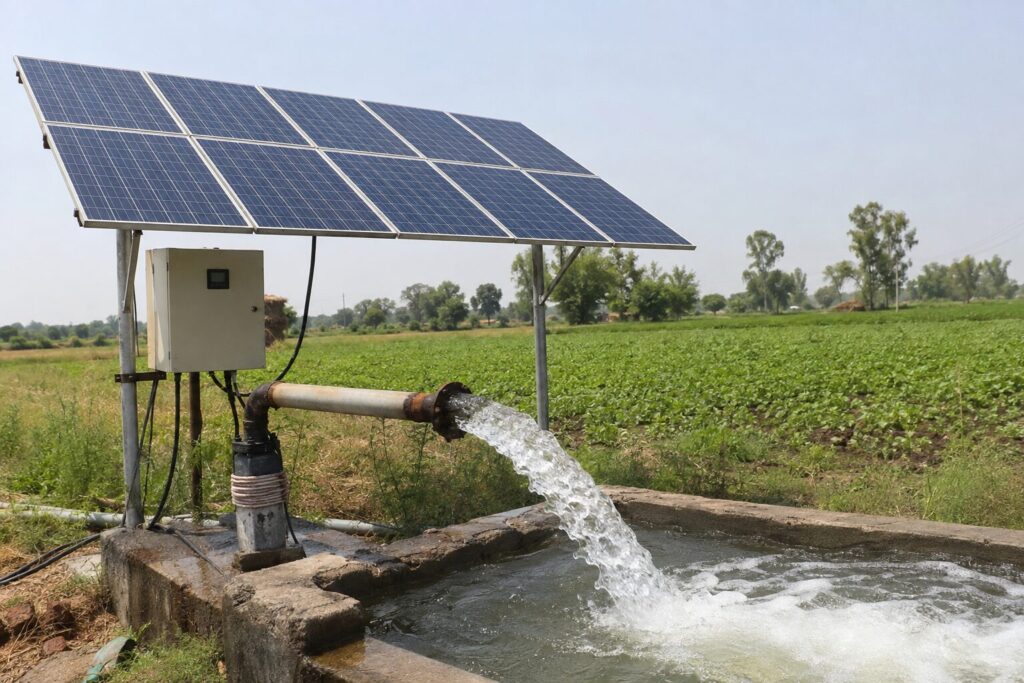
Diesel prices don’t go down. That’s the blunt truth behind why so many farmers and rural landowners in India are looking at solar water pump installation right now. If you’re currently running a pump on diesel, or fighting an electricity connection that cuts out right when your crop needs water most, solar solves both headaches at once — it runs on sunlight, and sunlight doesn’t send a bill. This guide walks through how installation actually happens on the ground, what it costs, where government subsidies come in, and the mistakes that trip up a lot of first-time buyers. What Is Solar Water Pump Installation? Solar water pump installation means setting up solar panels, a pump controller, a water pump, and the pipework needed so sunlight — not diesel or grid power — does the job of pulling water out of the ground and getting it where it needs to go. Here’s the basic chain: the panels catch sunlight and turn it into DC electricity. That power runs through a controller, which is really just the brain of the system — it makes sure the pump gets a steady, safe supply instead of getting fried by a sudden surge. The pump itself does the physical work, drawing water from a well, borewell, river, or pond and pushing it through pipes to the field, a storage tank, or a livestock trough. Once it’s installed, there’s no fuel to buy. The sun shows up for free every day, and the system just uses it. How Does It Actually Work, Step by Step? Most installations, done properly, go through four stages: 1 Site assessment — someone actually visits and checks your water source, how deep it is, how much flow you need, and how many hours of usable sunlight your site gets. 2 System sizing — matching panel wattage (usually somewhere between 500W and 5000W), pump type, and voltage (12V up to 72V) to what your land and water source actually demand. 3 Installation — mounting the panels, wiring the controller, placing the pump, and running pipe to wherever the water needs to end up. 4 Testing and handover — checking that the flow rate is what it should be, that the controller reacts properly as sunlight changes through the day, and walking the owner through basic upkeep. Honestly, the assessment stage is where things go wrong most often. Installers who skip it — or rush it — tend to hand over systems that look fine on paper but can’t keep up once peak irrigation season hits. Types of Solar Water Pumps Pump Type Best Suited For Key Trait Submersible Deep wells, borewells Fully submerged, handles greater depth Surface Shallow wells, rivers, tanks Sits above the water source DC Pump Standalone solar setups Runs directly off panel output AC Pump Hybrid or grid-linked setups Uses an inverter to convert DC to AC Which one you need really comes down to how deep your water source is and whether the pump has to work alongside existing AC-powered equipment. Benefits of Solar Water Pump Installation • Lower running costs — once it’s installed, there’s no recurring diesel expense eating into your margins • Water access you can count on — works fine in areas the grid barely reaches • Less maintenance hassle — fewer moving parts than a diesel engine means fewer things to break • Smaller environmental footprint — less reliance on fossil fuel, fewer emissions • Government support exists — schemes like PM-KUSUM offer subsidies on eligible installations, though how much you actually get depends on your state, so it’s worth checking before you plan your budget around a specific number Common Mistakes to Avoid A lot of the problems people run into later trace back to shortcuts taken early on: • Picking pump capacity based on price instead of what your land actually needs • Not accounting for shade from nearby trees or buildings when placing panels • Skipping a storage tank, then struggling on cloudy days • Forgetting to factor in total dynamic head — that’s the vertical lift plus friction loss in the pipes • Going with an installer who never actually visits the site before quoting How to Choose the Right System Before you sign off on anything, get clear answers on a few things: how much water you need daily, in litres; your total head; how many sunlight hours your location realistically gets; and whether your site even qualifies for PM-KUSUM or a state-level subsidy. If an installer is willing to size your system around these specifics rather than just selling you whatever package they have on hand, that’s usually a good sign. KLK Ventures Pvt. Ltd., based in Noida and working on projects across NCR and pan-India, follows exactly this approach — assessing the water source, designing a configuration that actually fits, handling the installation itself, and helping clients work through the subsidy paperwork. Their solar water pumping system service covers agricultural irrigation, livestock watering, and rural domestic use. Conclusion Solar water pump installation isn’t complicated in theory, but getting it right depends on details most people don’t think about until something goes wrong — sizing, site assessment, installer quality. Done properly, it cuts your diesel or electricity costs and gives you water access that doesn’t depend on the grid staying up. If you’re weighing solar water pump installation for a farm or rural property, the installer’s willingness to actually assess your site — rather than push a standard package — is usually what separates a system that works from one that disappoints you in July. Frequently Asked Questions 1.How much does solar water pump installation cost in India? It depends on pump capacity, panel wattage, and your site conditions. PM-KUSUM subsidies can bring the upfront cost down a lot for eligible farmers, but the exact percentage varies by state, so don’t assume a figure without checking. 2.Is solar water pump installation suitable for deep borewells? Yes — submersible
Commercial Solar Power Systems: The Complete Guide for Indian Businesses (2026)
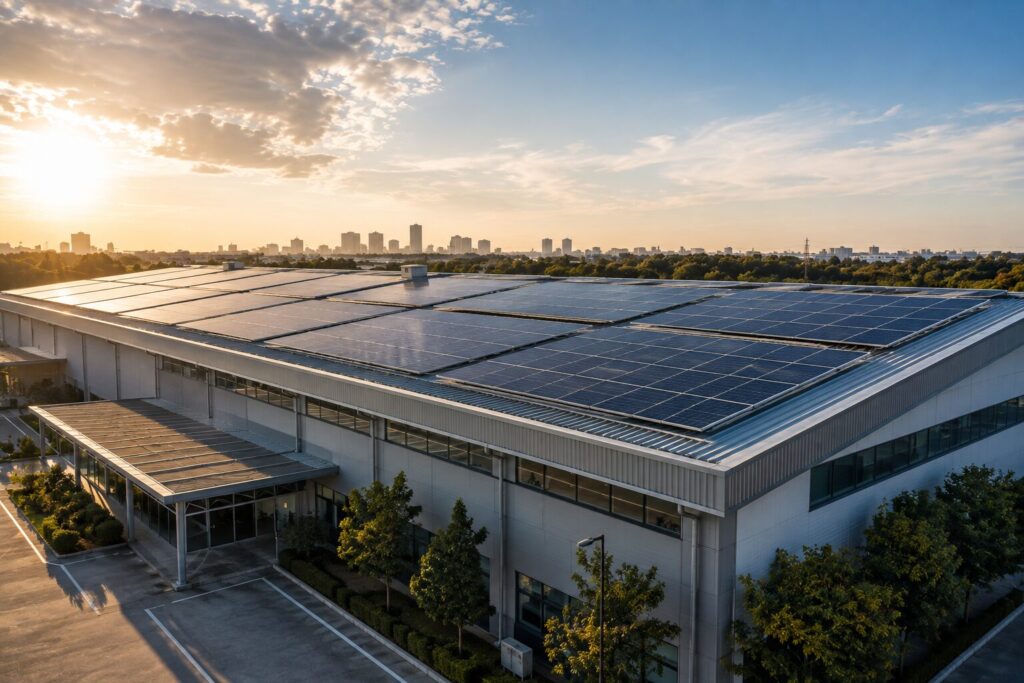
Every business owner reaches the same point eventually — staring at an electricity bill that keeps climbing no matter how carefully the numbers are managed. For factories, warehouses, offices, and retail spaces across India, power is often one of the largest fixed costs. A commercial solar power system in India offers a practical way for businesses to reduce electricity expenses, improve energy efficiency, and gain greater control over long-term operating costs. As electricity tariffs continue to rise and solar technology becomes more accessible, more businesses are turning to commercial solar solutions as a cost-effective energy investment. What Is a Commercial Solar Power System? A commercial solar power system is a solar installation engineered for business use, such as factories, offices, hospitals, warehouses, and commercial complexes are sized to handle far higher loads and longer operating hours than a residential rooftop setup. Types of Commercial Solar Systems On-Grid: Connected to the utility grid, with surplus power exported through net metering. Off-Grid: Independent of grid supply, suited to remote or unreliable-grid sites. Hybrid: Grid-connected with battery storage for continuity during outages. How Does It Work? A commercial system is built around solar PV modules, an inverter, mounting structures, a net meter, and a monitoring system sized to the facility’s load profile. A proper project starts with a site survey, followed by design, approvals, installation, and commissioning. What Does It Cost? Cost depends on capacity, site conditions, and module quality, so any figure should be treated as an estimate pending a site assessment. As a general reference, commercial rooftop systems in India commonly range from ₹35,000–₹45,000 per kW installed, varying by state and structure type. Financing Routes Businesses typically choose the following: CAPEX: The business owns the system and captures the full savings along with applicable tax depreciation. RESCO/OPEX: A developer owns and maintains the system, while the business pays a lower per-unit tariff with little upfront cost. For CAPEX buyers, the document notes that Section 32 of the Income Tax Act allows 40% first-year accelerated depreciation under the written-down value method when commissioned before 1 October, subject to the applicable rules. Businesses should confirm the tax treatment with a chartered accountant. From June 2026, MNRE also requires commercial and industrial solar projects to use ALMM list-II-listed modules. Why Are Businesses Switching? Commercial and industrial tariffs run considerably higher than residential rates, so solar savings can be proportionally larger for businesses. With accelerated depreciation and falling equipment costs, payback typically lands between three and six years, with systems generating power for 25 years or more, depending on the site and financing route. Solar also reduces exposure to tariff hikes and diesel backup costs, making budgeting easier. Key Numbers 3–6 years: Typical payback period 25+ years: System lifespan 40%: First-year depreciation* Best-Fit Industries and Local Fit Manufacturing plants, warehouses, hospitals, hotels, and educational institutions can see fast returns because daytime consumption aligns with peak solar generation. Noida and the wider Delhi-NCR region receive strong, consistent solar irradiance, and Uttar Pradesh’s net metering framework allows eligible commercial consumers to export surplus power to the grid, although timelines should be confirmed with the local DISCOM. Businesses in this region generally benefit from working with a locally based installer that understands regional DISCOM processes. Why Choose KLK Ventures? KLK Ventures began as K.L. Khanna Gears Industries, manufacturing precision industrial gears for more than three decades, before moving into renewable energy. That industrial background now informs its approach to project quality. KLK Ventures offers end-to-end delivery covering: Site assessment System design Installation Commissioning Ongoing solar maintenance On-grid systems Off-grid systems The team is based in Sector-58, Noida, and is led by CEO Akshat Jain, whose background spans energy, trading, and accounting. Ready to See What Your Business Could Save? Get a free site assessment and quote from KLK Ventures. Phone: +0120 4549038Email: info@klkindia.com Frequently Asked Questions What is a commercial solar power system? A solar installation designed for business use, sized for higher loads and longer operating hours than a residential setup. How much does it cost in India? Commercial solar systems typically cost around ₹35,000–₹45,000 per kW as a general estimate. A site assessment is required for an accurate quotation. How long is the payback period? The estimated payback period is roughly three to six years, depending on savings, depreciation, incentives, site conditions, and the financing model. Can businesses sell excess solar power to the grid? Yes. Businesses can export surplus solar power under applicable state net-metering policies, including in Uttar Pradesh, subject to DISCOM approval. Is accelerated depreciation still available in 2026? The document states that 40% first-year depreciation under Section 32 is available if the system is commissioned before 1 October, subject to applicable rules. Businesses should confirm the treatment with a chartered accountant.