
Solar Panel Installation Cost in India 2026
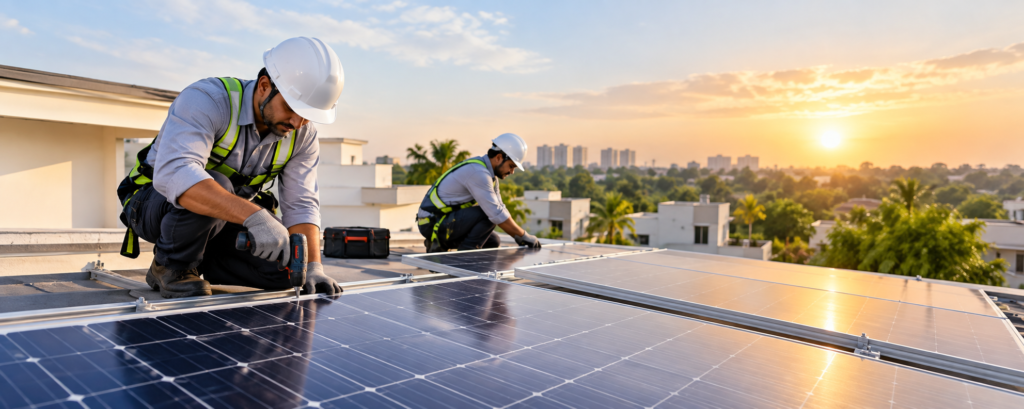
A 3 kW home system runs about ₹1.8–2.25 lakh before subsidy. After the ₹78,000 central subsidy and any state top-up, most households pay ₹1–1.5 lakh out of pocket. A 1 kW setup nets around ₹30,000; a 5 kW system settles near ₹2.1–2.6 lakh after subsidy. That’s the number most people call about. But when looking at Solar Panel Installation Cost in India, it also matters which subsidy bracket you fall into, what your city adds on top, and the line items that tend to appear on the invoice weeks after the “final” quote. This guide covers the real 2026 numbers, how the PM Surya Ghar subsidy is calculated, what quotes usually miss, and how long it takes to earn the money back. What Actually Determines Solar Panel Installation Cost in India? For reliable solar power backup for home, consider system size, battery needs, installation costs, and subsidies. Actual usage — not what a neighbour installed. A 2–3 kW system covers most 2–3BHK homes; running two ACs and a geyser through summer usually needs 5 kW or more. Panel type — monocrystalline PERC costs more per watt but needs less roof space. Polycrystalline is cheaper if roof area isn’t a constraint. System configuration — on-grid (no battery) is cheapest and most common. Hybrid or off-grid with batteries adds roughly ₹50,000–80,000. Roof structure — a standard frame is usually included. An elevated structure to keep the roof usable underneath adds ₹10,000–25,000. Location — labour rates, local EPC competition, and net metering rules shift the final cost, sometimes meaningfully between nearby cities. Solar Panel Price by System Size (2026) System Size Cost Before Subsidy Approx. Subsidy Net Cost After Subsidy 1 kW ₹60,000 – ₹70,000 ₹30,000 ₹30,000 – ₹40,000 2 kW ₹1,20,000 – ₹1,35,000 ₹60,000 ₹60,000 – ₹75,000 3 kW ₹1,80,000 – ₹2,25,000 ₹78,000 + state top-up ₹1,00,000 – ₹1,50,000 5 kW ₹2,90,000 – ₹3,35,000 ₹78,000 (fixed) ₹2,10,000 – ₹2,60,000 10 kW ₹5,50,000 – ₹6,50,000 ₹78,000 (fixed, residential cap) ₹4,70,000 – ₹5,70,000 As a sanity check: published rate guidance puts per-kW cost near ₹60,000 up to 5 kW, around ₹55,000 between 6–10 kW, and near ₹50,000 beyond that. Systems above 5 kW fall outside the standard residential subsidy slab — the ₹78,000 figure does not scale up automatically. Not sure where your home falls on this table? That’s usually the first question answered on a site visit, not guessed over the phone. KLK Ventures offers a free rooftop assessment, sizing the system around real consumption before quoting anything. Understanding the PM Surya Ghar Subsidy and Solar Panel Installation Cost in India Central Financial Assistance lands directly in the bank account once the net meter is commissioned — no middleman, no bill adjustment. Up to 2 kW, it’s ₹30,000 per kW. From 3 kW onward, it caps at a flat ₹78,000 and doesn’t grow further, even on larger systems. Some states add their own top-up. Delhi and Uttar Pradesh currently offer up to ₹30,000 extra for residential consumers — a big reason the Solar Panel Installation Cost in India can be lower in Delhi NCR than in a state without a matching scheme. These add-ons are tied to yearly budgets, so it’s worth checking the relevant state solar portal before locking in a final price. What Quotes Usually Leave Out for Solar Panel Installation Cost in India Electrical upgrades — older wiring sometimes can’t handle the new load, adding a switchboard upgrade mid-project. Net metering fees — DISCOM paperwork typically costs ₹2,500–5,000 and can take a few weeks to clear. Roof repairs — issues that surface once the installer is actually up there. Inverter replacement — panels run 25 years; inverters usually need swapping every 8–12. Monitoring fees — some vendors quietly charge a monthly app fee. None are dealbreakers — they’re just easier to plan for before the contract is signed. Payback Period Most homes recover their investment in 3–4 years. After that, it’s free electricity for the remaining 20-plus years the panels are rated for — a tax-free return that’s hard to match against a fixed deposit or debt fund. The exact number depends on the current bill, applicable subsidy, and how much sun the roof gets — not a generic average. Picking an Installer Don’t let price alone decide. Ask for an itemised quote separating panel, inverter, structure, and labour. Confirm the workmanship warranty is in writing. Find out whether net metering paperwork is handled by the installer or left to you. KLK Ventures runs a site survey first, an itemised quote instead of one lump figure, and handles net metering and subsidy paperwork directly — no line items appear after signing, and systems aren’t oversized beyond actual usage. Frequently Asked Questions What is the average cost of solar installation for a home in India? A typical 3 kW system runs ₹1.8–2.25 lakh before subsidy, dropping to roughly ₹1–1.5 lakh after the central subsidy and any state top-up. Does the subsidy apply to every system size? The PM Surya Ghar residential subsidy applies up to 3 kW at a fixed ₹78,000, with smaller amounts for 1 kW and 2 kW. Larger systems still qualify, but the subsidy itself doesn’t increase past the 3 kW cap. How long does the subsidy take to arrive after installation? Once the net meter is commissioned and inspected, it’s usually credited within 30–45 days via Direct Benefit Transfer. Is an on-grid or off-grid system cheaper? On-grid is cheaper since it relies on the grid rather than batteries. Off-grid and hybrid systems cost more but make sense where power cuts are frequent. Do prices vary by city? Yes — labour rates, local installer competition, and state subsidy differences mean the same size system can cost differently in Delhi, Lucknow, or Bengaluru. What’s the typical payback period? Most homeowners recover their investment in 3–4 years, then keep generating savings for the remaining 20-plus years of the system’s working life. What should I check before signing a contract? Confirm the exact panel and inverter brand, get the warranty
Solar Power Backup for Home: How It Works and What You Actually Need
Power cuts have a habit of showing up at the worst possible time. The fan cuts out mid-afternoon, the fridge goes silent overnight, or the inverter gives up right as a work call starts. For more and more Indian households, the fix isn’t a bigger diesel generator or yet another battery replacement. It’s solar power backup for home a setup that makes its own electricity and stores it for exactly these moments. If you’re trying to figure out whether solar backup is worth it for your house, here’s what it actually involves, how it’s different from a regular inverter, and what to think through before you commit to anything. What Is Solar Power Backup for Home? A home solar power backup system uses rooftop panels to generate electricity through the day and stores whatever’s left over in a battery, so it’s there whenever the grid drops, day or night. A regular inverter only recharges off grid electricity. A solar backup system for home charges mainly (sometimes entirely) from sunlight instead, which is why it can keep going through longer outages as long as the battery still has charge left in it. That’s not the same thing as just having panels on your roof. A home solar battery backup pairs the panels with a battery bank, an inverter, and a charge controller, so the energy you’ve stored is actually usable on demand rather than only while the sun’s out. How Does a Home Solar Backup System Work? A few core pieces need to work together for any of this to function: Solar panels capture sunlight and turn it into DC electricity. Charge controller regulates how much current flows into the battery, which protects battery life over time. Battery storage holds onto surplus solar energy. Lithium batteries are the common choice here, mostly because they’re compact and last longer through charge cycles. Solar inverter with battery converts stored DC power into the AC power your appliances actually use, and handles the switching between solar, battery, and grid. Through the day, panels usually produce more than the house needs, so that surplus goes into the battery. Come evening, or whenever the grid fails, the system pulls from the battery instead of leaving you sitting in the dark. Can Solar Panels Provide Backup During a Power Cut? Only if there’s battery storage involved. A pure grid-tied (on-grid) system can’t supply power during a blackout at all, since it’s built to sync with grid electricity and shuts off automatically for safety the moment the grid goes down. If backup during outages actually matters to you, you’re looking at either an off-grid solar system or a hybrid solar system for home, one that brings solar, battery, and grid connectivity together. Is Solar Backup Better Than a Normal Inverter? A regular inverter is, at the end of the day, just a battery with a switch attached. It stores grid electricity and lets it out during a cut, so everything it delivers has already come off the grid once. Solar backup generates its own electricity instead, which means a real chunk of what you use during an outage never touched the grid at all. A few things worth weighing here: Where the charge comes from. Normal inverters pull entirely from the grid. Solar backup pulls mainly from sunlight, with grid charging kept as a fallback in hybrid setups. What it saves you over time. Solar backup also offsets your daytime grid use rather than sitting idle waiting for a cut, so it earns its keep in a way a plain inverter doesn’t. How it handles a long outage. A properly sized solar battery backup for home can recharge itself the next day even if the power stays out, something a grid-only inverter simply can’t do. How Much Solar Battery Capacity Does a Home Need? Honestly, it comes down to which appliances you want backed up and for how long. Someone backing up lights, fans, and a Wi-Fi router needs a much smaller setup than someone who also wants the fridge, an AC or two, and a water pump running through a cut. A reasonably practical way to think about sizing: Write down the appliances you want on backup, along with roughly how much wattage each draws. Figure out how many hours a day they’re actually in use. Decide how many backup hours you want without any sunlight, an evening, overnight, or longer. Get the battery and panel capacity sized against that load, ideally with a professional assessment to confirm it before you buy anything. Guessing at capacity is probably the single biggest reason homeowners end up with a system that either can’t keep up during an outage or costs way more than it needed to. A site-specific assessment is worth doing before you finalize anything. Can Solar Backup Run Fans, Lights, Refrigerators and Other Appliances? Yes, solar backup can run the usual home essentials, fans, lights, fridges, routers, TVs, even air conditioners, as long as the battery and inverter are actually sized for that load. A lot of homeowners choose to back up just the “essential loads” (lighting, fans, refrigeration, communication devices) to keep the battery size and cost reasonable, and only run heavier appliances like ACs on backup if the system has been specifically built for that. On-Grid, Off-Grid, and Hybrid Solar Systems: What’s the Difference? An on-grid solar system stays connected to the utility grid and feeds any excess power back into it, but it offers zero backup during a power cut since it shuts down with the grid for safety reasons. An off-grid solar system runs completely independent of the grid, generating, storing, and supplying its own electricity. It works well in areas where grid access is unreliable or missing altogether. A hybrid solar system for home combines generation, battery storage, and a grid connection, pulling from whichever source makes sense at the time and switching over to battery automatically the moment the grid drops. For most urban Indian homes dealing with power cuts, a
The Smart Way to Power Your Business in India
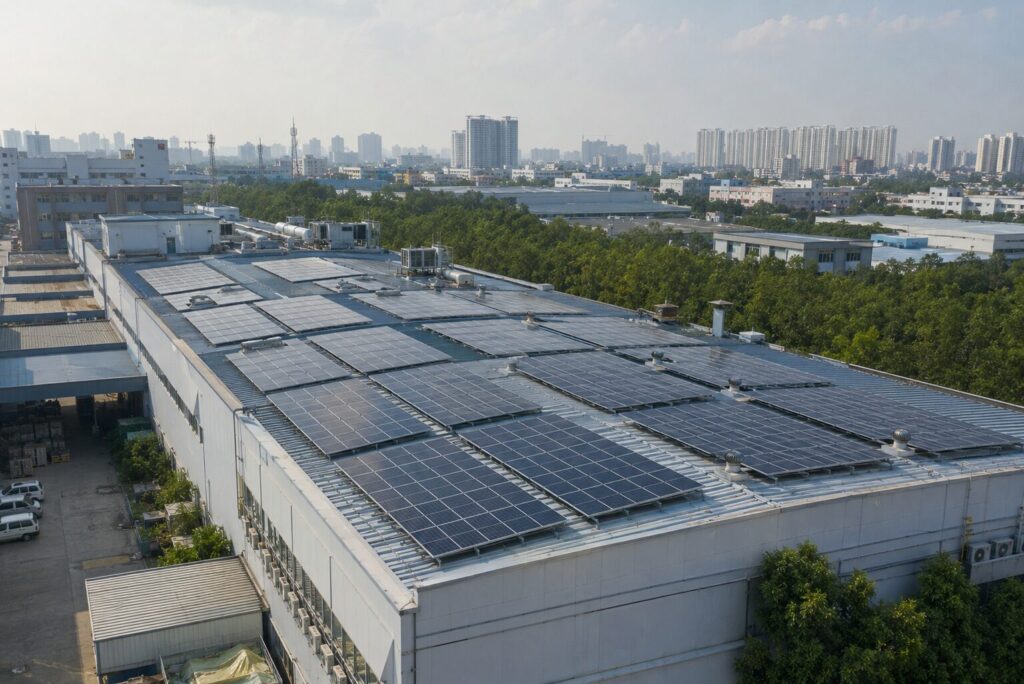
Solar installation services cover the design, approval, and setup of a commercial solar power system on a business’s rooftop or land, so a company can generate its own electricity instead of paying full commercial tariffs. For manufacturing units, warehouses, retail chains, and agro-processing facilities around Delhi-NCR, that usually means a rooftop or ground-mounted plant sized to your actual daytime load, with net metering approval and, where it applies, accelerated depreciation worked into the numbers from the start. KLK Ventures designs and delivers commercial solar systems for manufacturing, warehousing, retail, and agro-industrial businesses across Delhi-NCR — from the first load audit through to commissioning and net metering sign-off. What follows is based on what we run into on-site, not a sales brochure. Here’s how it usually starts, if we’re being honest about it. You’re running a factory, a warehouse, an office park — doesn’t matter which — and one month you actually look at the power bill instead of just paying it, and realize it’s crept up every year without you noticing. It’s eating into margins that should be staying in the business. That’s usually the point where someone finally picks up the phone and asks what it would take to put solar on the roof. That’s where professional solar installation services in India can help businesses reduce their dependence on expensive grid power instead of writing a bigger cheque to the discom next month too. This isn’t an early-adopter move anymore. It’s just what serious operations do now. India’s installed solar capacity crossed 162 GW as of June 2026, according to MNRE data shared in the Rajya Sabha, and the country added a record 44.6 GW of new solar PV capacity in FY 2026 alone. Open access commercial and industrial projects were a big part of that, per JMK Research. The grid infrastructure is there. The policy backing is there. The financing is there. Whether your business actually uses any of it is really the only open question left. Why Businesses Are Choosing Solar Over Grid Power Commercial and industrial power costs a lot more than residential power in most states — sometimes close to double. A properly sized solar system knocks out a big chunk of your daytime draw, which happens to be exactly when factories, offices, and shops pull the most current anyway. Stretch that over 25 years of panel life and you’re not looking at a one-off discount. You’re looking at a genuinely different cost base for as long as the plant is running. Then there’s depreciation, which doesn’t come up in these conversations nearly as often as it should. Businesses that invest in solar assets can claim accelerated depreciation under the Income Tax Act, and that alone can shave a year or two off your payback compared to a plain cost comparison. Add modules that are cheaper than they were five years ago, plus easier bank or NBFC financing, and the math on a commercial installation gets better basically every quarter you sit on it. PM-KUSUM and Accelerated Depreciation, Sorted Out Quick thing worth clearing up, because it trips people up constantly. PM-KUSUM is written mostly for farmers, and most of what’s online about it assumes that audience. But there’s a piece worth knowing if your business touches agriculture at all. Component A of PM-KUSUM lets farmers, cooperatives, panchayats, and rural entrepreneurs set up decentralised solar plants up to 2 MW on their own land and sell that power straight to the discom under a long-term PPA. Running a cold storage unit, an agro-processing plant, or working through an FPO? Worth a look — don’t write it off just because you’re not a farmer yourself. For a regular factory, warehouse, or retail business, though, PM-KUSUM doesn’t apply. What matters for you is the 40% accelerated depreciation under Section 32 of the Income Tax Act, since PM Surya Ghar subsidies are for residential rooftops only — commercial consumers don’t qualify there. Stack that depreciation on top of net metering and today’s lower equipment prices, and payback often lands under five years. It’s the one thing worth pushing your vendor to talk about, even if they don’t bring it up first. What Solar Installation Services Should Actually Include 01 Site audit and load analysisWhat you’re actually consuming, what your roof or land can structurally handle, how much shadow-free area you really have — before anyone touches a design. 02 System design and net metering paperworkSizing the plant right, then pushing the discom approvals through so you’re not stuck chasing files for three months. 03 Component sourcingPanels and inverters on that ALMM approved list, because that affects both performance and whether the plant is even compliant. 04 Installation and commissioningStructural mounting, wiring, safety checks — done properly, not rushed to hit someone’s deadline. 05 Monitoring and maintenanceSomeone actually watching the numbers afterward, so you find out if the plant is underperforming instead of just wondering why the bill didn’t drop as much as expected. Most commercial solar projects that go sideways skip one of these five somewhere. It’s why the installer matters a lot more than the number on the quote. How to Pick the Right Partner Not every installer who sends you a proposal has actually built something at commercial scale before. A few things worth confirming before you sign anything. References from businesses roughly your size and load profile matter more than you’d think — three homes with rooftop panels don’t tell you much about how a vendor handles a factory. Make sure they’re handling the net metering application with the discom themselves too, instead of quietly handing that back to you halfway through. And read the warranty carefully: panel performance and workmanship are two different guarantees, and vendors like to blur that line when it suits them. Last thing — ask if monitoring is included after installation. A plant nobody’s watching quietly loses output, and you usually don’t notice until the bill arrives. A team that’s actually done commercial solar work
Solar Irrigation System: The Complete Guide for Indian Farmers (2026)
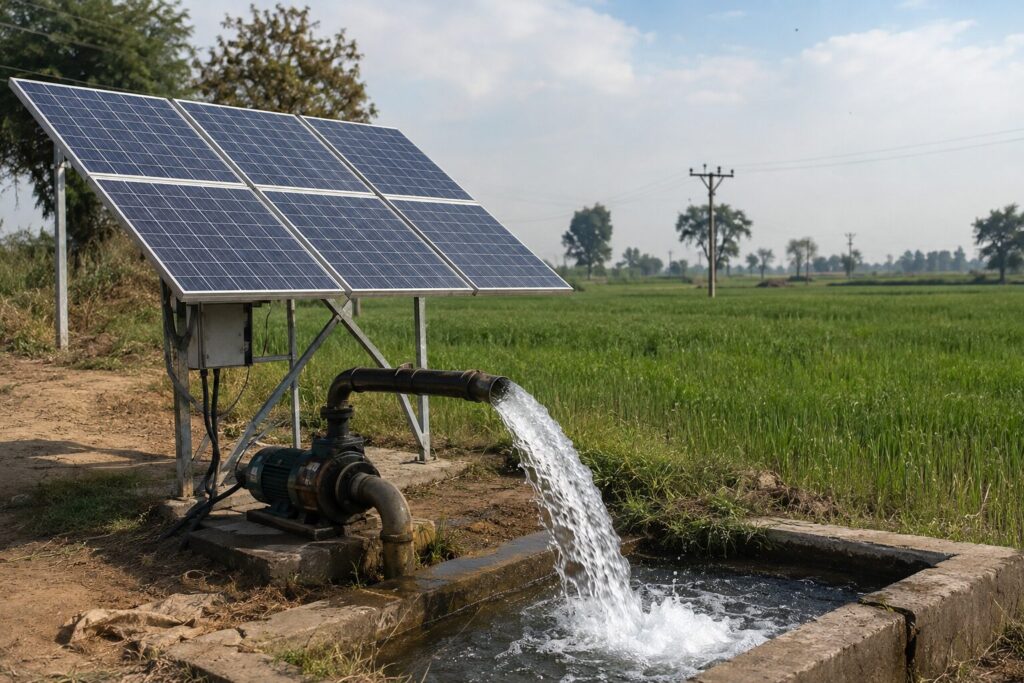
Talk to almost any farmer during sowing season and the conversation eventually lands on diesel prices — that, and the power cuts that always seem to strike right when the field is thirstiest. It’s a strange way to run irrigation: shaping your watering schedule around the discom’s timetable instead of the crop’s actual needs. A solar irrigation system gets you out of that bind. Rather than sitting around for grid power to come back or setting aside cash for the next diesel top-up, the pump simply draws power generated right on your own land. No fuel to buy. No phone calls to the lineman asking when the supply’s coming back. This guide covers how these setups actually function, what they run you, the subsidy support available through India’s PM Kusum Yojana, and how to land on the right configuration for your land — using concrete figures rather than the usual “it depends” non-answer. Want the technical specs first? KLK’s solar water pumping system page breaks down the equipment options in more detail. There’s more farmer-focused reading over on the KLK blog as well. What Exactly Is a Solar Irrigation System? In plain terms, it’s a pumping setup powered by sunlight rather than diesel or grid electricity. Solar panels absorb sunlight and convert it into electric current, which drives a pump that draws water from a borewell, canal, pond, or river and delivers it to the field – via flood irrigation, sprinklers, or drip lines, depending on your setup. Because sunlight doesn’t come with a bill, the ongoing running cost after you’ve installed the system is nearly zero. That’s the core appeal, and it explains why so many farmers are moving over regardless of where diesel prices happen to be sitting this month. You’ll also see this referred to as a solar water pumping system for agriculture or a solar-powered irrigation pump — same setup, different name. How Does a Solar Irrigation System Work? Five components carry most of the workload. Solar panels sit at the front of the process, absorbing sunlight and turning it into DC electricity. Next comes the pump controller — also known as a VFD — which acts as the system’s brain,regulating how much power reaches the pump and buffering against voltage spikes that could otherwise damage the motor. Then there’s the pump itself, either submerged in the water source or mounted above ground, whose job is simply to move the water. A network of pipes routes that water to the field, and a mounting structure keeps the panels angled correctly to capture as much sunlight as possible throughout the day. On a clear day, this entire chain powers the pump in real time — which is why most farm setups skip batteries entirely. Since irrigation almost always happens during daylight hours, there’s usually no need to store power for later. Some farmers do choose to add a battery if they irrigate before sunrise or during long overcast stretches, but for the majority of fields, a direct panel-to-pump connection is simpler and gets the job done. Types of Solar Pumps Used for Irrigation Different farms call for different pumps, and choosing the wrong one is a mistake that tends to get expensive fast Pump Type Best For Notes Submersible DC pump Borewells, deep water sources Runs directly on solar power, highly efficient Submersible AC pump Deep borewells with inverter setup Requires an inverter to convert DC to AC Surface pump Ponds, canals, shallow wells Installed above ground, simpler to service DC pump Small to mid-size farms Loses the least energy in the process Most Indian farms end up somewhere between 1 HP and 10 HP of pump capacity, matched with a solar array ranging from 1 kW to 10 kW or beyond — the exact numbers depend heavily on how deep your water source sits and the size of the land you’re covering. KLK’s site assessment process exists precisely to get that match right before any equipment goes in the ground. Why Farmers Are Making the Switch The recurring fuel expense disappears entirely once the system is up and running. You’re no longer waiting on the discom’s schedule — water the field whenever the crop actually needs it. Set against a diesel pump, most systems recover their upfront cost within just a few irrigation seasons. Far fewer things can break down mechanically — no engine, no oil changes, none of the moving parts a diesel genset relies on. Programs like PM-KUSUM shave a meaningful chunk off the initial investment. There’s an environmental upside too — no emissions, and no risk of fuel seeping into the water source. Not sure what size system fits your land? Get a free site visit and subsidy check from KLK Ventures — call +0120 4549038. What Does It Cost, and What Subsidy Can You Get? Costs shift quite a bit depending on pump size, panel wattage, and the specifics of your site — water depth, distance to the field, and so on. As a rough starting point, though: A 2 HP pump typically pairs with a 2 kW–3 kW solar array. Move up to 5 HP, and you’re generally in the 6 kW–7.5 kW range Larger commercial setups scale further from there. The upside is that the PM Kusum Yojana was built specifically to soften this cost — central and state governments each contribute toward the subsidy for eligible farmers, which can bring the amount you pay out of pocket down substantially. Even so, the exact percentage and eligibility criteria shift from state to state, so it’s worth checking the current figures before you finalize a budget. How to Pick the Right System for Your Land Start with your water source. A deep borewell needs a submersible pump; a pond or canal is better suited to a surface pump. Calculate your actual water requirement based on crop type, land size, and irrigation method — flood, sprinkler, and drip all draw water differently. Match the pump’s
Solar Water Pump Installation: A Practical Guide for Indian Farms and Properties
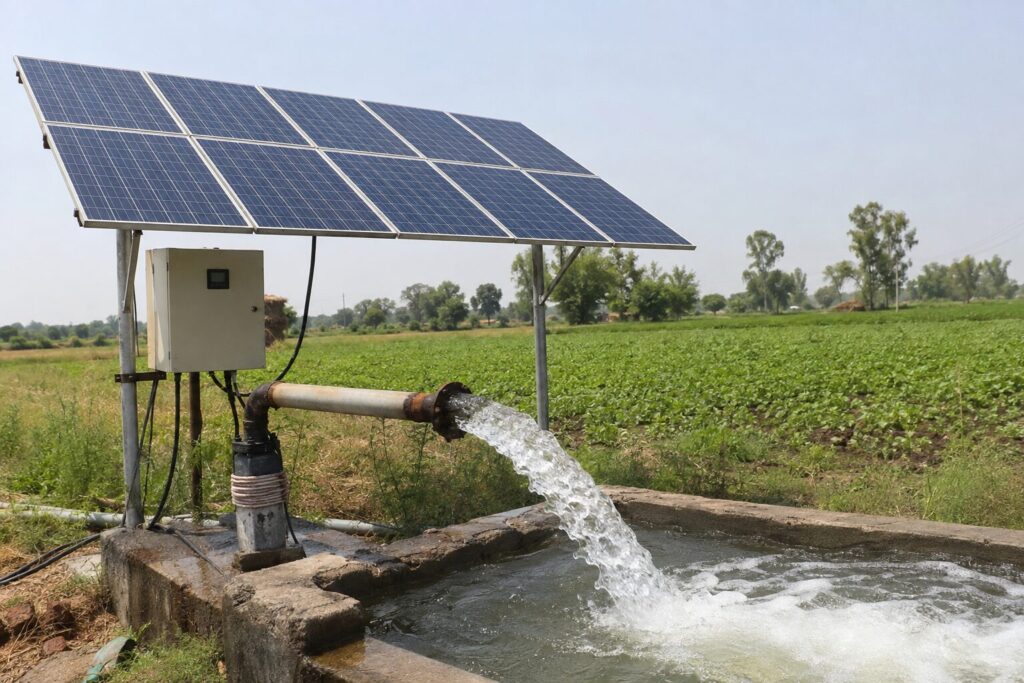
Diesel prices don’t go down. That’s the blunt truth behind why so many farmers and rural landowners in India are looking at solar water pump installation right now. If you’re currently running a pump on diesel, or fighting an electricity connection that cuts out right when your crop needs water most, solar solves both headaches at once — it runs on sunlight, and sunlight doesn’t send a bill. This guide walks through how installation actually happens on the ground, what it costs, where government subsidies come in, and the mistakes that trip up a lot of first-time buyers. What Is Solar Water Pump Installation? Solar water pump installation means setting up solar panels, a pump controller, a water pump, and the pipework needed so sunlight — not diesel or grid power — does the job of pulling water out of the ground and getting it where it needs to go. Here’s the basic chain: the panels catch sunlight and turn it into DC electricity. That power runs through a controller, which is really just the brain of the system — it makes sure the pump gets a steady, safe supply instead of getting fried by a sudden surge. The pump itself does the physical work, drawing water from a well, borewell, river, or pond and pushing it through pipes to the field, a storage tank, or a livestock trough. Once it’s installed, there’s no fuel to buy. The sun shows up for free every day, and the system just uses it. How Does It Actually Work, Step by Step? Most installations, done properly, go through four stages: 1 Site assessment — someone actually visits and checks your water source, how deep it is, how much flow you need, and how many hours of usable sunlight your site gets. 2 System sizing — matching panel wattage (usually somewhere between 500W and 5000W), pump type, and voltage (12V up to 72V) to what your land and water source actually demand. 3 Installation — mounting the panels, wiring the controller, placing the pump, and running pipe to wherever the water needs to end up. 4 Testing and handover — checking that the flow rate is what it should be, that the controller reacts properly as sunlight changes through the day, and walking the owner through basic upkeep. Honestly, the assessment stage is where things go wrong most often. Installers who skip it — or rush it — tend to hand over systems that look fine on paper but can’t keep up once peak irrigation season hits. Types of Solar Water Pumps Pump Type Best Suited For Key Trait Submersible Deep wells, borewells Fully submerged, handles greater depth Surface Shallow wells, rivers, tanks Sits above the water source DC Pump Standalone solar setups Runs directly off panel output AC Pump Hybrid or grid-linked setups Uses an inverter to convert DC to AC Which one you need really comes down to how deep your water source is and whether the pump has to work alongside existing AC-powered equipment. Benefits of Solar Water Pump Installation • Lower running costs — once it’s installed, there’s no recurring diesel expense eating into your margins • Water access you can count on — works fine in areas the grid barely reaches • Less maintenance hassle — fewer moving parts than a diesel engine means fewer things to break • Smaller environmental footprint — less reliance on fossil fuel, fewer emissions • Government support exists — schemes like PM-KUSUM offer subsidies on eligible installations, though how much you actually get depends on your state, so it’s worth checking before you plan your budget around a specific number Common Mistakes to Avoid A lot of the problems people run into later trace back to shortcuts taken early on: • Picking pump capacity based on price instead of what your land actually needs • Not accounting for shade from nearby trees or buildings when placing panels • Skipping a storage tank, then struggling on cloudy days • Forgetting to factor in total dynamic head — that’s the vertical lift plus friction loss in the pipes • Going with an installer who never actually visits the site before quoting How to Choose the Right System Before you sign off on anything, get clear answers on a few things: how much water you need daily, in litres; your total head; how many sunlight hours your location realistically gets; and whether your site even qualifies for PM-KUSUM or a state-level subsidy. If an installer is willing to size your system around these specifics rather than just selling you whatever package they have on hand, that’s usually a good sign. KLK Ventures Pvt. Ltd., based in Noida and working on projects across NCR and pan-India, follows exactly this approach — assessing the water source, designing a configuration that actually fits, handling the installation itself, and helping clients work through the subsidy paperwork. Their solar water pumping system service covers agricultural irrigation, livestock watering, and rural domestic use. Conclusion Solar water pump installation isn’t complicated in theory, but getting it right depends on details most people don’t think about until something goes wrong — sizing, site assessment, installer quality. Done properly, it cuts your diesel or electricity costs and gives you water access that doesn’t depend on the grid staying up. If you’re weighing solar water pump installation for a farm or rural property, the installer’s willingness to actually assess your site — rather than push a standard package — is usually what separates a system that works from one that disappoints you in July. Frequently Asked Questions 1.How much does solar water pump installation cost in India? It depends on pump capacity, panel wattage, and your site conditions. PM-KUSUM subsidies can bring the upfront cost down a lot for eligible farmers, but the exact percentage varies by state, so don’t assume a figure without checking. 2.Is solar water pump installation suitable for deep borewells? Yes — submersible
Commercial Solar Power Systems: The Complete Guide for Indian Businesses (2026)
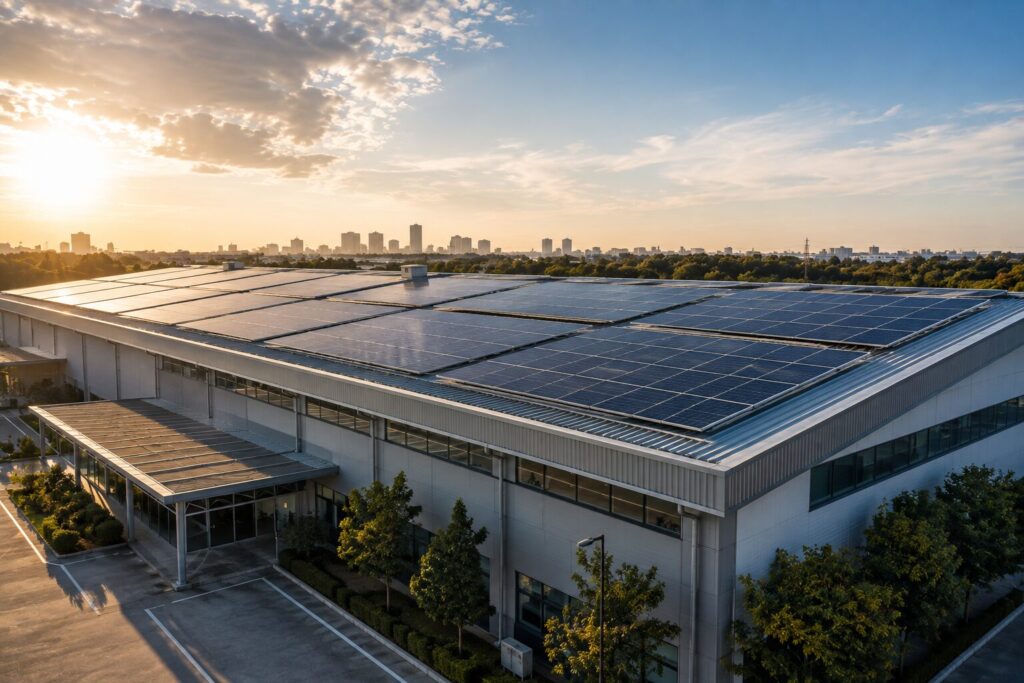
Every business owner reaches the same point eventually — staring at an electricity bill that keeps climbing no matter how carefully the numbers are managed. For factories, warehouses, offices, and retail spaces across India, power is often one of the largest fixed costs. A commercial solar power system in India offers a practical way for businesses to reduce electricity expenses, improve energy efficiency, and gain greater control over long-term operating costs. As electricity tariffs continue to rise and solar technology becomes more accessible, more businesses are turning to commercial solar solutions as a cost-effective energy investment. What Is a Commercial Solar Power System? A commercial solar power system is a solar installation engineered for business use, such as factories, offices, hospitals, warehouses, and commercial complexes are sized to handle far higher loads and longer operating hours than a residential rooftop setup. Types of Commercial Solar Systems On-Grid: Connected to the utility grid, with surplus power exported through net metering. Off-Grid: Independent of grid supply, suited to remote or unreliable-grid sites. Hybrid: Grid-connected with battery storage for continuity during outages. How Does It Work? A commercial system is built around solar PV modules, an inverter, mounting structures, a net meter, and a monitoring system sized to the facility’s load profile. A proper project starts with a site survey, followed by design, approvals, installation, and commissioning. What Does It Cost? Cost depends on capacity, site conditions, and module quality, so any figure should be treated as an estimate pending a site assessment. As a general reference, commercial rooftop systems in India commonly range from ₹35,000–₹45,000 per kW installed, varying by state and structure type. Financing Routes Businesses typically choose the following: CAPEX: The business owns the system and captures the full savings along with applicable tax depreciation. RESCO/OPEX: A developer owns and maintains the system, while the business pays a lower per-unit tariff with little upfront cost. For CAPEX buyers, the document notes that Section 32 of the Income Tax Act allows 40% first-year accelerated depreciation under the written-down value method when commissioned before 1 October, subject to the applicable rules. Businesses should confirm the tax treatment with a chartered accountant. From June 2026, MNRE also requires commercial and industrial solar projects to use ALMM list-II-listed modules. Why Are Businesses Switching? Commercial and industrial tariffs run considerably higher than residential rates, so solar savings can be proportionally larger for businesses. With accelerated depreciation and falling equipment costs, payback typically lands between three and six years, with systems generating power for 25 years or more, depending on the site and financing route. Solar also reduces exposure to tariff hikes and diesel backup costs, making budgeting easier. Key Numbers 3–6 years: Typical payback period 25+ years: System lifespan 40%: First-year depreciation* Best-Fit Industries and Local Fit Manufacturing plants, warehouses, hospitals, hotels, and educational institutions can see fast returns because daytime consumption aligns with peak solar generation. Noida and the wider Delhi-NCR region receive strong, consistent solar irradiance, and Uttar Pradesh’s net metering framework allows eligible commercial consumers to export surplus power to the grid, although timelines should be confirmed with the local DISCOM. Businesses in this region generally benefit from working with a locally based installer that understands regional DISCOM processes. Why Choose KLK Ventures? KLK Ventures began as K.L. Khanna Gears Industries, manufacturing precision industrial gears for more than three decades, before moving into renewable energy. That industrial background now informs its approach to project quality. KLK Ventures offers end-to-end delivery covering: Site assessment System design Installation Commissioning Ongoing solar maintenance On-grid systems Off-grid systems The team is based in Sector-58, Noida, and is led by CEO Akshat Jain, whose background spans energy, trading, and accounting. Ready to See What Your Business Could Save? Get a free site assessment and quote from KLK Ventures. Phone: +0120 4549038Email: info@klkindia.com Frequently Asked Questions What is a commercial solar power system? A solar installation designed for business use, sized for higher loads and longer operating hours than a residential setup. How much does it cost in India? Commercial solar systems typically cost around ₹35,000–₹45,000 per kW as a general estimate. A site assessment is required for an accurate quotation. How long is the payback period? The estimated payback period is roughly three to six years, depending on savings, depreciation, incentives, site conditions, and the financing model. Can businesses sell excess solar power to the grid? Yes. Businesses can export surplus solar power under applicable state net-metering policies, including in Uttar Pradesh, subject to DISCOM approval. Is accelerated depreciation still available in 2026? The document states that 40% first-year depreciation under Section 32 is available if the system is commissioned before 1 October, subject to applicable rules. Businesses should confirm the treatment with a chartered accountant.
Green Energy Solutions: Why More Indian Homes and Businesses Are Making the Switch
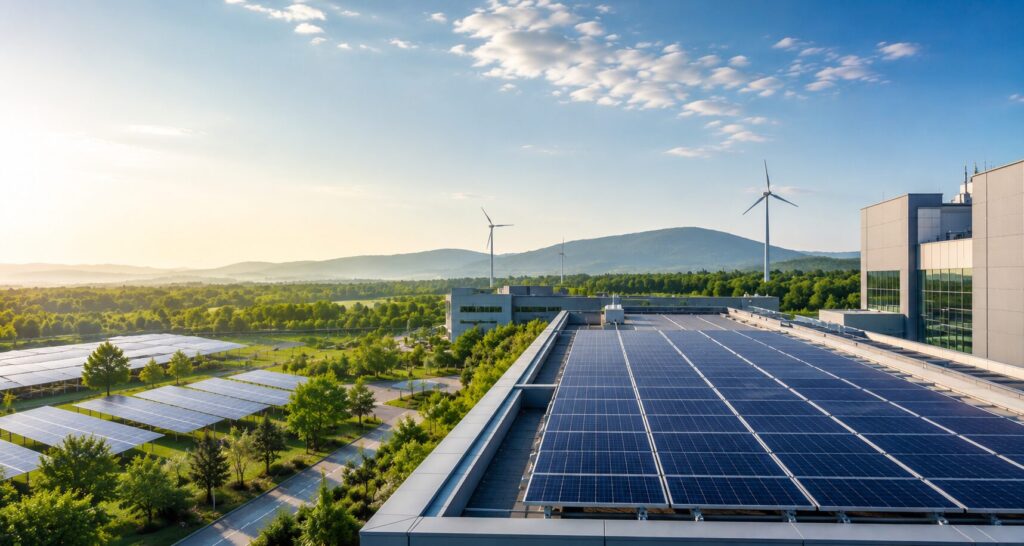
Every month, electricity bills climb a little higher, and the conversation around power in India is changing with them. Green energy solutions are no longer a niche idea reserved for eco-conscious early adopters. They are becoming the practical, cost-effective choice for homeowners, factories, and businesses that want reliable power without depending entirely on the grid. At KLK Ventures, we’ve spent years helping clients move from conventional electricity to solar-based green energy solutions, and we’ve learned that the shift works best when it’s approached with patience and the right guidance, not hype. Quick stat — Most households and businesses that switch to rooftop solar see a 60–90% drop in their monthly grid electricity bill, depending on system size and consumption pattern. What Are Green Energy Solutions, Really? Green energy solutions cover any system that generates power from renewable, low-impact sources — solar, wind, small hydro, and biomass among them. In India, solar power leads the way. Rooftop solar installations in particular have become the most accessible entry point for households and small businesses, because they require less land, work with existing infrastructure, and pay for themselves over a few years. Unlike fossil-fuel-based power, solar energy doesn’t run out, doesn’t pollute during operation, and doesn’t fluctuate wildly with global fuel prices. That stability alone is why so many businesses now treat solar as a financial decision as much as an environmental one. Why the Shift Is Happening Now A few factors have pushed green energy solutions from optional to essential: Rising grid electricity costs. Commercial and industrial tariffs have increased steadily, making solar payback periods shorter than they were even five years ago. Falling equipment prices. Solar panel and inverter costs have dropped significantly, while efficiency has improved, so a smaller rooftop can now produce more power than before. Government support. Central and state subsidy schemes, net metering policies, and simplified approval processes have made installation far less complicated than it used to be. Our team handles the subsidy paperwork directly, so clients don’t have to navigate it alone. Corporate sustainability goals. Many businesses now need to show measurable progress on carbon reduction, and on-site solar is one of the most direct ways to do that. Choosing the Right Green Energy Partner Not every solar installer offers the same level of service, and this is where a lot of buyers get stuck. A trustworthy green energy solutions provider should walk you through site assessment, system sizing, equipment selection, subsidy paperwork, installation, and after-sales maintenance — not just sell you panels and disappear. At KLK Ventures, our approach is fairly simple: we start with a free site assessment, look at your actual consumption pattern, roof or land capacity, and budget, then design a system around those realities rather than pushing a one-size-fits-all package. We’d rather recommend a smaller, well-matched system that performs reliably than an oversized one that looks impressive on paper. Thinking about a system for your property? Request a free site assessment and we’ll tell you honestly whether solar makes sense for your space. The Bigger Picture Switching to green energy solutions isn’t just about lowering your own electricity bill, though that matters. It’s also a small, tangible contribution to reducing dependence on coal-based power, which still supplies a large share of India’s electricity grid. Every rooftop system installed is one less household or business drawing entirely from that grid. We don’t claim solar is the answer to every energy problem, and it isn’t the right fit for every property. But for most homes and businesses with decent roof space and consistent daytime power needs, it’s one of the more sensible long-term investments available today. Frequently Asked Questions What are green energy solutions? Green energy solutions are power systems that generate electricity from renewable sources like sunlight, wind, or biomass instead of fossil fuels. In residential and commercial settings across India, solar power is the most common and accessible option. How much can I save by switching to solar-based green energy solutions? Most households and businesses see a 60–90% reduction in their monthly grid electricity bill after switching to solar. The exact figure depends on your current consumption, local tariff rates, and system size. Is rooftop solar suitable for every home or business? Rooftop solar works well for most properties with decent sun exposure, but it isn’t right for every roof. A free site assessment is the fastest way to confirm whether your property, shading, and orientation are a good fit. How long does a green energy solutions installation take? Most rooftop solar installations are completed within one to three weeks, depending on system size, approvals, and net metering paperwork with the local electricity board. Do green energy solutions require a lot of maintenance? Solar systems need minimal maintenance. Routine panel cleaning a few times a year, plus periodic inspections, is typically enough to keep the system performing efficiently for 20–25 years. If you’re exploring green energy solutions for your home or business, we’re happy to walk you through what a system would look like for your specific space — no pressure, just an honest assessment. GET YOUR FREE SOLAR ASSESSMENT →
Solar Maintenance Services: Why Regular Upkeep Is the Real Secret to a Profitable Solar System
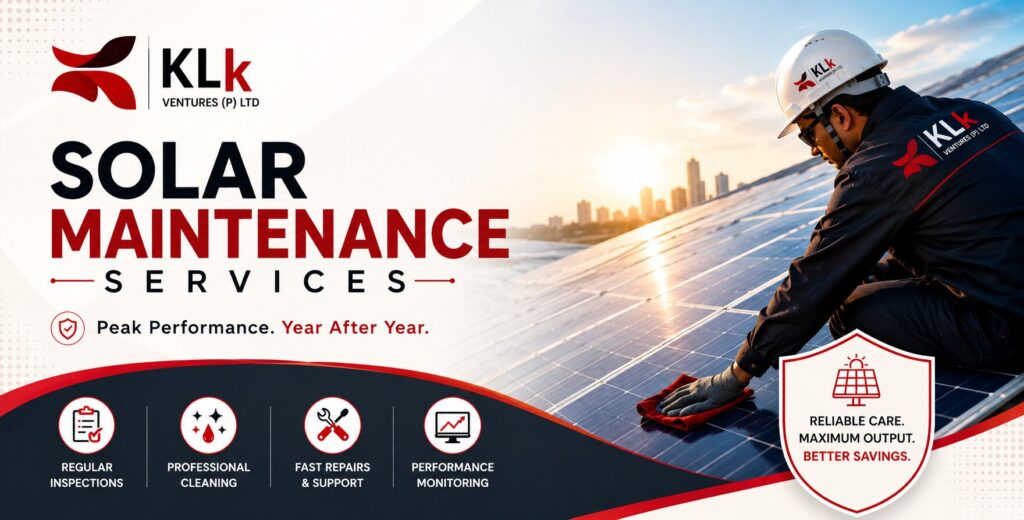
Installing a solar power system is a smart investment that helps reduce electricity bills and supports a greener future. However, installation is only the beginning. To ensure your solar panels continue delivering maximum energy output for years, regular Solar Maintenance Services are essential. Over time, dust accumulation, loose electrical connections, inverter issues, and environmental wear can gradually reduce your system’s performance. These problems often develop silently, causing energy losses that may go unnoticed until your savings begin to decline. At KLK Ventures, we provide comprehensive Solar Maintenance Services designed to keep your residential, commercial, and industrial solar systems operating at peak efficiency throughout their lifespan. Why Solar Maintenance Services Are Important Many solar system owners assume their panels require little to no maintenance. While solar systems are highly reliable, they still need periodic inspections and servicing to maintain optimal performance. Without routine maintenance, you may experience: Reduced energy generation due to dust and debris Lower efficiency from dirty solar panels Inverter performance issues Loose or damaged electrical wiring Increased risk of unexpected system failures Reduced return on investment (ROI) Regular maintenance helps detect these issues early, preventing costly repairs while maximizing your system’s energy production. What Do Professional Solar Maintenance Services Include? A professional Solar Annual Maintenance Contract (AMC) covers much more than basic panel cleaning. It is a complete preventive maintenance program designed to protect every component of your solar installation. 1. Comprehensive System Inspection Our technicians conduct scheduled inspections of: Solar panels Solar inverter DC and AC wiring Mounting structures Earthing system Junction boxes Grid connection Early detection of minor faults prevents major system failures and expensive repairs. 2. Professional Solar Panel Cleaning Dust, pollution, bird droppings, leaves, and other contaminants gradually reduce panel efficiency. Our scheduled cleaning services help: Restore maximum sunlight absorption Improve energy generation Reduce power losses Extend panel lifespan Professional cleaning ensures your solar panels continue operating at their highest efficiency. 3. Fast Repairs and Troubleshooting If any component develops a fault, our technical team provides prompt repair services for: Solar panels Inverters Electrical connections Connectors Mounting hardware Quick response minimizes downtime and helps restore full power generation as soon as possible. 4. Continuous Performance Monitoring Instead of waiting for annual inspections, KLK Ventures continuously monitors your system’s performance to identify abnormalities before they become serious problems. This proactive approach allows us to: Detect efficiency drops Identify inverter faults Monitor energy generation Prevent long-term production losses Benefits of Regular Solar Maintenance Services Routine maintenance offers significant long-term advantages, including: Improved solar panel efficiency Higher electricity generation Lower maintenance costs Extended system lifespan Maximum return on investment Reduced downtime Increased operational reliability Better overall system safety Whether you own a residential rooftop system or a large commercial installation, preventive maintenance ensures consistent performance year after year. Why Choose KLK Ventures for Solar Maintenance Services? KLK Ventures is a trusted Solar EPC Company with more than three decades of engineering expertise. Backed by manufacturing facilities in Noida (Uttar Pradesh) and Bihar, we offer complete solar solutions—from design and installation to long-term maintenance. Manufacturing-Level Technical Expertise Our engineers understand the complete design and construction of solar systems, allowing us to diagnose root causes rather than simply treating symptoms. End-to-End Solar Solutions Unlike third-party maintenance providers, KLK Ventures manages: Solar design Installation Commissioning Energy storage Maintenance Annual Maintenance Contracts This ensures complete accountability for your solar investment. Maintenance for All Solar Systems Our maintenance services cover: Residential rooftop solar systems Commercial solar plants Industrial solar installations Government solar projects On-grid solar systems Off-grid solar systems Hybrid solar systems Solar water pumping systems No matter the system size or configuration, our experts provide customized maintenance solutions. Long-Term AMC Support Our Annual Maintenance Contracts are designed to provide ongoing care rather than one-time servicing. With scheduled inspections, preventive maintenance, and prompt technical support, your solar system continues delivering reliable performance year after year. Signs Your Solar System Needs Maintenance If you notice any of the following, it’s time to schedule professional maintenance: Lower electricity savings Reduced solar generation Dirty solar panels Frequent inverter warnings Unexpected shutdowns Visible wiring damage Loose mounting structures Abnormal monitoring reports Addressing these issues early helps avoid costly repairs and prolonged energy losses. Invest in Long-Term Solar Performance A solar power system is designed to operate for decades—but only with proper care. Professional Solar Maintenance Services help maintain efficiency, reduce downtime, protect critical components, and maximize your return on investment. With KLK Ventures’ expert Annual Maintenance Contracts, your solar system continues performing the way it was designed—from day one through every year ahead. If you want reliable energy production, lower maintenance costs, and peace of mind, investing in professional solar maintenance is the smartest decision you can make. Frequently Asked Questions (FAQs) 1. How often should solar panels be professionally maintained? Most solar systems should be cleaned every 3–6 months, while a complete technical inspection is recommended at least once a year. Areas with heavy dust or pollution may require more frequent servicing. 2. What is included in a Solar Annual Maintenance Contract (AMC)? A Solar AMC typically includes: Solar panel cleaning Inverter inspection Wiring and electrical checks Performance testing Preventive maintenance Fault diagnosis Repair support System monitoring 3. Can poor maintenance reduce my solar savings? Yes. Dust accumulation, inverter issues, loose connections, and unnoticed faults gradually reduce power generation, lowering your electricity savings over time. 4. Does KLK Ventures provide Solar Maintenance Services for residential and commercial systems? Yes. KLK Ventures offers maintenance solutions for: Residential solar systems Commercial installations Industrial solar plants Government projects Institutional solar systems 5. Is maintenance necessary for off-grid solar systems and solar water pumps? Absolutely. Off-grid systems include batteries, charge controllers, and pumps that require regular inspections to ensure reliable operation and prevent unexpected failures.
Solar Systems for Commercial Use: Why Businesses in India Are Making the Switch
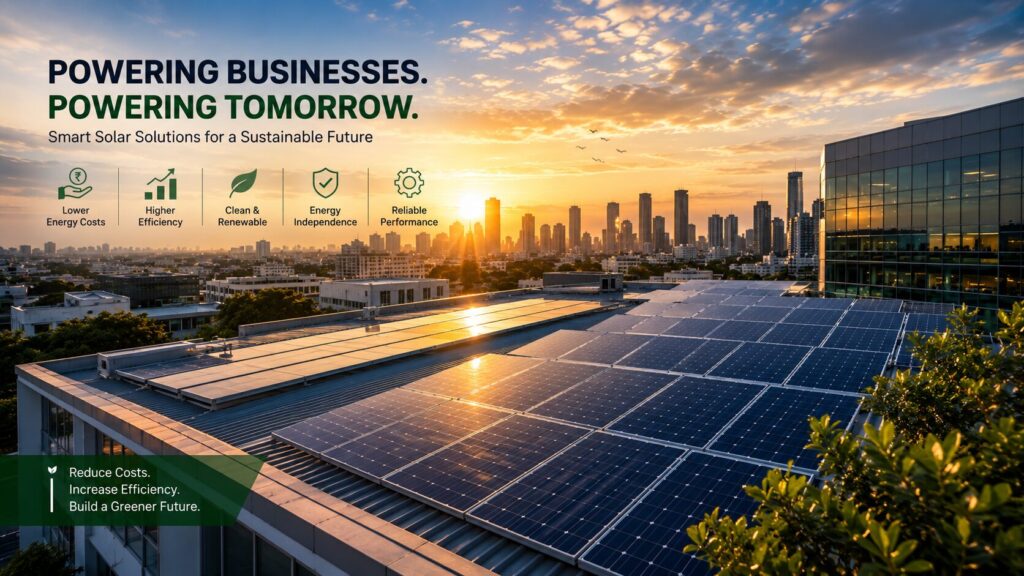
Electricity bills don’t stay flat — they climb every year, and for a business running machinery, HVAC, or long operating hours, that climb hits the bottom line hard. This is exactly why more factories, hotels, hospitals, and offices across India are turning to solar systems for commercial use. Beyond the obvious cost savings, going solar has become a practical, forward-looking decision for any business that wants predictable energy costs and a smaller environmental footprint. At KLK Ventures, a Noida-based company with roots going back over three decades in engineering and manufacturing, this shift toward solar systems for commercial use is something we help businesses navigate every day — from the first energy audit to the final installation. How Solar Systems for Commercial Buildings Actually Work A commercial solar setup isn’t just panels on a roof. It’s a small power plant tailored to your business: Panels capture sunlight and convert it into direct current (DC) electricity. Inverters convert that DC power into usable AC power for lighting, machinery, and equipment. Batteries (optional) store surplus energy for peak hours or outages. Net metering sends any extra power back to the grid, earning credits that lower your bill further. Monitoring tools track performance so maintenance stays minimal and efficiency stays high. The result is a system that draws on a completely natural, renewable resource — sunlight — and turns it into a dependable, everyday power source for your operations. Types of Commercial Solar Systems to Consider Not every business has the same roof space, budget, or power needs, which is why solar systems for commercial use come in a few different formats: Rooftop Solar — the most common choice, using existing roof space efficiently. Grid-Tied Solar — connected to the grid, with net metering credits for surplus generation. Hybrid Solar — solar plus battery storage, useful where outages are frequent. Off-Grid Solar — fully independent systems for locations without reliable grid access. Who Benefits Most Manufacturing units, retail chains and shopping malls, schools and colleges, corporate offices, hotels and resorts, and hospitals are among the businesses seeing the biggest gains from switching to solar. Any operation with high daytime energy use — when solar generation naturally peaks — tends to see the fastest return on investment. The Real Advantages Lower operating costs through reduced electricity expenditure Government incentives, including rebates, grants, and tax benefits for commercial installations Energy independence from grid price hikes and outages Minimal upkeep, since commercial-grade panels typically last 25+ years with low servicing needs A stronger brand image, since sustainability commitments matter to clients, investors, and employees alike Why Businesses Choose KLK Ventures Plenty of vendors will sell you panels. Fewer can carry a commercial project from design through decades of upkeep — which is where KLK Ventures’ three decades of engineering and manufacturing background actually shows up in the details: End-to-End EPC Expertise KLK Ventures handles engineering, procurement, and construction under one roof, so a commercial project doesn’t get split across multiple vendors with conflicting timelines. One team owns the design, the equipment sourcing, and the on-site build. Customized Engineering, Not a Standard Package Every commercial site has a different roof structure, load profile, and shading pattern. Systems are engineered around your actual energy consumption and site conditions, with in-house battery manufacturing giving more flexibility on storage design than a reseller could offer. Experienced Installation Teams Installation is handled by teams who’ve worked across manufacturing plants, hotels, hospitals, and warehouses, not subcontracted out to whoever’s available. That matters for commercial sites, where installation has to work around live operations without disrupting the business. Annual Maintenance Support (AMC) The relationship doesn’t end at commissioning. AMC coverage includes panel cleaning, performance inspection, fault detection, and preventive maintenance, so output stays consistent across the system’s 25+ year lifespan instead of degrading quietly. Key Takeaways Commercial solar systems cut electricity costs while paying for themselves within the panel’s 25+ year lifespan. Rooftop, grid-tied, hybrid, and off-grid are the four main system types — the right one depends on roof space, budget, and outage frequency. Manufacturing units, hotels, hospitals, and retail spaces with high daytime energy use see the fastest returns. Government rebates and tax benefits are available for commercial installations. KLK Ventures offers end-to-end EPC delivery, customized engineering, experienced installation teams, and ongoing AMC support. Frequently Asked Questions 1. How much can a business actually save with a commercial solar system? Savings depend on your current electricity consumption and system size, but most businesses see a meaningful reduction in monthly power bills, with many recovering their investment well within the panel’s 25-year lifespan. 2. Do commercial solar systems work during power outages? A grid-tied system alone won’t provide backup during an outage. For that, a hybrid solar system with battery storage is the better choice, since it keeps critical equipment running when the grid goes down. 3. What government incentives are available for commercial solar in India? Businesses can access rebates, tax benefits, and financing support for commercial solar installations. KLK Ventures assists clients in navigating and applying for these government-backed programs. 4. How much maintenance does a commercial solar system need? Very little. Routine cleaning and periodic performance checks are usually enough to keep a system running efficiently for its full 25+ year lifespan. 5. Is rooftop space always required for a commercial solar system? Rooftop solar is the most common setup, but businesses without adequate roof space can explore ground-mounted or off-grid alternatives depending on land availability. Conclusion Solar systems for commercial use are no longer a niche upgrade — they’re becoming a standard part of how efficient businesses manage energy costs and environmental responsibility. Whether you run a factory, a hotel, or a corporate office, a well-designed solar system pays for itself while reducing your dependence on an increasingly expensive grid. KLK Ventures brings over 30 years of engineering expertise to every installation, helping businesses across India make that switch with confidence. Ready to explore your options? Talk to KLK Ventures about a commercial solar system built around
Solar Panel Installation: A Complete Guide for Indian Homes and Businesses
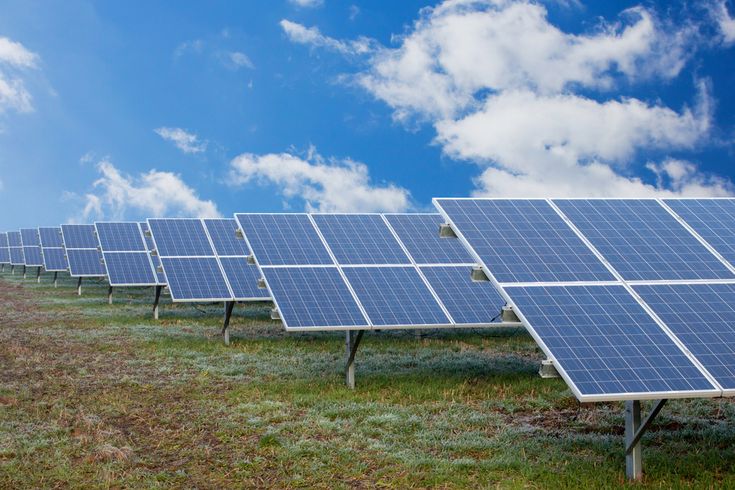
Your electricity bill isn’t going to get smaller on its own. Tariffs are rising almost every year, and every unit you pull from the grid costs a little more than it did last summer. Solar panel installation is one of the few home upgrades that actually pays you back—month after month, for the next 25 years. But the difference between a solar system that quietly cuts your bills for two decades and one that underperforms within a year comes down to exactly one thing: how it’s installed. At KLK Ventures, we’ve spent over 30 years building things that last—starting as K.L. Khanna Gears Industries, manufacturing heavy industrial gears, and evolving into one of the trusted solar companies in India. This guide walks you through exactly what a proper installation looks like, so you know what to expect and what to demand from your installer. What Solar Panel Installation Actually Involves Installation isn’t simply about bolting panels to the roof and walking away. A professional solar installation includes: Site assessment Structural engineering Panel mounting Inverter integration Electrical wiring Safety testing Grid or battery connection Skipping any one of these steps can reduce system performance—or even damage your roof. A reliable solar power company in India manages every stage under one roof, ensuring nothing falls through the cracks. The Solar Panel Installation Process (Step by Step) 1. Site Survey and Load Assessment An engineer evaluates: Roof strength Shadow-free installation area Previous 12 months of electricity bills This determines the correct system size. If the sizing is wrong, the entire system suffers. 2. System Design The installer designs your system based on: Number of solar panels Inverter capacity Wiring layout Mounting angle Regional sunlight conditions Every design should be customized for your property—not copied from another installation. 3. Approvals and Net Metering Your installer submits the required applications to your local DISCOM for net metering. This allows surplus electricity generated by your solar system to be exported to the grid, earning energy credits. 4. Mounting and Wiring The installation team: Mounts panels at the optimal tilt angle Installs the inverter Completes code-compliant electrical wiring Proper installation during this stage has the biggest impact on long-term performance. 5. Testing and Commissioning Before activation, the system undergoes: Electrical safety testing Performance verification Final commissioning This ensures the system is not just installed—but installed correctly. 6. Maintenance That Protects Performance Dust accumulation alone can reduce solar efficiency by 15–25%. To maintain optimal performance: Clean panels every 15–20 days Schedule one professional inspection annually Small maintenance habits protect a long-term investment. Why Your Installer Matters More Than the Solar Panel Brand Many solar problems begin with poor installation rather than poor equipment. An experienced solar company in India provides: System sizing based on actual electricity consumption Certified components with manufacturer warranties Compliance with electrical and safety regulations Accurate net metering documentation Reliable long-term after-sales support Choose an installer that will still support your system years after installation. Choose the Right Solar System System Type Best For Battery Required On-Grid Urban homes with reliable grid supply No Off-Grid Remote areas with frequent power cuts Yes Hybrid Homes needing backup power and bill savings Yes Explore KLK Ventures’ on-grid and off-grid solutions to determine the best option for your property. Solar Installation Cost and Return on Investment The total installation cost depends on: System capacity Solar panel quality Roof structure Battery requirements Government subsidy programs under the Ministry of New and Renewable Energy (MNRE) can significantly reduce the upfront investment. For a detailed cost breakdown, refer to our guide on Solar Panel Installation Cost in India, including expected payback periods for different household sizes. The Bottom Line A solar system is only as good as the people who install it. Every shortcut taken during installation eventually appears as: Lower electricity savings Reduced panel lifespan Roof damage Increased maintenance costs Carry out a proper load assessment, choose certified components, and partner with a trusted solar power company in India that provides long-term support—not just installation. Ready to switch to solar? Talk to KLK Ventures for a professional site assessment and a solar solution designed around the way you actually use electricity. Frequently Asked Questions 1. How long does solar panel installation take? A typical residential installation takes 3–7 days once approvals are in place, depending on system size and roof complexity. 2. Do I need government approval to install solar panels? Yes. Grid-connected systems require net metering approval from your local electricity distribution company (DISCOM). 3. What roof type is best for solar panels? Flat concrete (RCC) roofs are the easiest to work with, but sloped and metal roofs can also be fitted using the right mounting structures. 4. Can solar panels be installed on old buildings? Yes, as long as a structural inspection confirms the roof can safely bear the added load. Page 2 of 35 5. How much maintenance does a solar system need after installation? Very little — cleaning every 15–20 days plus one annual inspection is usually enough to keep output steady. 6. Is it better to go with a local solar company in India or an international brand? A local, established solar company in India usually means faster service response, simpler warranty claims, and installers who already know the local grid and subsidy rules inside out.