
Top 4 Types of Earthing Systems in India.
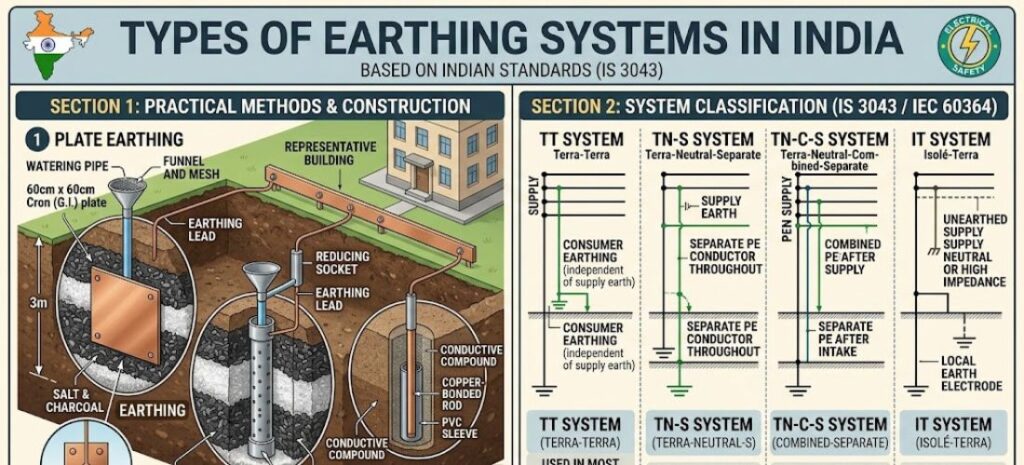
When people search for types of earthing, they usually want a clear answer to one simple question: Which earthing system is actually safe and long-lasting for their building? In India, choosing the right earthing system is not just a technical decision; it directly affects safety, equipment life, and maintenance costs. In the next few sections, you’ll understand the types of earthing system, how they work, and which one makes the most sense for your needs. Why the Importance of Earthing Cannot Be Ignored Whether you are building a house, running a factory, or managing a hospital, electrical earthing is the backbone of safety. Every electrical system produces fault current. This can happen due to: Short circuits Insulation failure Lightning strikes If this current doesn’t get a safe path into the ground, it can lead to: Electric shocks (dangerous for human life) Damage to expensive machines Fire hazards That’s why a low-resistance earthing system is not optional; it is essential. But here’s the real problem: Many buildings in India still use outdated earthing methods installed years ago without maintenance. Over time, these systems stop working effectively. So the question is, which earthing type should you trust today? What Are the 4 Types of Earthing Systems? If you’re wondering how many types of earthing exist, the most commonly used types of earthing systems in India are the following: Marconite Earthing Pipe Earthing Plate Earthing Chemical Earthing These are the main earthing system types used across residential, commercial, and industrial projects. Quick Comparison Table of Earthing System Types Earthing Type Maintenance Level Lifespan Performance Stability Suitable For Marconite Earthing Very Low 40–50+ years Very High All soil types, industries Pipe Earthing High 5–10 years Medium Homes (basic use) Plate Earthing Medium 10–15 years Medium Open spaces Chemical Earthing High 5–8 years Low to Medium Poor soil conditions 1. Marconite Earthing – Modern and Reliable Earthing System What Is Marconite Earthing? Marconite earthing is an advanced earthing system type that uses a special conductive compound instead of traditional materials like charcoal or salt. It creates a permanent low-resistance path for fault current. How It Works A copper electrode is installed Marconite compound is filled around it The compound hardens and forms a strong conductive layer Unlike traditional systems, it does not depend on moisture. Benefits of Marconite Earthing Works in all soil types (rocky, dry, sandy) No water or chemical refilling required Long life (up to 50 years) Stable performance in all seasons No corrosion issues Practical Insight In many industrial setups where machines fail due to voltage fluctuations, switching to Marconite earthing has reduced breakdowns significantly. It is especially useful where downtime is costly. Visit us: solar water pumping system 2. Pipe Earthing – Common but Maintenance-Heavy What Is Pipe Earthing? Pipe earthing is one of the most widely used types of earthing system in Indian homes. It uses: A GI or copper pipe Buried vertically in the ground Surrounded by salt and charcoal Advantages Low initial cost Easy to install Commonly used in residential buildings Disadvantages Rusting over time Performance depends on soil moisture Requires regular maintenance Risk of current leakage Real-Life Tip Many homeowners install pipe earthing once and forget about it. After 4–5 years, the system often stops working due to corrosion, but people don’t realize it until a problem occurs. 3. Plate Earthing – Traditional but Space-Consuming What Is Plate Earthing? In this earthing type, a copper or GI plate is buried deep in the ground. Installation Process The plate is placed 3 meters deep Surrounded by charcoal and salt Connected to electrical system Advantages Better contact area than pipe earthing Stable in moderate soil conditions Disadvantages Requires large space Digging is labor-intensive Not suitable for urban areas Can corrode over time Practical Insight Plate earthing is still used in some government and old infrastructure projects, but in cities, it is becoming less practical due to space issues. Read More: solar system guide 4. Chemical Earthing – Used in Difficult Soil Conditions What Is Chemical Earthing? Chemical earthing improves conductivity by adding chemicals around the electrode. Advantages Works in high-resistance soil Better than basic pipe earthing in dry areas Disadvantages Requires frequent chemical refilling Expensive maintenance Environmental concerns Risk of corrosion Real Insight In some commercial projects, chemical earthing is chosen initially for performance, but long-term costs become high due to maintenance. Other Types of Earthing Systems (Additional Knowledge) Apart from the main four, there are a few other types of earthing systems: Rod Earthing Uses a metal rod driven into the ground Quick installation Best for moist soil Strip Earthing Uses metal strips buried horizontally Ideal for large industrial areas Water Pipe Earthing Uses metal water pipes Outdated and unsafe method How to Choose the Right Earthing System for Your Building Choosing the right type of earthing system depends on: 1. Soil Condition Dry or rocky soil → Advanced earthing (like Marconite) Moist soil → Pipe or rod earthing may work 2. Type of Building Home → Pipe or advanced earthing Factory → High-performance system required Hospital → Highly reliable earthing essential 3. Maintenance Capability If you don’t want regular maintenance → Avoid chemical or pipe earthing 4. Budget vs Long-Term Cost Low initial cost ≠ low lifetime cost Common Mistakes People Make While Choosing Earthing Choosing cheapest option without thinking long-term Ignoring soil testing Not checking earthing resistance regularly Using outdated systems without upgrades Simple Tips to Improve Earthing Performance Always test earth resistance annually Use quality earthing metal like copper Avoid mixing different metals Ensure proper installation depth Hire experienced professionals Advantages and Disadvantages of Different Earthing Types Advantages Protects human life Prevents equipment damage Reduces fire risk Disadvantages (if poorly installed) System failure Increased maintenance Safety hazards Final Thoughts – Which Earthing System Is Best? If you compare all earthing system types, modern solutions clearly perform better than traditional ones. Pipe and plate earthing are affordable but need maintenance Chemical earthing works but increases long-term costs Advanced earthing systems offer reliability and durability For buildings where safety,
How Much Can You Actually Save on Solar Power for Your Home?
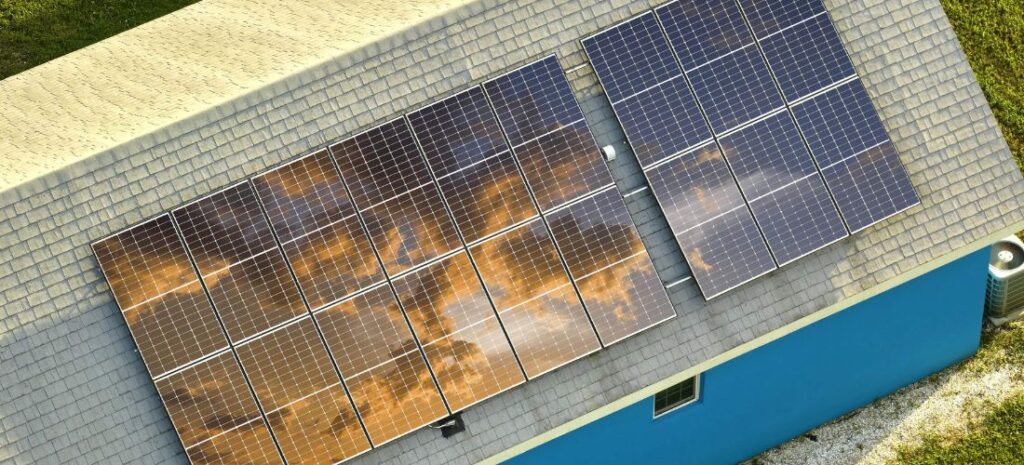
Electricity bills in India are not getting cheaper. In fact, the home solar energy cost is becoming more attractive every year as power tariffs continue to rise by around 4-5% annually. If you’ve been thinking about switching to solar, the big question is simple: how much can you really save? In this guide by KLK Ventures, we’ll break down real numbers, practical insights, and long-term savings so you can clearly understand whether solar is worth your investment. Why Solar Power Is Gaining Popularity in India India is seeing a massive shift toward solar energy. Here’s why: Rising electricity tariffs across states Frequent power cuts in some regions Government subsidies reducing installation costs Growing awareness of clean energy Today, many homeowners are exploring solar electricity for home in India as a way to cut costs and gain energy independence. Understanding Solar Power Costs in India Before calculating savings, it’s important to understand the solar power costs involved. 1. Initial Investment The biggest cost is upfront installation. This includes: Solar panels Inverter Mounting structure Wiring and installation Here’s a simple breakdown: System Size Average Cost Before Subsidy Cost After Subsidy 1 kW ₹70,000 – ₹90,000 ₹45,000 – ₹60,000 3 kW ₹2.1 – ₹2.9 lakh ₹1.5 – ₹1.8 lakh 5 kW ₹3.5 – ₹5 lakh ₹2.5 – ₹3.5 lakh 10 kW ₹6 – ₹8 lakh ₹5 – ₹6.5 lakh These numbers represent average solar panel and cost estimates in India. 2. Cost Per Unit (kWh) The solar electricity cost per kWh is much lower than grid electricity over time. Grid electricity: ₹6–₹10 per unit Solar electricity: ₹2–₹3 per unit (lifetime average) This is why solar becomes cheaper in the long run. 3. Maintenance Cost Solar systems are low maintenance: Cleaning panels: Once or twice a month Annual maintenance: ₹2,000–₹5,000 (approx.) How Solar Panels Generate Savings Solar panels reduce or eliminate your monthly electricity bill. Key Savings Factors: System size Electricity usage Local tariff rates Sunlight availability On average: 1 kW system generates 1,300–1,500 units/year This directly offsets your electricity consumption Real Savings Breakdown for Different Users Let’s understand savings in real-life scenarios. Urban Home (3 kW Solar System) A typical city household consumes moderate electricity. Detail Estimate Value Upfront cost after subsidy ₹1.5 – ₹1.8 lakh Monthly bill (before solar) ₹2,500 Annual electricity cost ₹30,000 Annual tariff increase 4% Year 1 savings ₹30,000 Year 10 savings ₹44,000 Year 25 savings ₹80,000 Total 25-year savings ₹14 – ₹16 lakh Payback period 5–6 years After payback, electricity is almost free for 20 years. Small Business (10 kW Solar System) Businesses benefit even more due to higher consumption. Detail Estimate Value Upfront cost after subsidy ₹5.5 – ₹6 lakh Monthly bill ₹15,000 Annual cost ₹1.8 lakh Tariff increase 4–5% Year 1 savings ₹1.8 lakh Year 10 savings ₹2.6 lakh Year 25 savings ₹4.8 lakh Total savings ₹60 – ₹70 lakh Payback 4–5 years Rural Home or Farm (5 kW System) In rural areas, solar reduces dependency on diesel and unreliable supply. Detail Estimate Value Upfront cost after subsidy ₹3 – ₹3.5 lakh Monthly cost before solar ₹5,000–₹6,000 Annual cost ₹60,000–₹72,000 Cost increase 5% Year 1 savings ₹65,000 Year 10 savings ₹95,000 Year 25 savings ₹2 lakh Total savings ₹25 – ₹30 lakh Payback 5–6 years What Affects Solar Energy Cost in India? The solar energy cost in India is not fixed. It depends on several factors: 1. Location More sunlight = more savings North India gets good solar output 2. Roof Type Flat roofs are easier to install Shade reduces efficiency 3. System Type On-grid (cheapest) Off-grid (includes battery, expensive) Hybrid systems 4. Panel Quality Higher efficiency panels cost more but perform better 5. Government Subsidy Can reduce cost by up to 40% Solar PV Panels Cost: Is It Worth It? The solar PV panel cost makes up around 50–60% of the system price. Higher quality panels: Last 25+ years Maintain efficiency over time Provide better ROI Cheap panels may reduce upfront cost but increase long-term losses. Read More: 1 mw solar power plant How Long Does It Take to Recover the Cost? This is called the payback period. Typical payback in India: Residential: 5–7 years Commercial: 3–5 years After that: Free electricity Protection from tariff hikes Increased property value Long-Term Savings: 25-Year Perspective Let’s simplify: Without solar: You keep paying rising bills With solar: You pay once, then save Over 25 years: Average home saves: ₹10–₹20 lakh Businesses save: ₹50 lakh+ This makes solar one of the best long-term investments. Additional Benefits Beyond Savings 1. Protection from Rising Electricity Costs Electricity prices increase every year. Solar locks your energy cost. 2. Environment-Friendly Solar reduces carbon footprint significantly. 3. Energy Independence Less dependence on power cuts and grid failures. 4. Government Support Schemes like rooftop solar subsidy make it easier to adopt. Common Mistakes People Make Avoid these if you want maximum savings: Choosing cheapest installer Ignoring maintenance Installing wrong system size Not checking warranty Practical Tips Before Installing Solar Here are some real-world tips from experience: Always do a proper load calculation Choose Tier-1 solar panels Check inverter warranty (minimum 5 years) Ensure proper net metering setup Compare at least 2–3 vendors Is Solar Right for You? Solar is ideal if: Your electricity bill is above ₹1,500/month You have rooftop space You plan to stay long-term in the property It may not be ideal if: You live in a rented house Your roof gets heavy shade Final Thoughts: Is Solar Worth the Cost? Yes, for most homeowners and businesses in India, solar is a smart investment. While the solar power for your home cost may seem high initially, the long-term savings are significant. Over time, solar doesn’t just pay for itself-it generates value. With rising electricity prices and government incentives, the shift to solar is no longer just an eco-friendly choice: it’s a financial decision. About KLK Ventures KLK Ventures focuses on helping homeowners and businesses transition to solar with the right guidance, quality systems, and long-term value. Choosing the right partner ensures you don’t