
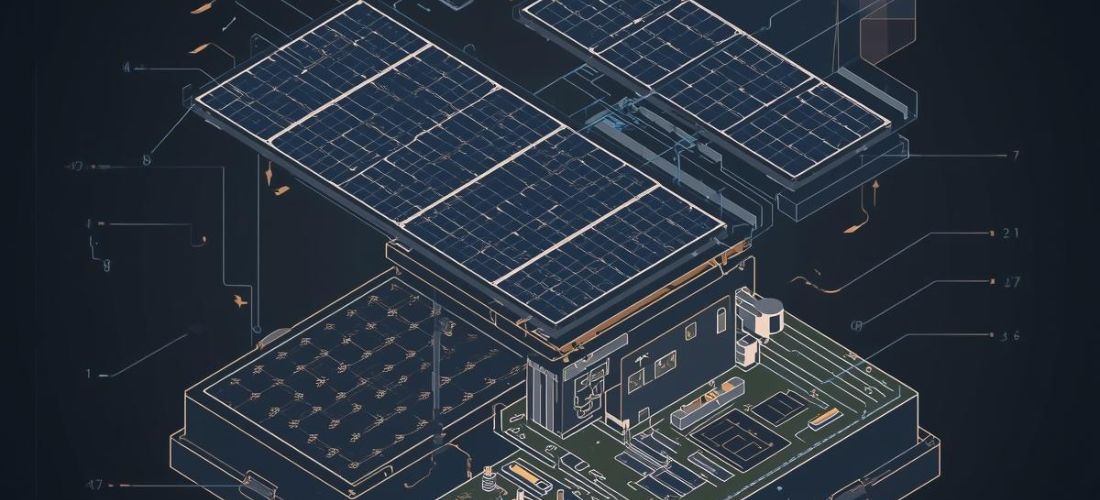
Solar Structure plays a crucial role in how well a solar power system performs over its lifetime. Solar panels generate maximum electricity only when they are placed at the right angle, direction, and height. That is why a strong and well-designed solar panel structure is just as important as the panels themselves.
Solar panels perform best when exposed to direct sunlight. In India, this usually means mounting modules facing south at an optimal tilt angle. This is where solar structures come in-they support, protect, and position solar panels so that energy generation remains high, stable, and safe for years.
What Is a Solar Panel Structure?
A solar panel structure (also called a solar mounting structure) is the framework that holds solar panels in place. It ensures panels stay fixed at the correct angle and orientation while facing different weather conditions like wind, rain, heat, and dust.
In simple words, if solar panels are the heart of a solar system, the solar structure is the backbone.
A good solar structure helps:
- Maximize sunlight exposure
- Improve power generation
- Increase system life
- Protect panels from damage
Solar structures are used in:
- Rooftop solar systems
- Ground-mounted solar plants
- Solar carports
- Solar tracking and solar water pumping systems
Why Solar Structures Are So Important
Many people focus only on solar panels and inverters, but the structure directly affects performance. A weak or poorly designed structure can reduce generation, cause panel damage, or increase maintenance costs.
Key reasons solar structures matter:
- They maintain the correct tilt and direction
- They handle wind load and extreme weather
- They keep panels ventilated to avoid overheating
- They support long-term durability of the system
In India, solar projects use different mounting designs based on location, roof type, land availability, and budget.
Factors to Consider Before Choosing a Solar Structure
Before selecting a solar panel structure, it is important to understand your site conditions and energy goals.
Ask yourself:
- Is the installation on a roof or on the ground?
- How much space is available?
- Is there any shading from trees or buildings?
- Do you plan to expand the system in the future?
- Is appearance important for you?
- Will the structure face strong winds or heavy rain?
The right answers help you choose the most suitable solar structure.
Types of Solar Structures
There are five main types of solar panel mounting structures commonly used in India:
- RCC Roof Mounting Structure
- Ground Mounting Structure
- Solar Carport Structure
- Shed Mounting Structure
- Tracking System Mounting Structure
Let’s understand each type in detail.
1. RCC Roof Mounting Structure
RCC stands for Reinforced Cement Concrete. These solar structures are installed on flat concrete rooftops of homes, offices, hospitals, schools, and commercial buildings.
This is one of the most common solar panel structures in residential and commercial rooftop projects.
How It Works
- Panels are mounted on metal frames fixed to the RCC roof
- Panels are tilted to face south for better sunlight
- The structure is anchored using bolts or ballast
Benefits
- Lower installation cost compared to other types
- Easy to inspect and maintain
- Uses unused rooftop space efficiently
- Shorter cable length reduces power loss
Limitations
- Roof penetration is required
- Poor sealing can lead to roof leakage
- Roof must be shadow-free
- Expansion is limited by roof size
RCC roof mounts are ideal when your building has enough open roof space and strong structural support.
2. Ground Mounting Structure
Ground-mounted solar structures are installed directly on the land using concrete foundations or pile-driven supports. These are widely used in utility-scale and large commercial solar plants.
How It Works
- Solar panels are fixed on frames anchored to the ground
- Tilt angle can be adjusted more freely
- Space between rows avoids shadowing
Benefits
- Higher energy generation potential
- Suitable for large capacities
- Easy to clean and maintain
- Ideal for solar tracking and solar water pumping systems
Limitations
- Requires large shadow-free land
- Higher installation cost
- Risk of vandalism if area is not secure
- Dirt and dust accumulation under panels
Ground mounting structures are best when rooftop space is limited or when high-capacity systems are needed.
3. Solar Carport Structure
Solar carports are elevated solar structures built over parking areas. They serve two purposes—energy generation and vehicle shading.
These solar panel structures are becoming popular in malls, offices, hospitals, airports, and housing societies.
How It Works
- Panels are mounted on tall steel or aluminum frames
- Vehicles park under the structure
- Optional EV charging can be integrated
Benefits
- Uses underutilized parking space
- Provides shade and weather protection for vehicles
- Generates clean electricity
- Improves the visual appeal of the area
Limitations
- Needs open parking space
- Slightly higher cost than ground mounts
Solar carports are an excellent solution where land is limited but parking space is available.
4. Shed Mounting Structure
Shed mounting structures are used on metal or sheet roofs, commonly found in factories, warehouses, workshops, and industrial units.
How It Works
- Panels are mounted on metal sheds using clamps
- Special care is taken to maintain airflow
- Lightweight structures are used
Benefits
- Low installation cost
- Makes use of large industrial roofs
- Easy maintenance
- Helps businesses reduce electricity bills
Limitations
- Power output depends on roof orientation
- Poor ventilation can cause panel heating
- Roof must be strong enough
Proper spacing between panels and the shed roof is very important to avoid heat buildup.
5. Tracking System Mounting Structure
Tracking system mounting structures are used in solar tracking and solar water pumping systems. These structures move panels automatically to follow the sun throughout the day.
Types of Solar Trackers
- Single-axis tracker: Moves east to west
- Dual-axis tracker: Tracks daily and seasonal sun movement
Benefits
- Maximizes energy generation
- Better performance during peak sunlight hours
- Ideal for limited space installations
Limitations
- High installation cost
- Moving parts increase maintenance
- Complex system design
Tracking structures are mostly used in large projects where higher generation justifies the cost.
Simple Comparison Table of Solar Structures
| Solar Structure Type | Best For | Cost Level | Maintenance | Space Requirement |
|---|---|---|---|---|
| RCC Roof Mount | Homes & offices | Low | Low | Limited |
| Ground Mount | Large plants | High | Medium | High |
| Solar Carport | Parking areas | Medium | Low | Medium |
| Shed Mount | Factories | Low | Low | Medium |
| Tracking Structure | High output systems | High | High | Medium |
Materials Used in Solar Panel Structures
Most solar structures are made from:
- Galvanized iron (GI)
- Aluminum
- Stainless steel
Key features of good materials:
- Corrosion resistance
- High strength
- Long lifespan
- Low maintenance
In coastal or high-humidity areas, corrosion-resistant materials are especially important.
How Solar Structures Affect System Performance
A well-designed solar panel structure:
- Keeps panels cool by allowing airflow
- Prevents panel damage during storms
- Maintains correct tilt angle year-round
- Reduces power losses
Even the best solar panels cannot perform well if the structure is weak or poorly aligned.
Installation and Safety Considerations
During installation, ensure:
- Proper load calculation
- Strong anchoring
- Wind speed compliance
- Earthquake safety (where required)
- Quality fasteners and bolts
Professional design and installation reduce long-term risks.
Cost of Solar Structures
The cost of a solar structure depends on:
- Type of structure
- Material used
- Location
- Wind load requirements
- Project size
Disclaimer:
Basic standard price is not specific. Price kuch bhi ho sakta hai. Actual cost depends on site conditions, material quality, and project size.
How to Choose the Right Solar Structure
To choose the best solar panel structure, think about:
- Available space
- Required solar capacity
- Budget
- Maintenance capability
- Future expansion plans
- Aesthetic preference
Matching these factors with the right structure ensures better returns and long-term reliability.
Conclusion
Solar structures are a critical part of any solar power system. Whether it is a rooftop, ground-mounted plant, solar carport, or tracking system, the right solar structure improves efficiency, safety, and lifespan.
Each type has its own advantages and limitations. There is no one-size-fits-all solution. The best solar structure is the one that fits your site conditions, energy goals, and budget.
By understanding different solar panel structures and their benefits, you can make a smarter and more confident decision for your solar project.
