
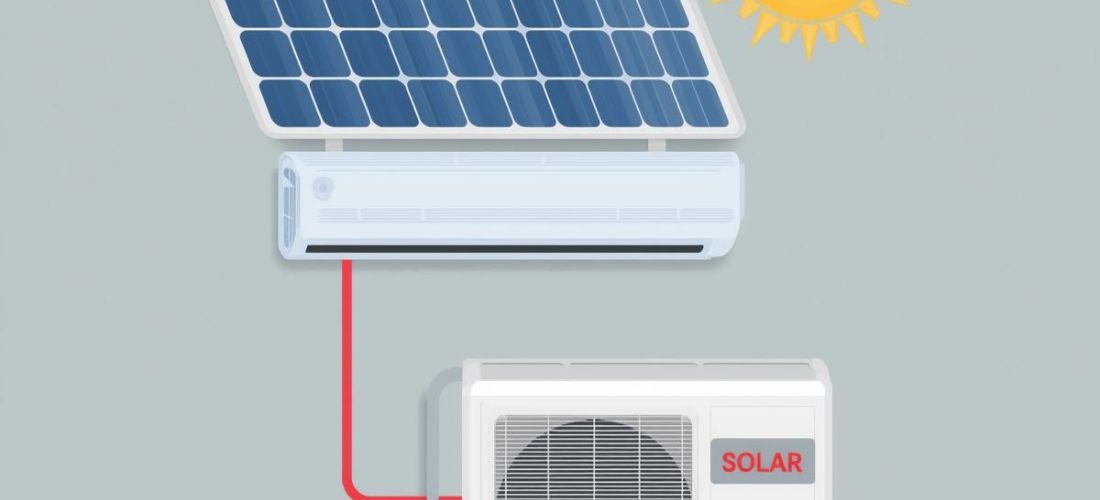
Solar panels are no longer just for lighting homes or running fans. With rising electricity bills and extreme summers, many Indian households are now asking a practical question: Can solar energy run an air conditioner?
The short answer is yes, solar panels can run AC in India if the system is designed correctly.
India receives abundant sunlight for most of the year, which makes solar energy a strong and reliable option for powering heavy appliances like air conditioners. In this guide, we’ll explain everything clearly-how it works, how much it costs, how many panels you need, and whether it’s worth it for your home.
Why More Indians Want to Run AC on Solar Energy
Indian summers are getting hotter every year. In many cities, ACs now run for 8-10 hours daily. This leads to:
- Very high electricity bills
- Heavy load on the power grid
- Frequent power cuts in peak summer
- Increased carbon footprint
Solar energy offers a practical solution. Once installed, solar panels generate electricity from sunlight, reducing your dependence on the grid and cutting monthly bills.
From my experience working with residential solar projects, most homeowners don’t want to go fully “off-grid.” Instead, they want solar panels to handle AC load during the day and reduce night-time consumption. This is both practical and cost-effective.
Can Solar Panels Really Run an Air Conditioner?
Yes, solar panels can run an AC, but not directly in most homes. An air conditioner needs:
- High starting power (surge load)
- Continuous running power
- Stable voltage
A proper solar AC system uses:
- Solar panels
- An inverter (usually hybrid)
- Batteries (optional but recommended)
- Grid connection (in most cases)
When designed correctly, solar energy can run your AC smoothly without damaging the appliance.
Understanding AC Power Consumption in Simple Terms
Before choosing solar panels, you must understand how much power your AC consumes.
AC Power Demand Basics
- Startup Power: High power needed when AC compressor starts
- Running Power: Power used once AC is running normally
- Daily Units (kWh): Total electricity used per day
Common AC Types & Power Consumption
| AC Type | Startup Surge (Watts) | Running Power (Watts) | Daily Usage (8 Hours) |
|---|---|---|---|
| Window AC (1 Ton) | 2,000 – 2,500 W | 900 – 1,200 W | 7 – 9 units |
| Split AC (1.5 Ton) | 2,800 – 3,500 W | 1,400 – 1,800 W | 10 – 14 units |
| Inverter AC (1.5 Ton) | 2,000 – 2,500 W | 1,000 – 1,300 W | 8 – 10 units |
| Central AC (3 Ton) | 7,000 – 8,000 W | 3,000 – 3,500 W | 25 – 30 units |
Inverter ACs are best for solar energy because they consume less power and handle fluctuations better.
How Solar Energy Matches AC Power Needs
Solar panels generate electricity only during daylight hours. That’s why system design matters.
Key Rule (Industry Standard)
To run an AC reliably:
- Solar system size should be 125%-150% of AC running load
- This covers power losses, heat, and inverter efficiency
For example:
- 1.5-ton AC (1.5 kW running load)
- Required solar panel capacity: 2 kW – 2.5 kW
How Many Solar Panels Are Needed to Run an AC?
There is no fixed number. It depends on:
- AC size
- Usage hours
- Location (sunlight availability)
- Panel wattage
Simple Calculation Method
- Check AC running watts
- Multiply by usage hours
- Divide by average sun hours (India: 4–5 hours)
Typical Solar Panel Requirements
| AC Type | Solar Capacity Needed | No. of Panels (400W) |
|---|---|---|
| 1 Ton AC | 1.5 – 2 kW | 4 – 5 panels |
| 1.5 Ton AC | 2 – 3 kW | 5 – 7 panels |
| 2 Ton AC | 3 – 4 kW | 8 – 10 panels |
| 3 Ton AC | 6 – 8 kW | 15 – 20 panels |
Rule of Thumb:
For every 1 ton of AC, plan 1–1.2 kW of solar panels.
Key Components Required to Run AC on Solar Panels
1. Solar Panels
Solar panels convert sunlight into electricity.
Best choice for AC systems:
- Monocrystalline panels
- 400W or higher
- Efficiency above 20%
These panels generate more power in less space, which is important for rooftops.
2. Solar Inverter
The inverter converts DC power from solar panels into AC power for your air conditioner.
Recommended inverter type:
- Hybrid inverter (solar + grid + battery)
- High surge capacity (2x AC startup load)
From real installations, I’ve seen AC failures mostly caused by low-quality or undersized inverters. Never compromise here.
3. Battery
Batteries store excess solar energy for:
- Night use
- Cloudy days
- Power cuts
If you want AC at night, batteries are necessary.
Preferred battery type:
- Lithium-ion (longer life, faster charging)
- Minimum 5–10 kWh per AC
4. Net Metering (Grid Support)
With net metering:
- Extra solar energy is exported to the grid
- You get credit units
- AC can run on grid at night
This reduces battery cost and improves ROI.
Cost of Running an AC on Solar Panels in India
Cost depends on:
- System size
- Battery choice
- Panel brand
- Installation quality
Estimated Cost Table (India)
| System Type | Approximate Cost | Payback Period |
|---|---|---|
| 1.5 Ton AC (2.5 kW solar, no battery) | ₹1.5 – ₹2.2 lakh | 4–6 years |
| 1.5 Ton AC (2.5 kW + battery) | ₹3 – ₹4.5 lakh | 6–8 years |
| 3 Ton AC (8 kW hybrid system) | ₹7 – ₹10 lakh | 7–10 years |
| Grid-tied solar (AC + home load) | ₹2 – ₹5 lakh | 4–6 years |
Government Subsidy & Benefits
The Indian government supports rooftop solar through:
- Central Financial Assistance (CFA)
- State-level subsidies
- Net metering policies
Subsidies mainly apply to grid-connected systems, not battery setups.
This can reduce upfront cost by 20–30% in many states.
Installation Tips
- South-facing roof gives best output
- Tilt angle: 15°–30°
- Avoid shade at all costs
- Use proper earthing and surge protection
- Install AC soft-starter for compressor safety
A poorly installed system performs 20–25% worse, even with good panels.
Is Your Home Suitable for Solar AC?
Ideal Conditions
- Minimum 100–150 sq. ft. roof space per AC
- 4+ hours of sunlight daily
- High electricity bill
- Inverter or split AC
Challenging Conditions
- Shaded roofs
- Old wiring
- Limited terrace space
In such cases, high-efficiency panels or partial solar support works better.
Advantages of Running AC on Solar Energy
- Huge electricity bill savings
- Protection from tariff hikes
- Lower carbon footprint
- Increased property value
- Reliable power during peak summer
Limitations You Should Know
- High initial cost
- Battery replacement after 8–10 years
- Requires proper design
- Not fully independent without batteries
Final Verdict: Are Solar Panels Worth It for AC in India?
Yes, solar panels can efficiently run AC in India and are absolutely worth it if:
- Your AC usage is high
- You live in a sunny region
- You want long-term savings
With the right system design, solar energy doesn’t just reduce bills—it gives peace of mind during peak summers.
Disclaimer
The prices mentioned above are basic and standard estimates based on common market trends. Actual costs may vary depending on location, brand, system design, installation quality, and policy changes. Please consult a certified solar installer for exact pricing.
FAQs
1. Can solar panels run an air conditioner completely?
Yes, with proper system sizing, inverter, and optional battery support, solar panels can fully run an AC.
2. How many solar panels are needed for a 1.5 ton AC?
Typically 5–7 solar panels of 400W each are required.
3. Is battery mandatory to run AC on solar?
No, batteries are optional if you use grid-connected solar. They are needed for night or backup use.
4. Is solar AC system safe for appliances?
Yes, when installed correctly with a good inverter and protection devices.
5. Which AC is best for solar energy?
Inverter ACs are best because they consume less power and handle voltage fluctuations better.
