
what-is-renewable-energy
What Is Renewable Energy? Home Blogs Every time we switch on a fan, charge our phone, or heat water, we’re using electricity. But where does this energy come from? In many places, it still comes from burning coal or oil — things that can harm our environment. Thankfully, there’s another way: renewable energy. Renewable energy comes from natural sources that don’t run out — like the sun, wind, and water. In this blog, we’ll explain what renewable energy is in a simple way, why it matters, and how it’s changing the way the world makes power. What Does “Renewable” Actually Mean? “Renewable” means it keeps coming back. When we say renewable energy, we mean energy from sources that naturally renew themselves. The sun rises every day, rivers keep flowing, and the wind keeps blowing. These sources don’t get used up, even if we use their energy every day. Compare that to fossil fuels like coal, gas, and oil — which take millions of years to form and will run out one day. They also create pollution. Renewable sources are the opposite — they’re clean and unlimited. Types of Renewable Energy Here are some of the most common types of renewable energy used around the world: 1. Solar PowerSolar panels catch sunlight and turn it into electricity.Commonly used on rooftops of homes, offices, and schools.Also used to heat water or run streetlights.2. Wind EnergyWind turns large blades on windmills or turbines.These spinning blades generate power.Found in open fields, hills, and coastal areas where wind is strong.3. Hydropower (Water Energy)Uses flowing rivers or water stored in dams.The movement of water turns turbines to create electricity.Used a lot in hilly regions with strong river flow.4. Biomass EnergyComes from natural waste like wood, crop leftovers, or animal waste.Burned or converted into gas for power.Used in rural areas and even some factories.5. Geothermal EnergyUses heat from deep inside the Earth.Used for heating buildings or making electricity.Works best in volcanic or rocky region Why Renewable Energy Matters So Much Here’s why we should care about renewable energy: Cleaner air and water – It doesn’t release harmful smoke or chemicals. Doesn’t run out – We won’t wake up one day with no sun or wind. Protects nature – Less damage to land and wildlife. Fights global warming – Reduces carbon dioxide that causes climate change. New job opportunities – From solar panel makers to wind farm technicians. The switch to clean energy is good for our health, economy, and environment. How We Use Renewable Energy Every Day Renewable energy isn’t just for scientists or big projects. It’s being used in more everyday ways than we think: Solar panels on homes – People use them to power fans, lights, or charge batteries. Solar water heaters – Used for bathing, especially in colder regions. Electric buses and cars – In many cities, public transport runs on solar or wind-generated power. Street lighting – Many villages and towns use solar-powered lamps. Rural pumps – Farmers use solar pumps for water irrigation. What’s Holding Us Back? Despite its benefits, renewable energy has some challenges too: Weather dependent – Solar doesn’t work well on cloudy days, and wind farms need good wind. Costly to install – Panels, batteries, and turbines cost a lot at first. Takes space – Wind and solar farms need large areas of land. Storage issues – Storing power for night-time or low-sun days is still expensive. The Future Is Looking Bright India and many other countries are already taking big steps toward renewable energy: Large solar parks are being built in Rajasthan, Gujarat, and Ladakh.Wind energy is growing in Tamil Nadu and Maharashtra.Rooftop solar systems are becoming popular in homes, offices, and schools.Even small villages are being powered by solar mini-grids. FAQs Q: Is solar the best form of renewable energy?A: Not always. It depends on your location and needs. Wind, hydro, and biomass are great too. Q: Can a home run 100% on solar power?A: Yes, if it gets good sunlight and has enough panels and batteries. Q: Is renewable energy expensive?A: The initial cost is high, but over time it becomes cheaper than traditional electricity. Q: Does renewable energy work in villages?A: Yes! In fact, it’s perfect for villages that don’t have stable electricity. Q: Are batteries required for all renewable setups?A: Not always. But for using power at night or on cloudy days, storage helps. Conclusion Renewable energy is not just a trend — it’s the smart way forward. Whether it’s a solar panel on your roof, a windmill on a hill, or a hydro dam in a river — these clean power sources are helping build a better, greener future. They may not be perfect yet, but they’re improving fast. With time, effort, and support, renewable energy can be the main way we power our homes, schools, and cities. And the best part? It’s something that helps everyone — people, animals, and the planet.
Solar System Guide: Planets in Order and Fun Space Facts
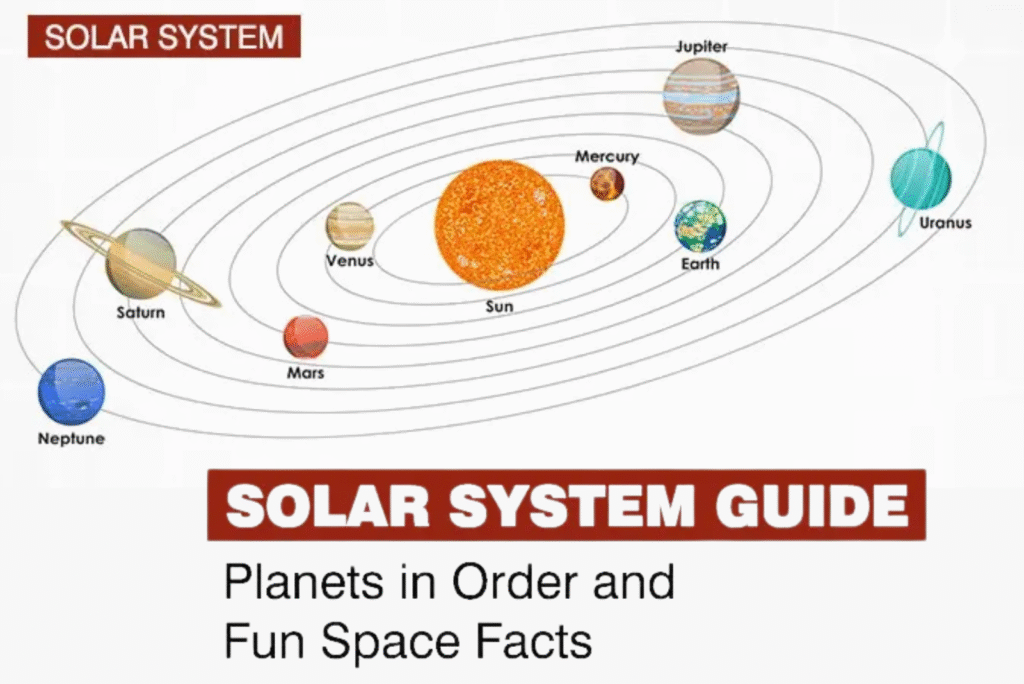
Solar System Guide: Planets in Order and Fun Space Facts Home Blogs The solar system is a concept people encounter in school, but most people don’t explore beyond its names and charts. This blog aims to simplify it using real concepts instead of complex science, including easy explanations and fun details to share. Every component from Mercury to Neptune (even Pluto) has unique stories which we aim to discover in this guide. Planets, moons, and asteroids will all be explored in a soothing, friendly manner that makes space feel easy. Have You Ever Wondered About The Order Of The Planets? Have you ever found yourself forgetting the order? There is a really easy trick that goes like this, My Very Educated Mother Just Served Us Noodles. This is what it translates to: 1. Mercury Closest to the Sun. Day time temperatures are always scorching while freezing temperatures take over at night. Small and rocky in composition. 2. VenusSimilar to Earth in size, but engulfed by thick poisonous clouds. It is the hottest planet. 3. EarthThe only home we have. Filled with life, water, and perfect distance from the sun. 4. MarsLooks reddish, and is cold and dry. It also has the largest canyon and the tallest volcano. 5. Jupiter The biggest planet. It has a famous red storm and many moons. It is also a gas giant. 6. SaturnHas stunning rings, which are primarily composed of ice. 7. UranusRotates on its side. The color is pale blue due to Methane gas. 8. NeptuneThe farthest from the Sun, also a deep blue. Cold and windy. Where Did Pluto Go? In 2006, it was reclassified as a dwarf planet, which striked away it’s title as the ninth planet. That’s because it didn’t clear it’s orbit of space rocks. Everyone still finds Pluto intriguing due to its five moons, one of them being Charon which is almost the same size as Pluto! Even without being classified as a full planet, it is still cherished by space enthusiasts and studied by astronomers. Other Stuff in Space (Besides Planets) The rest of the solar system holds more than just planets. Other important portions includes: Asteroids – Large rocks that mostly drift between Mars and Jupiter.Comets – As ice and dust are drawn closer to the sun, they glow and release long tails. Meteoroids – Space rocks that are small in size. When they burn up in the Earth’s atmosphere, they are called meteors. If parts of them hit the ground, those fragments are called meteorites. The Sun – It is not a planet, because it is the center of everything. It holds the cosmos with its gravity, and gives light and warmth. In the solar system everything is in constant motion, planets revolve around the sun, moons orbit planets, and even asteroids and comets are in pathways etched out by gravity. Some Planets Have Moons (Many of Them!) Let’s start with moons, Earth has one, but other planets have many: Earth – One moon, but it plays an crucial function as it helps control tides and illuminates the night sky. Mars – Small and tiny moons Phobos and Deimos that are in the shape of a peanut. Jupite – Over 90 moons, it also has the biggest moon in the solar system Ganymede. Saturn – Also is in possession of 80 plus moons which also holds Titan. Titan has thick clouds and lakes consisting of methane. Uranus and Neptune – Each have more than a dozen moons, icy and small in size. Planet Rings? More Than Just Saturn! “Ringing” is often associated with Saturn, but he certainly isn’t the only one wearing a ring. All four gas giants: Jupiter, Saturn, Uranus and Neptune, possess rings. Gas gulfs have varying ring qualities, with Jupiter having faint rings while Saturn’s are bold and wide, and Uranus and Neptune have thin, dark rings. Rings are composed of particles such as ice, rocks, and dust. It is hypothesized by scientists that they could be fragments of broken moons or comets. Did You Know? (Cool Space Facts) Here are some space facts that are sure to pique your interest: It takes approximately 165 Earth years for one single year on Neptune. Venus rotates in the opposite direction to most other planets. Mars experiences seasons similar to Earth, but they last for an extended period of time. Unlike the rest of the planets, Uranus is the coldest planet even though Neptune is farther away. The Sun will continue shining for 5 more billion years, making it around 4.6 billion years old. You would only weigh 19 kg if you were 50 kg on Earth. Jupiter has wantonly been enduring centuries of storms, with The Great Red Spot measuring far greater than Earth. Why Learn About This Stuff? Learning about space is not only for scientists, Space assists in understanding Earth better. Studying other planets gives us great insight into how weather functions, climate changes, and what may happen to our world. Moreover, wondering what is “out there” provides an extra dose of fun. While looking at the stars or waving the Moon hello, waiting for an upcoming space expedition, knowing more about the solar system enhances the thrill. Even something like solar energy, which is utilized on Earth, stems from understanding the Sun and a lot of modern-day technology was tested in space prior. And for many children and students, the basics of science-imaginary revolve on learning about planets. It nurtures curiosity and imagination, fostering creativity. FAQs Q: Is Mercury the hottest planet?A: No Venus is hotter, Mercury is closer to the Sun but lacks atmosphere to store heat. Q: How many planets are in the solar system?A: Eight planets with a couple of dwarf planets like Pluto. Q: Why does Uranus spin on its side?A: A long time ago, it was most likely struck by something large which caused the knock over. Q: Which planet is the largest?A: Jupiter is the largest, and it is over 1,000 times larger than Earth. Q: Will humans be able to
Solar and Photovoltaic Panel Cleaning
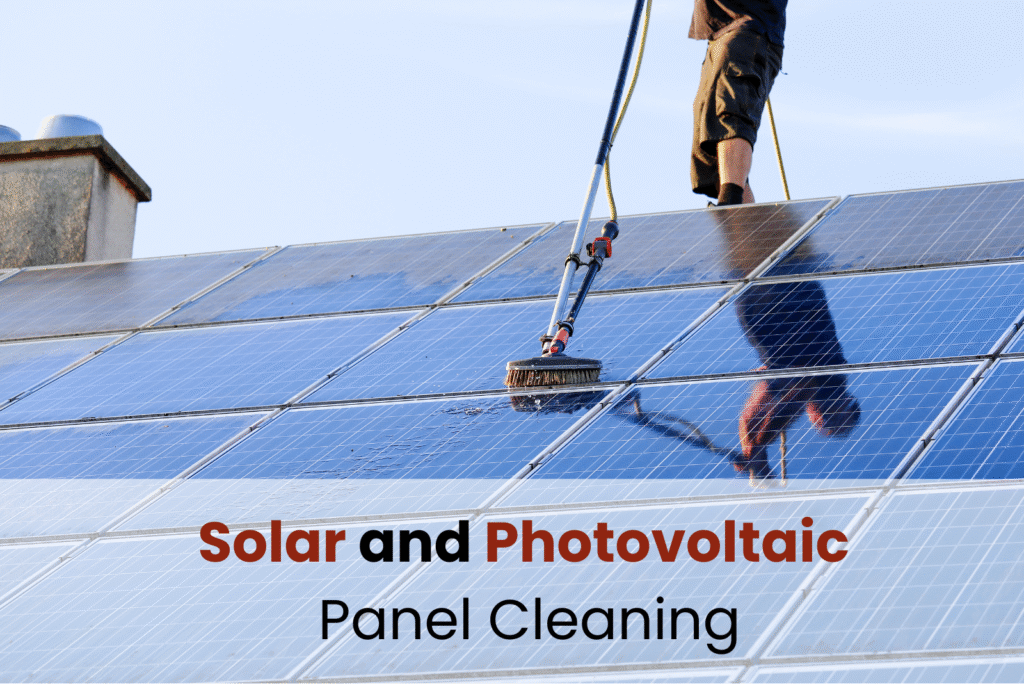
Solar and Photovoltaic Panel Cleaning Home Blogs Solar energy is one of the best ways to produce clean and green electricity. But just like any outdoor surface, solar panels also collect dust, dirt, bird droppings, and pollution. And when that happens, they can’t absorb sunlight properly — which means they generate less power. This blog is about how cleaning your solar and photovoltaic (PV) panels the right way can help keep them efficient and long-lasting. We’ll keep it super simple and useful, like a guide written by someone who’s been there, done that. Why Clean Solar Panels at All? Think of solar panels like windows — the cleaner they are, the more sunlight they let in. When dust and grime cover the surface, it blocks light and reduces energy output. Here’s what dirty panels can lead to: Lower power generation (sometimes by up to 20–30%)Shorter panel lifeDamage to the surface over timeIncreased energy bills for large-scale users Common Reasons Panels Get Dirty Dust and soil (especially in dry regions)Bird droppingsPollen and leavesIndustrial pollutionHard water stains after rainEven if your panels look fine from a distance, a layer of film or dirt can still block efficiency. This film often builds up slowly, making it hard to notice the drop in output right away. Best Time to Clean Your Solar Panels When it comes to cleaning, timing matters: Early morning or late evening – The panels are cool, and there’s no harsh sunlight. Cloudy days – Easier to clean without water drying too quickly. After heavy dust storms or long dry weather – Great time to remove built-up grime. How Often Should You Clean Them? Cleaning schedules depend on your environment: Residential rooftop systems: Once every 3–4 monthsCommercial and industrial systems: Every 1–2 monthsDusty or polluted areas: Possibly every monthFarm areas, desert regions, and buildings near roads or factories may need more frequent checks. Some solar farms also use automated cleaning systems with water-saving tech to clean panels without manual effort. Also Read: Which Solar Panel is Best For Homes How to Clean Solar Panels Safely Cleaning your panels is not hard, but it must be done carefully: Use soft water – Hard water can leave stains. Soft brushes or sponge only – Avoid anything sharp or abrasive. Mild soap if needed – Stay away from harsh chemicals. Turn off the system before cleaning – Safety is key. Use proper safety gear – Especially if climbing or reaching high places. Also, never clean hot panels — sudden cooling from water can crack the glass. If your panels are on the roof and not easily reachable, it’s smarter to hire a cleaning service. What to Avoid While Cleaning Pressure washers – Too strong and can damage the panels. Metal tools – Can scratch the surface permanently. Window cleaners or alcohol-based sprays – Might damage the anti-reflective coating. Signs Your Solar Panels Need Cleaning Sudden drop in energy output Visible dirt or stains Leaves or bird droppings covering part of the panel Inverter warning signs (in some systems) A quick check once a month helps catch issues early. KLK Ventures’ Role in Solar Panel Efficiency KLK Ventures is committed to supporting clean energy adoption across India. One of the ways we do that is through expert cleaning and maintenance of solar and PV systems. Our trained teams handle: Regular industrial solar panel cleaning On-site safety checks Water-conserving cleaning solutions Inspection and reporting for better performance We work with rooftop setups, factories, and solar farms to make sure that their systems stay in top condition year-round. FAQs Q: Can I use pressure water to clean my panels? A: Not recommended — it can crack the glass or loosen wiring. Q: Does rain clean the panels enough?A: Sometimes, but not always. Rain can leave spots, and it doesn’t remove heavy dirt. Q: How do I know if my panels are dirty?A: You might notice lower electricity output. A quick visual check can help too. Q: Can dirty panels damage the system?A: Yes, in the long run. Dirt can create hot spots that reduce panel life. Q: Should I hire a cleaning service?A: Yes, especially for bigger installations. It’s safer and more effective. Q: How much energy can I lose if I don’t clean my panels?A: Depending on the dust level, it could be 5–30% of output loss. Q: What’s the best time of year for a deep clean?A: After the dry season or before the peak summer months is ideal. Conclusion Cleaning your solar panels isn’t just a task — it’s an essential part of solar maintenance. Dirt and dust may seem small, but they make a big difference in how much power your system can produce. By following simple cleaning practices and regular checks, you can make sure your panels last longer and save more money. KLK Ventures supports clean energy across India by making sure solar systems stay clean, efficient, and fully functional. If you own or manage a solar system, regular cleaning is not just helpful — it’s necessary. Clean panels = clean power.
How to Switch Your Home to Green Energy

How to Switch Your Home to Green Energy Home Blogs With the world moving forward, many homeowners are considering green energy for their homes. It’s a safer option, and it is cost-effective in the long run. It’ll be beneficial for people who are looking to reduce their carbon footprints and cut down on electricity bills. In this blog, let’s see what green energy for home truly means, how to make the switch, and why it’s one of the most rewarding decisions you can make for your household. What Is Green Energy for Homes? It’s all about using green energy to power your homes. The green energy sources are clean and because of that, there is no air pollution like there is with the use of fossil fuels. The best part, however, is that these energy sources won’t even run out. Instead of powering homes with natural gas and fossil fuels, individuals often turn to the sun as a clean energy option. Aside from the sun, wind is also a popular source of clean electricity. Green energy is a way to sustainable living without putting the environment at risk. Easy and Effective Ways to Switch to Renewable Energy at Home Switching to green energy doesn’t have to be complex when it’s just easy. You can try these effective ways to bring green energy into your homes. 1. Install Solar PanelsInstalling solar panels is one of the fantastic ways to switch to green energy for home. There are many benefits of a solar rooftop system. You can generate clean electricity using solar panels while saving on electricity bills. A safe and easy way to make your house a home for green energy! 2. Try a Solar Water HeaterAnother option for shifting to renewable energy is to use solar water heaters. You can use this clean energy source to heat the water and maintain low electricity bills. 3. Use of Small Wind TurbinesNow, the thing is, wind turbines are mostly found on large areas of land where the air flows continuously. However, this becomes a great option if your house is in an area which is large and windy throughout; you can install a small wind turbine to generate electricity. 4. Upgrade to Energy-Efficient Appliances Traditional appliances use a lot of electricity which also raises the bills. To save yourself from this, choose appliances with green, energy-saving labels. This means that your household appliances will not use much power and save money. 5. Try Solar Air ConditioningSolar air conditioners are amazing and you’ll get to know that once you install them. These conditioners work on solar energy, which may seem strange to people, but these appliances are beneficial! Your electricity bills will go down as the heat goes up during harsh summers. 6. Choose Green Energy PlansMany electricity providers now offer green energy subscriptions. A simple call to your local utility company can shift your home to cleaner energy, without changing any hardware. Also Read – Wind Vs. Solar Energy How Much Does It Cost to Go Green at Home? This is the one thing that people often think about when planning to switch to green energy for home. The question, “How much is this going to cost me?” is always lingering around when there’s a discussion on green energy. How far you want to go with green energy, your budget, and the decisions you make will all affect the answer to this question. The best thing however, is the Government incentives that lift off the burden of high costs. Also, let’s tell you, after the initial investment, you’ll be blessed with low-maintenance systems! If you want to start small by switching to LED bulbs, outdoor solar lighting, or just buying energy-efficient appliances, you can do so with just a few thousand rupees. Some may seem a bit pricier than usual but trust us, your wallet will thank you later! Next, installing solar water heaters or solar air conditioners has slightly higher upfront costs. However, like it’s the case with any other green ways, you’re going to save a lot on electricity bills. So is the case with off-grid solar power systems for homes and solar in-roof systems. Best Solar Solutions for Residential Use Homes aren’t all the same, and neither are their energy needs. The right solar solution depends on what works best for your space and lifestyle. Rooftop Solar Panels This is a classic and effective choice. Photovoltaic panels convert sunlight into electricity very efficiently. The off-grid solar systems are great for homes located in off-grid areas with poor connectivity. They can power your home appliances, lights, fans and can even charge vehicles. Hybrid Solar Systems Now, if you think a solar system can either function alone or is connected to the grid, well you’re in for a surprise. A hybrid solar system has both features, you can use the solar power during the day and store extra energy away in a battery and you can also draw from the grid whenever you need it! Solar Water Heating Systems A quick and easy way to save money on water heating. These systems heat water using roof-mounted collectors and store it for domestic use in insulated tanks. Solar Battery Storage Many people have existing solar systems in their houses but don’t have batteries. A good solar energy storage system is needed when the sun goes down and electricity demands get high. It stores the extra energy for use later on. Combining several of these solar solutions will give your home a green and clean touch. Using green energy means making everything around you comfortable, safe, and sustainable! Government Subsidies for Green Energy in India The Indian Government actively encourages the adoption of green energy throughout the country by offering various subsidies and schemes. The Ministry of New and Renewable Energy (MNRE) offers financial incentives for rooftop solar panel installations. This covers 40% of the installation cost, depending on your location and the capacity. There are many schemes like Solar Kusum B & Solar Kusum
Cost of Installing a Solar Water Pump System in India
Cost of Installing a Solar Water Pump System in India Home Blogs Farming in India is seeing a huge shift as solar power is leading the way. The electricity costs are rising, and power cuts are still common in rural areas. This is why many farmers are turning to the solar water pump for agriculture. Why? Because it’s clean, efficient and a cost-effective way to water your fields. But the question is, what does it cost to install one? In this blog, we’ll understand solar water pump costs and subsidies. This will help you understand if solar water pumps are the right fit for the agricultural sector in India. What is the Price of a Solar Water Pump in India? Pump Capacity Approx. Price 1 HP ₹70,000 – ₹1,00,000 2 HP ₹1,30,000 – ₹1,80,000 3 HP ₹1,60,000 – ₹2,20,000 5 HP ₹2,30,000 – ₹2,90,000 10 HP ₹5,00,000 – ₹6,10,000 Factors Affecting Solar Pump Installation Cost It’s not just about purchasing a pump. The cost of installing a solar water pump for agriculture depends on a number of factors. Let’s take a look at them. 1. Pump CapacityThe size of the pump is the main deciding factor for the cost. A higher horsepower (HP) pump draws more water, which makes it great for large farms and deep water sources. A powerful pump will have a high price. For example, a 10 HP system will have a higher cost than a 1 HP pump. 2. Type of PumpThere are different types of pumps that you’ll find in the market. Submersible pumps – These pumps go under the water level and are best for borewells and deep wells. These pumps are on the expensive side due to their build and high power needs.Surface pumps – Surface pumps are installed above the ground to fetch water from shallow water sources. These pumps are more affordable than the submersible ones. Also read – Different types of solar water pumps 3. Solar Panel QualityThe solar water pump price depends on the quality of the solar panel too. There are many different types of panels with different efficiencies. The higher-quality panels’ price can be a bit high. These are more reliable and cost-effective in the long run. 4. Installation ComplexitySetting up a solar water pumping system requires labour, strong mounting structures and more wiring. All of this adds to the total cost which may affect the solar water pump price. 5. Additional ComponentsA solar water pump system isn’t just a pump and panels. It includes other parts too. Inverter – It’s needed for an AC pump which cannot use direct current.Controller – This manages the flow of current and also prevents damage.Mounting structures – These hold your solar panels in place to maintain their efficiency.Batteries – Batteries store extra energy so that the pump can work even in cases of no sunlight or at night. Each of the factors matters in making up the total cost of a solar water pump. So, it’s important to consider every aspect while making a decision. Government Subsidies for Solar Water Pumps in India The Government of India has always been first when it comes to encouraging people to take steps for the betterment of the future. Solar water pump subsidy is one method to do so. By providing excellent subsidies for installing solar water pump for agriculture, it’s becoming increasingly easier for farmers to turn to solar. Under their Pradhan Mantri Kisan Urja Suraksha evam Utthaan Mahabhiyan (PM KUSUM) scheme, the solar water pump subsidy is: Central Government Subsidy: 30% of the total cost. State Government Subsidy: 30% of the total cost. Farmer’s Contribution: The remaining 40% is borne by the farmer. (30% of which can be taken as a loan) This means solar water pumps for agriculture have become easily accessible through subsidies and low solar water pump price. Also read – Solar Kusum-B yojana & Solar Kusum-C Yojana for more information about the same. Cost Difference: AC vs. DC Solar Pumps AC Pumps – These have a lower initial pump cost. However, these solar pumps require inverters to function which adds to the installation costs. Also, due to the complex components, the maintenance needs may rise and cause a rise in the expenses. DC Pumps – These pumps have a higher upfront cost due to many components. However, unlike AC pumps, these have low maintenance and operating costs since they run on solar power without the need for a utility grid. Is a Solar Water Pump System Worth the Investment? There are many uses of solar water pumps in agriculture. But the question is whether a solar water pump for agriculture is truly worth your money. Our answer is, yes, it is. Here’s why: 1. No More High Electricity BillsAs solar panels use sunlight, your solar water pump for agriculture won’t need to rely on the electricity grid. This reduces the electricity bills to a great extent. As farmers continue using solar water pumps for agriculture, they will be saving a lot in the upcoming years. 2. A Win for the EnvironmentSolar power is wonderful for the environment. Since the sun is a natural and renewable resource, it will minimise reliance on non-renewable energy resources. Burning coal and other fuels emits greenhouse gases such as carbon dioxide into the environment. That is why going solar is an intelligent and environmentally friendly alternative! 3. Lower Running and Maintenance CostsThe amazingness of solar panels doesn’t end at just their eco-friendly and efficient attributes, there’s much more. Once farmers install these solar pumps, they’ll have to face low maintenance costs. With no fuel and fewer moving parts, the maintenance is very affordable. Check out – Maintenance and durability of solar water pumps 4. Strong Government SupportThe government supports farmers through various initiatives and a solar water pump subsidy. This lifts the financial burden off of farmers and encourages them to make use of the amazing solar power to water their fields. 5. Long-Term Value for Your FarmThe Solar water pump for agriculture is not
solar-amc-vs-one-time-service
Solar AMC vs One-Time Service: Which One is Better? Home Blogs Going solar is one of the best things you can do for the planet and your wallet. But once those panels are up on your roof, a new question comes up: How do you keep them running smoothly for years to come? That’s where solar AMC (solar annual maintenance contracts) and one-time solar service enter the picture. Both are useful, but they have different features. So, how does one decide which one is better for them? In this blog, we’ll understand what makes one better than the other. What Is Solar AMC and How Does It Work? Solar AMC is a yearly service plan offered by solar companies upon solar panel installation. An expert team will inspect your solar system while cleaning and maintaining it if necessary. Solar annual maintenance contracts act like a reliable friend, so you can enjoy hassle-free services. Here’s how it usually works: Scheduled Inspections – Technicians visit periodically to inspect solar panels and the whole system. Cleaning – There’s a thorough cleaning of panels to remove dust or debris. This helps maintain efficiency. Performance Monitoring – The system’s energy output is monitored regularly. This is helpful because it makes sure your system is working perfectly. Repairs and Replacements – Solar annual maintenance contracts offer repair and replacement of faulty parts. Reporting – The service provider gives you reports on system performance and maintenance. That’s why Solar AMCs are necessary for large solar systems. Especially with the rise of solar technology in India, making clean energy more accessible and affordable for households and businesses. Benefits of Choosing Solar AMC for Long-Term Maintenance Most of us don’t have time (or the nerve) to climb on the roof and inspect solar panels. That’s why Solar AMC is such a game-changer. Let’s break down its wonderful benefits: 1. Hassle-Free MaintenanceSigning up for solar annual maintenance contracts means no stress. You won’t have to worry about regular clean-ups or emergency repairs any more. Your service team will take care of everything from scheduling visits to keeping your system clean. 2. Boosted Energy EfficiencyAs you’re already aware of solar panels being set up outside tend to accumulate dust on them. Dust and debris can be responsible for reducing efficiency. Solar AMC offers regular cleaning, which lets your solar panels perform their best every day! 3. Longer LifespanRoutine maintenance can add years to your system’s life. Catching corrosion early, replacing damaged wires, and tightening loose components helps a lot. With a solar annual maintenance contract, you’re adding more value to your investment. 4. No Surprise RepairsBreakdowns never come at a good time. But with solar AMC, many minor repairs are included and any big issues are caught early. This doesn’t let them turn into a financial problem later on. 5. Better Warranty ProtectionDid you know that many solar panel warranties require regular professional maintenance? Skipping checkups might void your warranty. A solar AMC helps you stay compliant without stress. Also read – Why are annual maintenance contracts important? One-Time Solar Service: Pros and Cons One-time solar service is exactly what its name suggests. Maintenance is done only when you request it. There’s no contract and you only need to pay when you need an inspection or repair service Pros: Lower upfront cost – You only pay when you actually need to check or repair your solar system. Flexibility – You can decide when and from where to get service, as you’re not bound to any contract. Cons: Less Prevention, More Reaction – With one-time services, you don’t feel the need to get your systems inspected. And if there’s no inspection, you will only know the problems when there’s some damage.Inconsistent performance – Without regular cleanings and inspections, you’ll see a decline in the performance of solar panels. Higher long-term costs – One-time services are only given when you request them. So they may go unnoticed; however, ignoring small issues will lead to bigger and costly ones. Stress and delays – If you need help, you might have to wait a long time. Finding good technicians can get a bit difficult, especially at times of emergencies. This may cause stress. Cost Comparison: AMC vs One-Time Solar Maintenance With solar AMC, you’ll pay a fixed annual fee. It includes – 2 to 4 scheduled service visits – This helps the panels stay efficient for a long time.Cleaning – Solar panels are prone to dust accumulation because they are installed out in the open. Minor repairs – These repairs or part replacements are necessary for the proper working of the panels. The costs are fixed for the services and you only need to pay the same amount. However, with one-time service, costs can vary depending on different factors. A basic cleaning might be cheap, but if your inverter fails, or your system needs rewiring? Your bill can be heavy on your pockets. It is clear that solar maintenance services like solar AMCs usually lead to long-term financial savings by keeping your system functioning effectively and preventing costly failures. Which Is Better for Residential Solar Panels? For homeowners, it’s better to choose Solar AMC. Here’s why – Life gets busy and people generally don’t have time to inspect their solar panels regularly. In such cases, Solar AMC comes to the rescue. Cleaning panels improperly can actually damage them. With the help of professionals, you’ll avoid this problem. Electrical issues can be dangerous if left unchecked. All of this requires experts who know how to deal with them properly. Scheduled inspections, regular cleanings and performance checks help keep your system up to date. How do you decide between AMC and One-Time Service for solar systems? A few things should be taken into account when selecting the best for your solar system’s upkeep. Your system’s size and complexity should be the first thing to consider. Larger systems greatly benefit from AMC as regular checkups keep everything efficient. While smaller systems may not need frequent care, for such setups, a one-time service is a good option. The second aspect
solar-street-lights-vs-traditional-street-lights
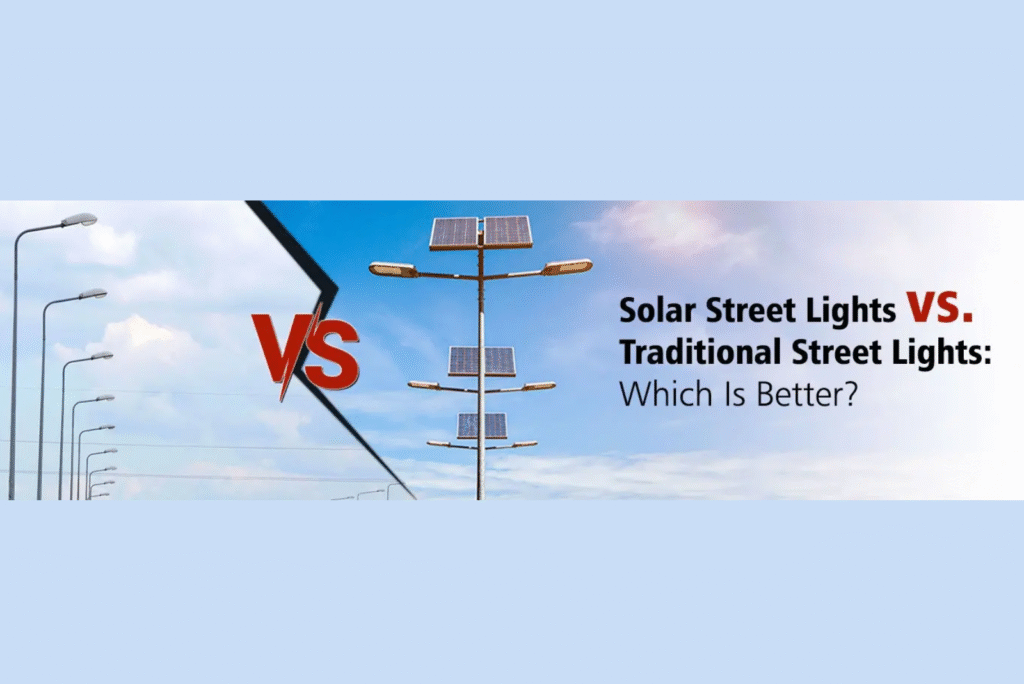
Solar Street Lights vs. Traditional Street Lights: Which Is Better? Home Blogs Street lights do more than just light up our roads. They make cities safer, help reduce accidents and make life after dark much easier. But as the energy prices rise and environmental concerns grow, many are turning to sustainable options. One such solution is the solar street light. It’s not only powerful but also an eco-friendly option. However, there are still some questions regarding solar street lights and traditional street lights. In this blog, we’ll understand which one provides better value and long-term benefits. How Do Solar Street Lights Work? Knowing how a solar street light works is the first step in making the right choice. Let’s see what the working process is that sets the solar lighting system apart from traditional lights. 1. Solar Panels Absorb the SunlightYou already know that without solar panels, no solar street light can function. These panels trap the sunlight to convert it into electricity. So this is why installing these panels in a place where sun rays fall in abundance is necessary. 2. Batteries Store the Energy Now, the solar panels only generate electricity during the daytime. But there’s a need for solar street lights only during dark hours, so batteries become important. These act as a power bank and store energy for use during nighttime, ensuring there’s no issue. 3. Automatic Lighting at Dusk There are built-in light sensors for solar street lights. As the sun sets, these sensors detect low light and automatically turn on the solar street light and vice versa. This feature makes them really effective and convenient. 4. Batteries Power the LED LightsThe LED lights are operated by batteries that store energy. The lights are an excellent option due to their brightness and low power usage. Homes and streets are kept well-lit by these bright lights. Cost Comparison: Solar vs. Traditional Street Lights 1. Initial Light CostSolar: Prices range from ₹4,000 to ₹13,000 (depending on features and brand).Traditional: Typically between ₹900 and ₹8,9992. Installation CostSolar: ₹7,000 – ₹15,000.Traditional: ₹5,000 – ₹10,000.3. Annual Electricity CostSolar: ₹0 (powered by solar energy).Traditional: ₹2,000 – ₹5,000 (depends on local electricity rates). Energy Efficiency of Solar Street Light When it comes to energy efficiency, Solar street lights don’t fail to impress. As these lights depend on the sun for power, there’s no issue of power supply. The solar panels do their magic during the day and absorb the sunlight to convert it into electricity. So, during the nighttime, the same energy powers the LED lights. LEDs have low energy consumption yet shine the brightest. They convert most of the energy into light. This is better than older street light technologies, which lose most of their energy. The solar lighting system has one more amazing feature: a light sensor. These sensors are responsible for switching these lights on and off automatically. This increases their efficiency to a large degree. Solar street lights also avoid the use of an electricity grid since they solely depend on the sun for power. This makes it excellent for regions where there is low grid connectivity. Maintenance Requirements: Solar vs. Electric Street Lights Maintenance is a major concern that arises when deciding between solar street lights and traditional streetlights. Individuals tend to opt for the system that needs less maintenance since it is cost-effective and saves time. With the rise of outdoor solar lighting, most individuals are changing their minds. Therefore, when it comes to street lights, what are the maintenance needs that make one superior to the other? Let’s see. Aspect Solar Street Light Traditional Street Light Wiring Needs There is no wiring required as these lights are completely off-grid and independent. Traditional street lights need underground wiring and grid connection. These wires are prone to faults and damage. Bulb Lifespan Solar street lights come with LED bulbs that are long-lasting. These last typically 10-15 years. The use of bulbs like halogen or sodium vapour raises the need to change them every few years. Cleaning Requirements The solar panels require occasional cleaning to maintain their efficiency. The fixtures may require routine cleaning. Battery Maintenance The batteries usually last 8-10 years (depending on brand and type). However, these are easy to replace. There’s no battery requirement as the power comes from the grid. Repair Complexity The solar street light only requires simple repairs. These repairs are usually limited to the unit. Traditional street light repairing is usually complex and may require rewiring. This is more time-consuming and expensive. Overall Maintenance Cost Low because of fewer replacements and no electricity bills. Higher because of regular inspections and repairs. The electricity bill is high too, based on consumption. Which Street Light Is More Environment-Friendly? Are you still wondering which street light is more environmentally friendly? Well, the solar street light takes the spot because these street lights are better in all aspects. Let’s understand how. 1. Powered by Clean, Renewable Solar EnergySolar street lights rely completely on solar energy, and you know that the sun is a renewable and green energy source. So what makes them wonderful and eco-friendly is that there’s a constant use of sunlight. Solar street lights ditch fossil fuels and other non-renewable energy sources which are often harmful to the environment. 2. Zero Carbon EmissionsThis is the greatest benefit of solar street lighting. These lights do not release carbon dioxide and other harmful greenhouse gases. The utilisation of sunlight makes these lights a green, clean source, offsetting climate change as well. 3. Increased SustainabilitySolar energy is sustainable and abundant. With the use of solar street lights in home or other areas, the use of oil, gas or coal is reduced. Traditional street lights, on the other hand, require constant consumption of non-renewable resources, making them unfit for the environment’s health. 4. High Energy EfficiencySolar street lights come with amazing features like motion and light sensors. These detect low light and motion and automatically turn on and off. This makes them great for use as these lights
What is Green Energy?
What is Green Energy? Home Blogs In today’s world, where environmental concerns are dominating current topics, green energy emerges as a beacon of hope. It comes from natural sources such as wind, water and sun. These green energy sources are a solution that is not only eco-friendly but also reliable. In this blog, we’ll understand green energy types and their benefits. You’ll know what makes them ideal for long-term energy solutions! Types of Green Energy Sources The amazing thing is that there are many green energy types that contribute to the betterment of the environment. Solar Energy Solar energy is the most useful form of green energy due to its availability. For as long as the sun keeps shining, we’ll get clean power. Solar panels make use of this amazing energy by converting it into heat or electricity. A better energy choice with long-term benefits! Wind Energy This green energy source is harnessed with the help of wind turbines. The turbines move to generate clean energy. Wind farms supply electricity to thousands of homes. Read more here – Can wind power and solar energy work together effectively? Hydropower Hydroelectric energy is another term for it. As the water passes through the turbines, electricity is produced. This is one of the oldest and most reliable types of renewable energy. Geothermal Energy This environmentally friendly energy source harnesses the heat that exists deep within the Earth. Both direct heating and electricity generation are possible with this heat. Biomass Energy This green energy source uses organic materials like crop waste, wood and animal waste to create fuel. Benefits of Using Green Energy There are many reasons to choose green energy. A few of them are: 1. Cleaner Air and WaterGreen energy production doesn’t cause any harm to the environment. There will be no release of harmful pollutants. This means using green energy sources offers a healthier and safer environment for everyone! People will get cleaner air to breathe and safer water to drink! 2. Reduced Greenhouse Gas EmissionsGreen energy types are a key to balancing climate change. You know how traditional energy sources like coal, oil and natural gas release greenhouse gases into the environment. These gases contribute a lot to the environment. So, using green energy like wind and solar helps slow down the effects of global warming. Also Read: Wind vs Solar Energy. 3. Long-term Savings The initial investment is always a bit higher but the savings will be worth it. Who doesn’t want a reduction in electricity bills and amazing savings? Once you start using green energy sources, there’s no going back. 4. Energy Access to All There are many places in India where there’s no reliable power access to date. Green energy types like wind and solar are reaching off-grid places. This will offer reliable energy access to remote places. 5. More Jobs and Local Growth This new shift to green energy is creating thousands of jobs. This renewable energy sector creates new opportunities for people. These jobs support families and local economies. How Does Green Energy Work You may be wondering how this cool and amazing energy works. Each green energy type functions differently, using different methods. Here’s how some of them work: 1. Solar EnergySolar panels are placed on rooftops or areas where there is sunlight in abundance. These panels absorb the sunlight and turn it into electricity. The electricity is then used to power homes, lights and other appliances. 2. Wind EnergyWind turbines consist of long blades that spin when the wind blows. The blades help the generator generate electricity. The electricity can then be sent to homes, businesses and even cities. 3. Hydropower Dams or rivers direct the flowing water towards turbines. The force of the water spins these turbines. The fast spinning motion is what generates electricity that powers homes and cities. 4. Geothermal EnergyHeat that is trapped under the surface is brought to the surface using pipes and wells This heat is then used to create steam. The steam spins the turbines, generating electricity. Green Energy Vs Renewable Energy There is some misunderstanding about green energy and renewable energy. Although they are not always the same, people frequently mistake them for renewable energy. Green energy is eco-friendly and renewable. This indicates that the environmental effects of this energy are small. Renewable energy sources comprise all the sources that replenish easily. However these sources also include the ones that can affect ecosystems. So, by now you might have understood that all green energy types are renewable, but not all renewable energy is green. Examples of Green Energy in Daily Life Heating and Cooling in Homes and Buildings – Green energy can be used for more than just producing electricity. Heating and cooling are two more uses for it. It is made possible by amazing innovations like solar water heaters and solar air conditioners! Transportation and Public Transit – Transportation is the fastest growing area for green energy use. Many cities have adopted electric buses and metro trains. By using renewable electricity, transportation will cause less air pollution. Agricultural Areas – Farming has seen a great change with the introduction of green energy. Solar water pumping systems have been helping the agriculture sector greatly. Farmers can irrigate fields without relying on unreliable and polluting sources. Rural and Off-grid Power Areas – Where traditional electricity is still finding a way through, green energy is taking its place. In remote areas and locations, proper grid connectivity is still a far-fetched dream. Green energy sources are improving lives in such areas. Future of Green Energy in India India is taking major steps towards a greener and cleaner future. Green energy has been in focus and is seen as a reliable source of power in India. This country also proposed a major goal during the COP26 summit. It was to get 500 GW of clean fuel based energy by the year 2030. The best part is the support from the government of India. Various programs and schemes are supporting the already growing use of renewable
Solar Kusum-C: Benefits, Eligibility & Application Process

Solar Kusum-C: Benefits, Eligibility & Application Process Home Blogs The main concerns for farmers across India are unreliable power supply, high electricity and diesel costs. And the grid-connected solar pumps rely on the unreliable power supply. An unreliable power supply means delayed irrigation. However, with the Solar Kusum-C Scheme, everything becomes much easier, efficient, and sustainable. This blog will help you understand all about the Solar Kusum-C Scheme. Let’s get to know what the benefits are and how you can apply. What is the Solar Kusum-C Scheme? Like the Solar Kusum-B Yojana, the Solar Kusum-C Scheme is a component of the PM-KUSUM program. Solarizing the current water pumps is the primary goal of this component. This scheme is managed by the Ministry of New and Renewable Energy (MNRE) in partnership with state renewable energy agencies. The government of India shares the cost of solarizing the existing water pumps. This makes the solar water pumping system affordable for even small farmers. The solar water pumps are amazing as they run on sunlight and replace traditional diesel or electric pumps. The goal is to help farmers access clean energy to irrigate their farms. Solar Kusum-C Yojana also encourages the use of renewable energy resources that help both humans and the environment. Top Benefits of the Solar Kusum-C Yojana for Farmers The solar Kusum-C Yojana does much more than just offer solarized pumps. It brings tons of benefits for farmers that make farming easier, cheaper and reliable. Some of the top advantages of this scheme are: Low Electricity Bills Once the solar system is installed, farmers won’t have to worry about the rising electricity bills. As solar energy is free, the irrigation becomes almost cost-free after setup. This way farmers will save a lot of money on electricity!. No Reliance on Diesel You already know how expensive diesel actually is. And not only that, it’s also harmful to the environment. So with the help of a solar water pump, installed under Solar Kusum-C Yojana, farmers will be able to cut out diesel completely. Reliable Power Supply In remote areas, power cuts are frequent especially when farmers need water the most. Solar pumps are what help in such cases. They are a reliable source of power and can supply water whenever needed. Low Maintenance Diesel pumps are complex and come with heavy parts. So when farmers switch to solar pumps, they are bringing home machinery that is low maintenance with fewer moving parts. These pumps need very little time and money for repairs. Extra Income Opportunity Here’s something that will help farmers generate extra money: selling electricity. Yes, the solar system usually generates more energy than is required. This extra energy can be sent back to the grid. This will help farmers earn income! Who is Eligible for the Solar Kusum-C Scheme? Individual Farmers Any farmer using a grid-connected pump is eligible to apply for the PM KUSUM scheme. Water User Associates (WUAs) A group of farmers that share irrigation infrastructure can also benefit from this scheme. Farmer Producer Organisation (FPOs) FPOs that manage operations for multiple members are eligible to apply for the same too. Primary Agriculture Credit Societies (PACS) PACS operating shared irrigation systems are also eligible to apply for the Solar Kusum-C Scheme. Community or Cluster-Based Irrigation Systems The large irrigation systems that are used by the villages or farming communities also qualify for the scheme. Step-by-Step Guide to Apply for Solar Kusum-C Yojana Online Applying for this scheme is simple if you follow the right steps. Here’s how you can do it online: Go to the official PM-KUSUM portal. You’ll find the section for Component C on the main page of the portal. Click on it. Register with your basic details. Once you find the section, you can fill in the details like name, Aadhaar number, land details, pump details and contact information. Upload the required documents. Once you’ve filled out the necessary details, you’ll have to upload the documents. These usually include a copy of your Aadhaar card, land documents, passport-size photo and recent electricity bill (if any). Submit your application. After reviewing your details and documents, you can click on submit. You’ll receive a confirmation message after your form is submitted successfully. Wait for approval Officials will review your application and if it gets approved, you’ll be contacted for further instructions. Subsidy and Financial Support Under Kusum-C Scheme One of the biggest reasons to apply for this scheme is the financial support. The government provides a huge subsidy, so the farmer only pays a small part of the total cost. Here’s how the cost-sharing typically works: 60% of the cost is paid by the central and state governments together. 30% can be taken as a loan from banks or financial institutions. Farmers only need to pay 10% out of their pocket. How to Track Your Solar Kusum-C Application Status After you apply for the Solar Kusum-C Yojana, we understand your concern and eagerness. You can check your application status on the official portal you’ve applied to. You’ll need: Applicant number/Aadhaar number or Registration Id Mobile Number and other details Once you’ve gathered all the details, simply log in through the website and look for the “Track Application” or “Application Status” option. Click on it, you’ll be able to review your application status there. However, if you face any issue, you can simply call the helpline num Conclusion The Solar Kusum-C Scheme is a golden opportunity for farmers to solarize their existing pumps. This will help them switch to clean and green energy that is low-cost and reliable. Also, with the help of the right solar solutions from trusted companies like KLK Ventures, farmers are going to benefit a lot! The transition to solar is easy, affordable and hassle-free with Solar Kusum-C Yojana. So don’t wait to apply! FAQs Who is eligible for the PM solar scheme?Any Indian farmer, individual or group who uses land for agriculture and needs a pump can apply. Cooperatives and panchayats can also apply. What is PM Kisan eligibility?PM-Kisan
Solar Kusum-B Yojana: Subsidy, Cost & Installation Guide

Solar Kusum-B Yojana: Subsidy, Cost & Installation Guide Home Blogs Irrigation is essential for farming but for many farmers, running irrigation pumps is a daily struggle. Diesel is costly, electricity is unreliable. And if there’s a delay in water, there will be no crops. Solar Kusum-B Yojana is what helps change this. Farmers get to install solar water pumps at an affordable cost with up to 60% subsidy support. This blog will help you understand everything. Read on to learn who can apply, how much it costs, and what the installation guide is. What is Solar Kusum-B Yojana? Overview of the Scheme The Solar Kusum-B Yojana is a part of the much larger Pradhan Mantri Kisan Urja Suraksha evam Utthan Mahabhiyan (PM-KUSUM) scheme. Installing independent solar water pumping systems up to a maximum capacity of 7.5 HP is the main objective of Component B. Farmers who want to install solar-powered irrigation pumps can get financial assistance through the Solar Kusum-B Yojana. These pumps are particularly well-suited for remote locations since they run on their own. Reducing dependency on grid electricity and diesel for agricultural irrigation is the aim. Farmers are eligible for up to a 60% subsidy under this program. This will make it affordable for them to switch to a cleaner and greener energy source. Eligibility Criteria for Solar Kusum-B Yojana 2025 Individual farmers who own cultivable land. Farmer Producer Organizations (FPOs), Primary Agriculture Credit Societies (PACS), and Water User Associations (WUAs). Applicants must be in off-grid or partially electrified areas. Farmers who currently use diesel pumps are given preference. Those who are implementing micro-irrigation systems or efficient water management practices are also eligible. How to Apply for the Solar Kusum-B Scheme Online Are you looking for ways to apply for the Solar Kusum-B Yojana online? Then read on. Here’s the easy step-by-step process: Go to the official portal Visit the Kusum Component-B section of the MNRE website. Register as a beneficiary Find the option where you can fill in details like name, mobile number, Aadhar number, and land information. Upload documents You should keep the scanned copies of the necessary documents, like – Aadhaar card Photograph of the applicant Land ownership proof Address proof (ration card, voter ID, etc.) Bank passbook or account details Recent electricity bill (if applicable) Verification by the authorities Once you’ve uploaded the documents and your application is submitted, State Implementing Agencies (SIAS) will check the documents and verify them. Approval and vendor selection If the application gets approved, the names will be displayed on the portal. And after that, a registered vendor will be assigned to install the pump. Subsidy and loan disbursement The subsidy is given to the vendor directly. This reduces the installation costs for the farmers. Farmers can then pay their share through personal funds or loans. Subsidy Details and Financial Assistance Under Kusum-B The reason why many farmers are inclined towards the solar Kusum-B scheme is due to the generous subsidy structure. The government offers a great subsidy for the installation of pumps. Let’s see how it actually works. Central Government Subsidy – 30% of the pump’s cost State Government Subsidy – 30% Farmer’s Own Contribution – 10 % of the total cost Bank Financing – If there’s a need, farmers can opt for the remaining 30% as a loan Farmers living in areas like the North-East, Himalayan states (Himachal Pradesh, Uttarakhand), etc, get up to 50% central government subsidy. The financial support is what helps the farmers greatly. Through this scheme, solar irrigation is made possible even for marginal farmers. Cost Breakdown and Farmer Contribution in Kusum-B Scheme The actual cost of a solar pump varies based on its capacity and location. But to give you a rough idea of its cost, here’s a general cost breakdown: 5 HP Solar Pump SystemTotal Cost: ₹1.5 lakh Central Subsidy (30%): ₹45,000 State Subsidy (30%): ₹45,000 Farmer’s Contribution (10%): ₹15,000 Optional Loan (30%): ₹45,000 Step-by-Step Solar Pump Installation Process Under Kusum-B Online Application The farmer will need to register on the official PM-KUSUM portal and submit the required documents. Verification and Approval After all the necessary documents are submitted, the State Implementing Agency (SIA) will review the application. Vendor Assignment and Payment Once the application is approved, an authorised vendor is assigned. The farmer will pay their 10% share and complete their necessary formalities. Installation and Training The vendor installs the solar pump on-site. The farmer is then trained on how to operate the pump for better efficiency. Maintenance Services Maintenance services are mandatory for their smooth functioning even after years. Benefits of Solar Kusum-B Yojana For Farmers: Cut Down on Farming Costs – By switching to solar powered pumps, farmers will eliminate the need for diesel and grid electricity. These options are costly; however, with the help of solar power, the farming costs will be lower to a great extent. Access to Reliable Water Anytime – With different types of solar water pumps, farmers will no longer have to rely on grid electricity or fuels. They can irrigate their fields at daytime to ensure timely watering. Low Maintenance, Long-Term Use – Solar water pumps require less maintenance than diesel pumps. These pumps work efficiently for years with minimal upkeep! Boost in Crop Yield – You know what consistent and hassle-free irrigation means? Your crops get the water when needed. This leads to better crop growth, which directly boosts farmers’ income. Conclusion The Solar Kusum-B Yojana is more than just a subsidy scheme, it’s a movement that leads to sustainable and better farming. With low initial investment, long-term savings and environmental benefits. A trusted solar company, like KLK Ventures, will help farmers access the Solar Kusum-B Yojana and carry out a smooth and trusted installation process.