
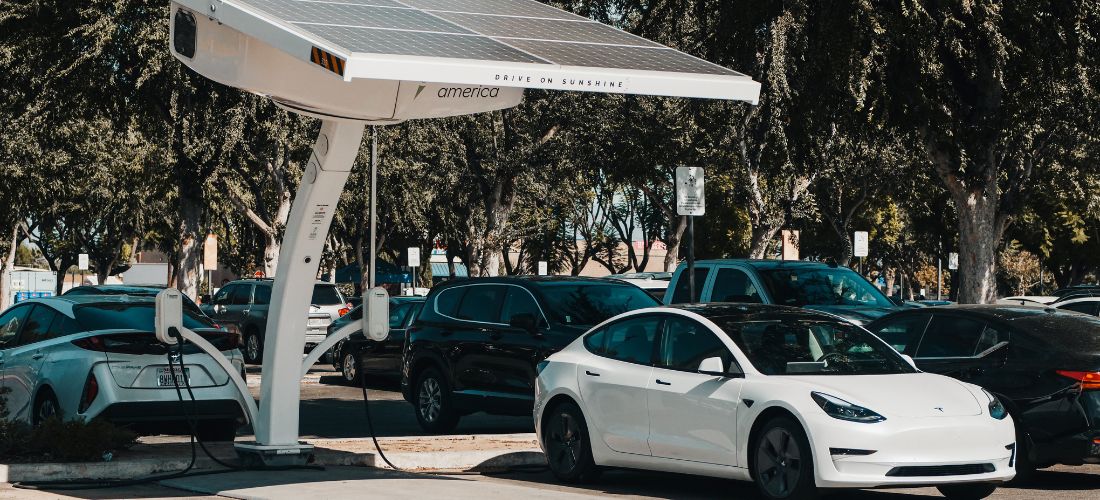
Using solar for electric car charging is no longer a futuristic idea-it’s becoming a practical solution for homeowners and businesses across India. With rising electricity costs and increasing EV adoption, many people are exploring electric car charging with solar as a cleaner and more affordable option. In simple terms, solar panels capture sunlight, convert it into electricity, and use it to charge your EV battery—reducing your dependency on the grid.
If you’ve ever wondered how solar EV charging actually works, how much it costs, and whether it’s worth installing, this guide will walk you through everything in a clear and easy-to-understand way.
What is Solar EV Charging?
Solar EV charging means using solar panels to generate electricity and power your electric vehicle. Instead of relying entirely on grid electricity, your EV gets charged using energy from the sun.
This setup usually includes:
- Solar panels installed on your rooftop
- An inverter to convert electricity
- A solar EV charger (also called a wall box)
- Optional battery storage system
This system is commonly referred to as:
- Charging electric vehicle with solar
- Solar electric car charging
- Solar power electric car charger setup
How Does Solar Energy Power Electric Cars?
Whether you install solar panels at home or at a commercial site, the process remains simple and efficient.
1. The Basic Process
Here’s how electric car charging with solar works step by step:
- Solar panels capture sunlight and convert it into DC electricity
- The inverter converts DC into AC power
- The solar electric car charger sends electricity to your EV
- Your EV battery stores this clean energy
This process ensures smooth and efficient ev charging solar without relying heavily on grid electricity.
2. How Solar EV Charging Works After Installation
Once your system is installed, it can operate in different ways depending on your setup:
- Home solar EV charging
Your rooftop panels power your EV directly during the day - Hybrid charging (Solar + Grid)
Uses solar first, then switches to grid when needed - Solar-powered charging stations
Common in commercial areas or parking lots - Off-grid solar EV charging
Works independently using battery storage - Future wireless solar charging
Still emerging but shows promising potential
Read More: hybrid solar inverters
Why Use Solar for Electric Car Charging?
Switching to solar for electric car charging offers both financial and environmental benefits. It’s not just about saving money-it’s about long-term sustainability.
Key Benefits of Solar EV Charging
- Lower charging costs
Solar energy is free after installation - Reduced electricity bills
Less dependency on grid power - Clean and green energy
No harmful emissions - Energy independence
Generate your own electricity - Long-term savings
System pays for itself over time - Supports India’s green mission
Aligns with renewable energy goals
Real-Life Insight: What Most Homeowners Experience
Many EV owners who install solar systems notice a big drop in their monthly electricity bills within the first few months. For example:
- Charging an EV daily using grid power can cost ₹3,000–₹5,000/month
- With solar, this cost can drop by up to 60–70%
The biggest advantage? You are using sunlight-which is completely free.
How Many Solar Panels Do You Need?
The number of panels depends on several factors:
- EV battery size
- Daily driving distance
- Sunlight availability
- Panel efficiency
Simple Example:
- A 40 kWh EV battery
- Requires around 10–12 solar panels for a full charge in a day
If you drive more or own a larger EV, you may need a bigger system.
Do You Need a Special Solar EV Charger?
Yes, a standard plug may not be enough for efficient solar electric car charging.
Key Components You’ll Need:
- Solar panels
- Inverter
- Solar EV charger / wall box
- Smart energy management system
- Optional: Battery storage
Advanced Features (Optional but Useful):
- Smart charging controls
- Load management
- Bidirectional charging (vehicle-to-home)
Using a proper solar EV charger ensures faster and safer charging.
Solar EV Charging Cost in India
Understanding costs is important before investing in a solar power electric car charger setup.
Cost Comparison Table
| Aspect | Details |
|---|---|
| Solar power cost | ₹2.5–₹3 per kWh |
| Grid electricity cost | ₹8–₹9 per kWh |
| Savings potential | Up to 60–70% |
| Payback period | 4–6 years |
| Government incentives | Subsidies & tax benefits available |
| Maintenance | Low |
Disclaimer: Basic standard price is not fixed. Costs can vary based on location, system size, and market conditions.
Is Solar EV Charging Worth It in India?
Short answer: Yes, for most people.
India has strong sunlight availability, making it ideal for ev charging solar systems.
Why It Works Well in India:
- High solar exposure
- Rising electricity prices
- Government support for solar energy
- Growing EV adoption
Over time, solar charging becomes cheaper than grid charging.
Challenges You Should Know
While solar electric car charging is beneficial, there are a few limitations:
- High initial installation cost
- Requires rooftop space
- Charging depends on sunlight
- Battery storage adds extra cost
However, most of these challenges are one-time or manageable.
Practical Tips Before Installing Solar EV Charging
If you’re planning to install a solar electric car charger, keep these tips in mind:
- Assess your daily driving needs
- Choose high-efficiency panels
- Install a smart EV charger
- Consider battery storage for night charging
- Check government subsidies
Solar EV Charging for Homes vs Businesses
For Homes:
- Ideal for daily commuting
- Smaller system size
- Lower installation cost
For Businesses:
- Can install solar charging stations
- Attract EV users
- Generate additional revenue
Future of Solar EV Charging
The future of charging electric vehicle with solar looks promising.
Upcoming Trends:
- Wireless EV charging
- Smart grid integration
- Vehicle-to-home power systems
- More affordable solar panels
India is moving toward a clean energy future, and solar EV charging will play a big role.
Read More : what is a solar carport
Conclusion
Using solar for electric car charging is one of the smartest decisions for EV owners today. It combines cost savings, environmental benefits, and energy independence into one powerful solution.
While the initial investment may seem high, the long-term benefits outweigh the costs. As solar technology becomes more affordable and EV adoption increases, solar EV charging will soon become the standard rather than the exception.
Frequently Asked Questions
1. Is solar for electric car charging worth it in India?
Answer: Yes, using solar for electric car charging is worth it in India due to high sunlight availability and rising electricity costs. It helps reduce charging expenses and supports clean energy usage.
2. How does charging electric vehicle with solar work?
Answer: Charging electric vehicle with solar works by converting sunlight into electricity using solar panels. This power is then used through an inverter and solar EV charger to charge your EV battery.
3. How many solar panels are needed for solar EV charging?
Answer: For an average EV with a 40 kWh battery, around 10–12 solar panels are required. The number may vary depending on usage and sunlight availability.
4. Do I need a special solar electric car charger?
Answer: Yes, a solar electric car charger or compatible EV charger is recommended to efficiently use solar energy and manage power flow between panels, grid, and EV.
5. What is the cost of solar EV charging setup in India?
Answer: The cost depends on system size and components. On average, solar power costs around ₹2.5–₹3 per kWh, making it cheaper than grid electricity.
6. Can I charge my EV at night using solar power?
Answer: Yes, you can charge your EV at night if you have battery storage. Otherwise, the system will use grid electricity.
7. What are the benefits of solar electric car charging?
Answer:
- Lower electricity bills
- Clean and renewable energy
- Reduced carbon footprint
- Long-term savings
- Energy independence
8. Is solar EV charging better than grid charging?
Answer: Yes, solar EV charging is more cost-effective and environmentally friendly compared to grid charging over the long term.
9. Are solar EV chargers suitable for homes?
Answer: Yes, they are ideal for homes with rooftop space and regular EV usage.
10. What are the limitations of solar EV charging?
Answer: Some limitations include high initial cost, dependence on sunlight, and the need for proper installation space.