
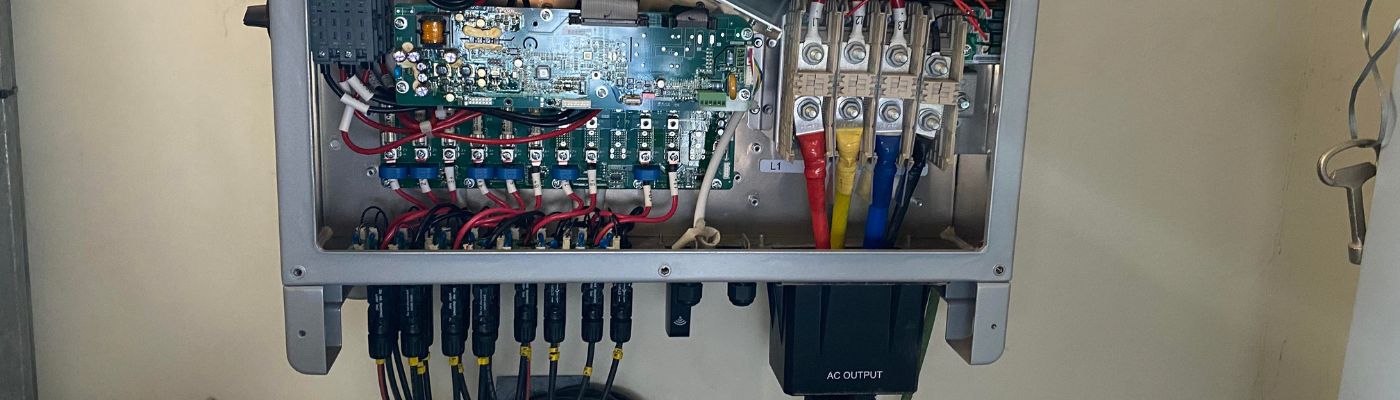
Hybrid Solar Inverters are advanced solar power devices that smartly manage electricity from solar panels, batteries, and the grid in a single system. They not only convert solar energy into usable electricity but also store extra power in batteries and supply backup during power cuts-making them one of the most practical solar solutions in 2026.
As electricity prices rise and power reliability varies across regions, hybrid solar inverters are becoming a preferred choice for homeowners and businesses that want both savings and uninterrupted power.
What Is a Hybrid Solar Inverter?
A hybrid solar inverter is an all-in-one intelligent inverter that combines:
- A solar inverter
- A battery inverter/charger
- Grid power management
Its main role is to control the flow of electricity between solar panels, battery storage, household loads, and the grid-automatically and efficiently.
Unlike basic grid-tied inverters that shut down during power cuts, hybrid solar inverters can continue powering essential appliances when the grid fails (if batteries are connected).
In short, a hybrid solar inverter ensures:
- Maximum use of solar energy
- Battery backup when required
- Smooth switching between power sources
- Reduced dependence on the grid
How Hybrid Solar Inverters Work
Hybrid solar inverters operate using smart energy management logic. Here’s how they function throughout the day:
Step 1: Monitoring Power Availability
The inverter continuously checks:
- Solar power generation
- Home electricity demand
- Battery charge level
- Grid availability
Step 2: Extracting Maximum Solar Power
Using MPPT (Maximum Power Point Tracking) technology, the inverter ensures solar panels produce the highest possible output under current sunlight and temperature conditions.
Step 3: Running the Home on Solar First
Solar energy is always the first priority. The inverter converts DC power from panels into AC and runs household appliances directly.
Step 4: Charging the Battery
If solar production exceeds usage, excess energy is used to charge the battery.
Step 5: Managing Excess Energy
- If net metering is allowed, extra power is exported to the grid
- If export is restricted, the inverter limits output to prevent grid feeding
Step 6: Handling Low Solar Generation
When solar energy is insufficient:
- The inverter checks battery availability
- If battery is low, it draws power from the grid
Some hybrid solar inverters can also charge batteries from the grid during off-peak hours.
Step 7: Power Backup During Outages
When the grid fails:
- The inverter isolates from the grid for safety
- Supplies power using solar and batteries
- Runs only essential loads that are pre-wired
Also Read: Power Backup Options
Step 8: Grid Restoration
Once grid power returns:
- The inverter synchronizes voltage and frequency
- Resumes normal operation
Main Functions of Hybrid Solar Inverters
Hybrid solar inverters perform multiple critical functions daily:
- DC to AC Conversion – Converts power from solar panels and batteries into usable AC electricity
- Battery Charging – Charges batteries using solar power or grid power when needed
- AC to DC Conversion – Converts grid power to DC to charge batteries
- Grid Synchronization – Matches grid voltage and frequency for safe import/export
- Automatic Switching – Seamlessly switches between solar, battery, and grid
- Load Management – Prioritizes essential appliances during backup
- Power Quality Control – Maintains stable voltage and frequency
- System Monitoring – Displays real-time data through screens or mobile apps
Operational Modes of Hybrid Solar Inverters
Hybrid solar inverters operate in different modes depending on energy availability:
Grid-Tied Mode
Solar power runs the home during the day. Excess energy charges batteries or goes to the grid.
Hybrid Mode
Solar, battery, and grid work together based on real-time demand.
Backup Mode
During outages, the inverter supplies power from the battery automatically.
Battery Charging Mode
Prioritizes battery charging during peak sunlight hours.
Night Mode
Battery power runs appliances after sunset, reducing grid usage.
Types of Hybrid Solar Inverters
Hybrid solar inverters come in several configurations to suit different needs.
1. Inverter/Charger Hybrid
- Works with grid or generator
- Charges batteries from AC source
- Requires separate solar charge controller
2. All-in-One Hybrid Inverter
- Built-in MPPT solar charger
- Compact and easy installation
- Ideal for residential rooftops
3. Grid-Tied Hybrid Inverter
- Supports net metering
- Exports surplus energy
- Backup works only with battery
4. Multi-Mode Hybrid Inverter
- Fast switching during outages
- Can support partial or full home backup
- Suitable for larger homes
5. Off-Grid-Capable Hybrid Inverter
- Designed for areas with no grid access
- Works with solar, batteries, and generator
- Requires careful system sizing
Hybrid Solar Inverter vs Normal Inverter
Here’s a simple comparison table:
| Feature | Hybrid Solar Inverter | Normal Inverter |
|---|---|---|
| Solar integration | Built-in MPPT | Not supported |
| Battery charging | Solar + grid | Grid only |
| Grid export | Yes (if allowed) | No |
| Backup during outage | Yes (with battery) | Yes |
| Electricity savings | High | None |
| Smart monitoring | Yes | No |
| Environmental benefit | High | Low |
Hybrid Solar Inverter Price in India (2026)
Prices depend on capacity, brand, features, and battery compatibility.
Estimated Hybrid Solar Inverter Prices (Without Battery)
| Capacity | Approx Price (₹) |
|---|---|
| 3 kW | ₹85,000 – ₹1,00,000 |
| 5 kW | ₹95,000 – ₹1,15,000 |
| 10 kW | ₹2,50,000 – ₹3,50,000 |
| 30 kW | ₹4,70,000 – ₹5,50,000 |
| 50 kW | ₹6,00,000 – ₹7,00,000 |
Prices are indicative and may vary by city, GST, brand, warranty, and market conditions.
Advantages of Hybrid Solar Inverters
- Energy independence from the grid
- Uninterrupted backup power during outages
- 24/7 solar utilization through battery storage
- Lower electricity bills
- Smart load prioritization
- Future-ready system with battery expansion
Disadvantages of Hybrid Solar Inverters
- Higher upfront cost compared to on-grid systems
- Battery replacement expense after 5–10 years
- Space requirement for battery installation
- Longer return on investment
For homes with reliable grid supply, hybrid systems may not always be financially justified.
When Should You Choose a Hybrid Solar Inverter?
Hybrid solar inverters make sense if:
- Power cuts are frequent
- Evening electricity usage is high
- Grid voltage is unstable
- Backup for medical or office equipment is needed
- Time-of-use electricity tariffs apply
- You plan to add batteries in the future
When Is an On-Grid Inverter a Better Option?
Choose an on-grid inverter if:
- Grid supply is stable
- Most energy is used during daytime
- Fast ROI is important
- No battery backup is required
On-grid systems are simpler and offer quicker payback in such cases.
Are Hybrid Solar Inverters Worth It in 2026?
Hybrid Solar Inverters are worth the investment for users who value energy reliability, backup protection, and long-term flexibility. While the initial cost is higher, the ability to manage solar, battery, and grid power intelligently makes them a strong future-proof solution.
However, for locations with excellent grid reliability, a standard on-grid solar system may deliver better financial returns.
Final Thoughts
Hybrid solar inverters represent the next step in smart solar energy systems. They give users control, backup security, and efficient power management-all in one unit. The decision ultimately depends on your location, power reliability, and long-term energy goals.
If uninterrupted power and energy independence matter to you, hybrid solar inverters are one of the smartest solar investments in 2026.
FAQ –
1: What is a hybrid solar inverter used for?
A hybrid solar inverter is used to manage power from solar panels, batteries, and the grid. It helps run home appliances, store excess solar energy in batteries, and provide backup during power cuts.
2: Can a hybrid solar inverter work without a battery?
Yes, a hybrid solar inverter can work without a battery like an on-grid system. However, battery backup during power cuts will not be available unless a battery is connected.
3: Is a hybrid solar inverter better than an on-grid inverter?
A hybrid solar inverter is better if you need power backup or plan to add batteries in the future. If your area has a reliable grid and no backup requirement, an on-grid inverter may offer a better return on investment.
4: How much does a hybrid solar inverter cost in India in 2026?
In 2026, hybrid solar inverter prices in India typically start from around ₹85,000 for a 3kW system and can go higher depending on capacity, brand, and features. Battery cost is additional.
5: Does a hybrid solar inverter reduce electricity bills?
Yes, hybrid solar inverters reduce electricity bills by prioritizing solar energy usage and storing excess power in batteries, which lowers dependence on grid electricity.