
10 Uses of Solar Energy in Our Daily Life Across India
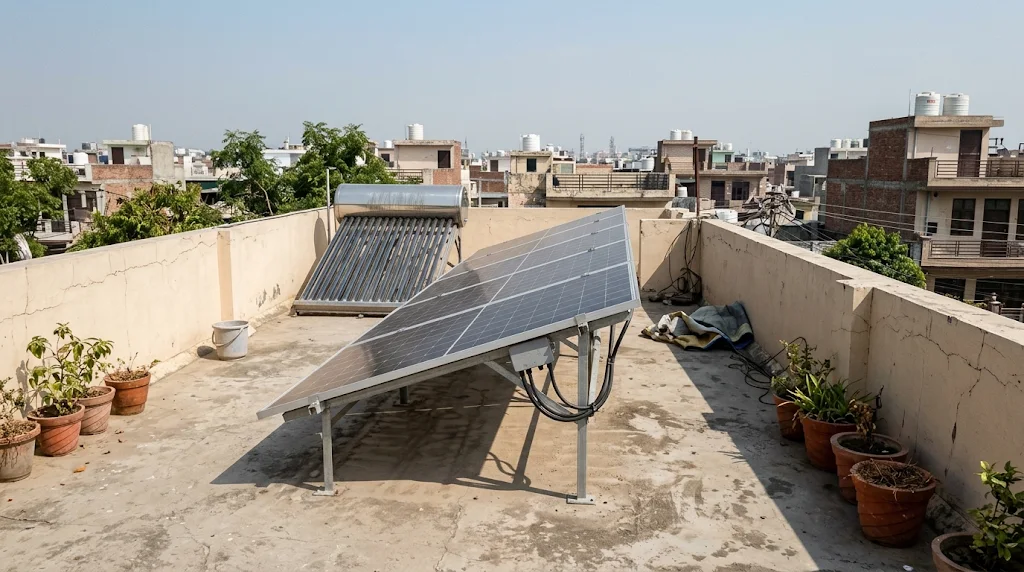
Solar energy is no longer confined to desert power parks or science textbooks. Walk through any Indian neighbourhood, highway, or farming belt today, and you will see rooftop panels, solar-lit streets, and sun-powered irrigation pumps doing everyday work. Exploring the 10 uses of solar energy in our daily life shows how sunlight already powers Indian homes, farms, and workplaces. How Is Solar Energy Used in Daily Life in India? Solar energy is used in daily life in India in two primary ways: generating electricity through photovoltaic (PV) panels and producing heat through solar thermal collectors. Households, farmers, and businesses rely on sunlight to run home appliances, heat water, light streets, pump irrigation water, charge devices, and support commercial buildings. India receives abundant sunlight across most regions for much of the year. Rising summer cooling loads, daytime commercial power demand, and the need for dependable rural electricity have turned solar into an everyday utility. Whether you are a student, homeowner, farmer, or business owner, solar fits into more daily routines than most people realise. What Are the 10 Uses of Solar Energy in Our Daily Life? From morning showers to evening street lighting, here are the 10 uses of solar energy in our daily life shaping how India lives and works. 1. Rooftop Solar Panels for Everyday Home Electricity The most visible use of solar power is generating household electricity. Rooftop solar panels use semiconductor photovoltaic (PV) cells to absorb sunlight and produce direct current (DC) electricity. An inverter converts that DC power into alternating current (AC) electricity to run fans, lights, refrigerators, televisions, laptops, and air conditioners. Across urban and semi-urban India, many households install an on-grid solar system tied to the local utility grid. Where net metering is available through the local power utility, surplus daytime power flows back to the grid while the home draws electricity after sunset. Clean energy at home works quietly without changing how you use your appliances. 2. Solar Water Heaters for Daily Bathing and Kitchen Needs Long before rooftop PV panels became common, solar water heaters were already a familiar sight on terraces in Bengaluru, Pune, Ahmedabad, and northern India. Unlike PV panels, a solar water heater does not generate electricity. It uses solar thermal collectors—evacuated glass tubes or flat-plate collectors—to absorb heat from sunlight and transfer it directly to water stored in an insulated tank. That hot water supports daily bathing, dishwashing, and laundry, especially on winter mornings, while reducing reliance on electric geysers. 3. Solar Street Lights for Neighbourhoods, Campuses, and Highways Step outside at dusk in a gated society, public park, college campus, or village road, and there is a strong chance the lamp overhead runs on sunlight. A standalone solar lighting system combines a compact PV panel, a charge controller, a rechargeable battery, and an LED lamp on one pole. The panel charges the battery during daylight, and built-in dusk-to-dawn sensors switch the LED on at sunset and off at sunrise. Because these poles operate independently of underground grid cabling, pathways, parking lots, and rural roads stay lit even during local power cuts. 4. Solar Water Pumps for Agricultural Irrigation and Farms For Indian farmers, reliable daytime irrigation directly affects crop health. Rural grid supply can be erratic or scheduled at night, while diesel pumps require fuel transport and regular upkeep. A solar water pumping system converts sunlight into electrical power that drives a surface or submersible pump through a dedicated controller. Farmers lift water from borewells, open wells, ponds, or canals during peak daylight hours. Beyond crop irrigation, solar pumps also supply water for livestock and rural storage tanks. 5. Commercial Rooftop Solar for Offices, Factories, and Warehouses Factories, cold storages, hospitals, schools, and offices consume most of their electricity during daytime working hours—the exact window when solar panels peak. A commercial solar system turns unused roof space into a productive asset, supplying daytime power for lighting, HVAC systems, office computers, and light machinery. Commercial properties choose grid-tied setups to offset daytime demand or hybrid systems with battery storage where uninterrupted power matters most. 6. Solar Cooking and Solar Thermal Drying Solar thermal energy also supports everyday food preparation and preservation. Box-type and parabolic solar cookers concentrate sunlight onto a cooking vessel, preparing staples like rice, dal, and vegetables without firewood or cooking gas. Community kitchens, hostels, and rural institutions often run larger concentrating solar cookers alongside conventional stoves. In agriculture and food processing, enclosed solar dryers use sun-heated air to dry spices, fruits, grains, and vegetables hygienically, protecting produce from dust, insects, and sudden rain. 7. Portable Solar Chargers for Phones, Power Banks, and Travel You do not need a rooftop system to use solar power daily. Foldable solar chargers and solar power banks let commuters, trekkers, field engineers, and students top up phones, earbuds, and torches outdoors. These compact units pair miniature PV cells with USB charging circuits. Although they charge more slowly than wall sockets, they are handy during outages, train journeys, camping trips, and remote fieldwork. 8. Off-Grid Solar Home Systems for Rural and Remote Areas In remote hamlets, hilly terrain, and farmhouses where utility lines are unreliable or absent, off-grid solar systems provide essential daily electricity. An off-grid setup combines solar panels, a charge controller, a battery bank, and an inverter to power LED bulbs, ceiling fans, and mobile chargers independently of the grid. Because batteries store daytime generation, families get clean, quiet lighting for evening studies and household chores after dark, replacing smoky kerosene lamps. 9. Solar-Powered Ventilation, Fans, and Cooling Support Indian summers make indoor heat management a daily challenge for homes, workshops, and storage sheds. Roof-mounted solar attic fans and exhaust ventilators use small integrated PV panels to push trapped hot air out of attics, warehouses, and poultry sheds during peak afternoon heat—right when sunlight is strongest. At home, DC solar fans and solar-backed inverters help keep rooms comfortable during daytime power cuts without draining backup batteries quickly. 10. Solar Power for EV Charging and Community Mobility As