
Solar Power Backup for Home: How It Works and What You Actually Need
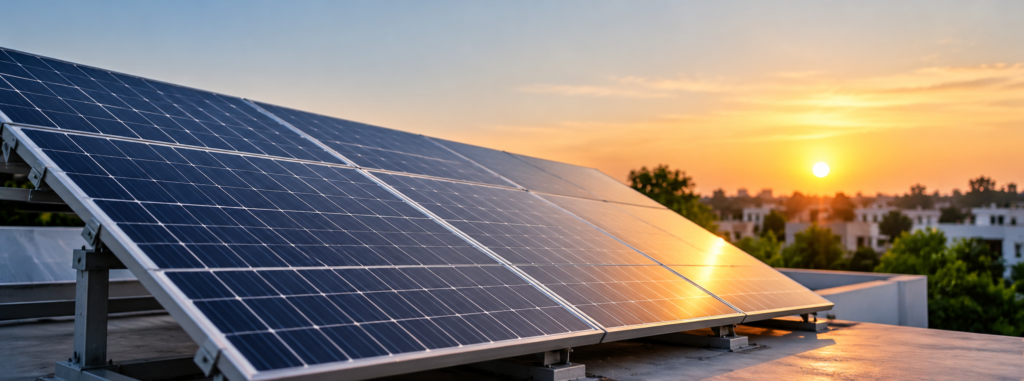
Power cuts have a habit of showing up at the worst possible time. The fan cuts out mid-afternoon, the fridge goes silent overnight, or the inverter gives up right as a work call starts. For more and more Indian households, the fix isn’t a bigger diesel generator or yet another battery replacement. It’s solar power backup for home a setup that makes its own electricity and stores it for exactly these moments. If you’re trying to figure out whether solar backup is worth it for your house, here’s what it actually involves, how it’s different from a regular inverter, and what to think through before you commit to anything. What Is Solar Power Backup for Home? A home solar power backup system uses rooftop panels to generate electricity through the day and stores whatever’s left over in a battery, so it’s there whenever the grid drops, day or night. A regular inverter only recharges off grid electricity. A solar backup system for home charges mainly (sometimes entirely) from sunlight instead, which is why it can keep going through longer outages as long as the battery still has charge left in it. That’s not the same thing as just having panels on your roof. A home solar battery backup pairs the panels with a battery bank, an inverter, and a charge controller, so the energy you’ve stored is actually usable on demand rather than only while the sun’s out. How Does a Home Solar Backup System Work? A few core pieces need to work together for any of this to function: Solar panels capture sunlight and turn it into DC electricity. Charge controller regulates how much current flows into the battery, which protects battery life over time. Battery storage holds onto surplus solar energy. Lithium batteries are the common choice here, mostly because they’re compact and last longer through charge cycles. Solar inverter with battery converts stored DC power into the AC power your appliances actually use, and handles the switching between solar, battery, and grid. Through the day, panels usually produce more than the house needs, so that surplus goes into the battery. Come evening, or whenever the grid fails, the system pulls from the battery instead of leaving you sitting in the dark. Can Solar Panels Provide Backup During a Power Cut? Only if there’s battery storage involved. A pure grid-tied (on-grid) system can’t supply power during a blackout at all, since it’s built to sync with grid electricity and shuts off automatically for safety the moment the grid goes down. If backup during outages actually matters to you, you’re looking at either an off-grid solar system or a hybrid solar system for home, one that brings solar, battery, and grid connectivity together. Is Solar Backup Better Than a Normal Inverter? A regular inverter is, at the end of the day, just a battery with a switch attached. It stores grid electricity and lets it out during a cut, so everything it delivers has already come off the grid once. Solar backup generates its own electricity instead, which means a real chunk of what you use during an outage never touched the grid at all. A few things worth weighing here: Where the charge comes from. Normal inverters pull entirely from the grid. Solar backup pulls mainly from sunlight, with grid charging kept as a fallback in hybrid setups. What it saves you over time. Solar backup also offsets your daytime grid use rather than sitting idle waiting for a cut, so it earns its keep in a way a plain inverter doesn’t. How it handles a long outage. A properly sized solar battery backup for home can recharge itself the next day even if the power stays out, something a grid-only inverter simply can’t do. How Much Solar Battery Capacity Does a Home Need? Honestly, it comes down to which appliances you want backed up and for how long. Someone backing up lights, fans, and a Wi-Fi router needs a much smaller setup than someone who also wants the fridge, an AC or two, and a water pump running through a cut. A reasonably practical way to think about sizing: Write down the appliances you want on backup, along with roughly how much wattage each draws. Figure out how many hours a day they’re actually in use. Decide how many backup hours you want without any sunlight, an evening, overnight, or longer. Get the battery and panel capacity sized against that load, ideally with a professional assessment to confirm it before you buy anything. Guessing at capacity is probably the single biggest reason homeowners end up with a system that either can’t keep up during an outage or costs way more than it needed to. A site-specific assessment is worth doing before you finalize anything. Can Solar Backup Run Fans, Lights, Refrigerators and Other Appliances? Yes, solar backup can run the usual home essentials, fans, lights, fridges, routers, TVs, even air conditioners, as long as the battery and inverter are actually sized for that load. A lot of homeowners choose to back up just the “essential loads” (lighting, fans, refrigeration, communication devices) to keep the battery size and cost reasonable, and only run heavier appliances like ACs on backup if the system has been specifically built for that. On-Grid, Off-Grid, and Hybrid Solar Systems: What’s the Difference? An on-grid solar system stays connected to the utility grid and feeds any excess power back into it, but it offers zero backup during a power cut since it shuts down with the grid for safety reasons. An off-grid solar system runs completely independent of the grid, generating, storing, and supplying its own electricity. It works well in areas where grid access is unreliable or missing altogether. A hybrid solar system for home combines generation, battery storage, and a grid connection, pulling from whichever source makes sense at the time and switching over to battery automatically the moment the grid drops. For most urban Indian homes dealing with power cuts, a