
Cost of Installing a Solar Water Pump System in India
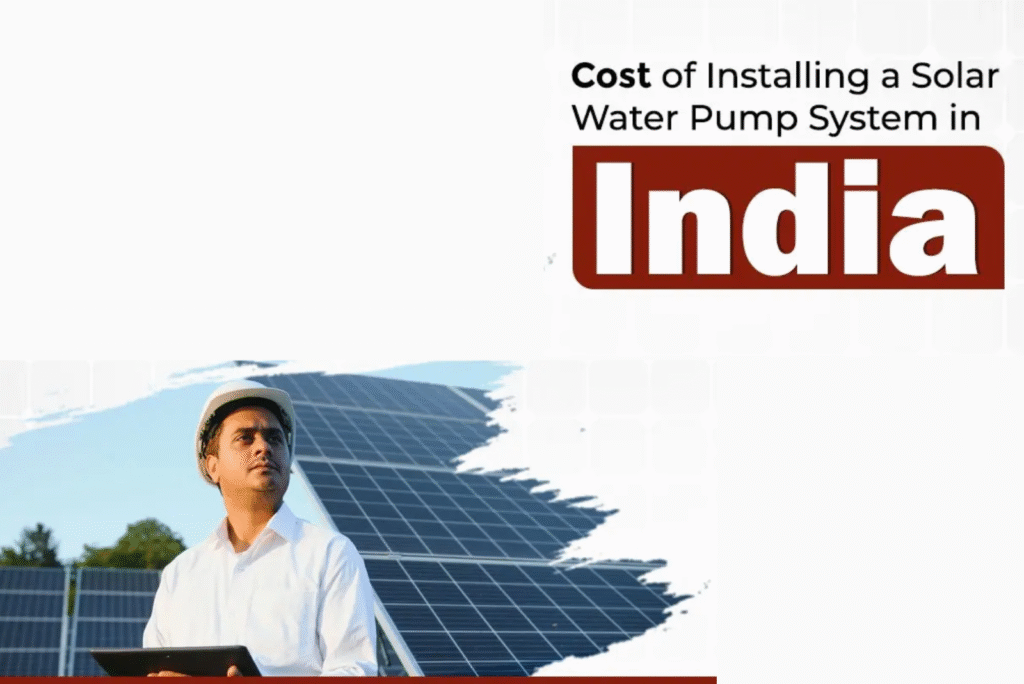
Cost of Installing a Solar Water Pump System in India Home Blogs Farming in India is seeing a huge shift as solar power is leading the way. The electricity costs are rising, and power cuts are still common in rural areas. This is why many farmers are turning to the solar water pump for agriculture. Why? Because it’s clean, efficient and a cost-effective way to water your fields. But the question is, what does it cost to install one? In this blog, we’ll understand solar water pump costs and subsidies. This will help you understand if solar water pumps are the right fit for the agricultural sector in India. What is the Price of a Solar Water Pump in India? Pump Capacity Approx. Price 1 HP ₹70,000 – ₹1,00,000 2 HP ₹1,30,000 – ₹1,80,000 3 HP ₹1,60,000 – ₹2,20,000 5 HP ₹2,30,000 – ₹2,90,000 10 HP ₹5,00,000 – ₹6,10,000 Factors Affecting Solar Pump Installation Cost It’s not just about purchasing a pump. The cost of installing a solar water pump for agriculture depends on a number of factors. Let’s take a look at them. 1. Pump CapacityThe size of the pump is the main deciding factor for the cost. A higher horsepower (HP) pump draws more water, which makes it great for large farms and deep water sources. A powerful pump will have a high price. For example, a 10 HP system will have a higher cost than a 1 HP pump. 2. Type of PumpThere are different types of pumps that you’ll find in the market. Submersible pumps – These pumps go under the water level and are best for borewells and deep wells. These pumps are on the expensive side due to their build and high power needs.Surface pumps – Surface pumps are installed above the ground to fetch water from shallow water sources. These pumps are more affordable than the submersible ones. Also read – Different types of solar water pumps 3. Solar Panel QualityThe solar water pump price depends on the quality of the solar panel too. There are many different types of panels with different efficiencies. The higher-quality panels’ price can be a bit high. These are more reliable and cost-effective in the long run. 4. Installation ComplexitySetting up a solar water pumping system requires labour, strong mounting structures and more wiring. All of this adds to the total cost which may affect the solar water pump price. 5. Additional ComponentsA solar water pump system isn’t just a pump and panels. It includes other parts too. Inverter – It’s needed for an AC pump which cannot use direct current.Controller – This manages the flow of current and also prevents damage.Mounting structures – These hold your solar panels in place to maintain their efficiency.Batteries – Batteries store extra energy so that the pump can work even in cases of no sunlight or at night. Each of the factors matters in making up the total cost of a solar water pump. So, it’s important to consider every aspect while making a decision. Government Subsidies for Solar Water Pumps in India The Government of India has always been first when it comes to encouraging people to take steps for the betterment of the future. Solar water pump subsidy is one method to do so. By providing excellent subsidies for installing solar water pump for agriculture, it’s becoming increasingly easier for farmers to turn to solar. Under their Pradhan Mantri Kisan Urja Suraksha evam Utthaan Mahabhiyan (PM KUSUM) scheme, the solar water pump subsidy is: Central Government Subsidy: 30% of the total cost. State Government Subsidy: 30% of the total cost. Farmer’s Contribution: The remaining 40% is borne by the farmer. (30% of which can be taken as a loan) This means solar water pumps for agriculture have become easily accessible through subsidies and low solar water pump price. Also read – Solar Kusum-B yojana & Solar Kusum-C Yojana for more information about the same. Cost Difference: AC vs. DC Solar Pumps AC Pumps – These have a lower initial pump cost. However, these solar pumps require inverters to function which adds to the installation costs. Also, due to the complex components, the maintenance needs may rise and cause a rise in the expenses. DC Pumps – These pumps have a higher upfront cost due to many components. However, unlike AC pumps, these have low maintenance and operating costs since they run on solar power without the need for a utility grid. Is a Solar Water Pump System Worth the Investment? There are many uses of solar water pumps in agriculture. But the question is whether a solar water pump for agriculture is truly worth your money. Our answer is, yes, it is. Here’s why: 1. No More High Electricity BillsAs solar panels use sunlight, your solar water pump for agriculture won’t need to rely on the electricity grid. This reduces the electricity bills to a great extent. As farmers continue using solar water pumps for agriculture, they will be saving a lot in the upcoming years. 2. A Win for the EnvironmentSolar power is wonderful for the environment. Since the sun is a natural and renewable resource, it will minimise reliance on non-renewable energy resources. Burning coal and other fuels emits greenhouse gases such as carbon dioxide into the environment. That is why going solar is an intelligent and environmentally friendly alternative! 3. Lower Running and Maintenance CostsThe amazingness of solar panels doesn’t end at just their eco-friendly and efficient attributes, there’s much more. Once farmers install these solar pumps, they’ll have to face low maintenance costs. With no fuel and fewer moving parts, the maintenance is very affordable. Check out – Maintenance and durability of solar water pumps 4. Strong Government SupportThe government supports farmers through various initiatives and a solar water pump subsidy. This lifts the financial burden off of farmers and encourages them to make use of the amazing solar power to water their fields. 5. Long-Term Value for Your FarmThe Solar water pump for agriculture is not
solar-amc-vs-one-time-service
Solar AMC vs One-Time Service: Which One is Better? Home Blogs Going solar is one of the best things you can do for the planet and your wallet. But once those panels are up on your roof, a new question comes up: How do you keep them running smoothly for years to come? That’s where solar AMC (solar annual maintenance contracts) and one-time solar service enter the picture. Both are useful, but they have different features. So, how does one decide which one is better for them? In this blog, we’ll understand what makes one better than the other. What Is Solar AMC and How Does It Work? Solar AMC is a yearly service plan offered by solar companies upon solar panel installation. An expert team will inspect your solar system while cleaning and maintaining it if necessary. Solar annual maintenance contracts act like a reliable friend, so you can enjoy hassle-free services. Here’s how it usually works: Scheduled Inspections – Technicians visit periodically to inspect solar panels and the whole system. Cleaning – There’s a thorough cleaning of panels to remove dust or debris. This helps maintain efficiency. Performance Monitoring – The system’s energy output is monitored regularly. This is helpful because it makes sure your system is working perfectly. Repairs and Replacements – Solar annual maintenance contracts offer repair and replacement of faulty parts. Reporting – The service provider gives you reports on system performance and maintenance. That’s why Solar AMCs are necessary for large solar systems. Especially with the rise of solar technology in India, making clean energy more accessible and affordable for households and businesses. Benefits of Choosing Solar AMC for Long-Term Maintenance Most of us don’t have time (or the nerve) to climb on the roof and inspect solar panels. That’s why Solar AMC is such a game-changer. Let’s break down its wonderful benefits: 1. Hassle-Free MaintenanceSigning up for solar annual maintenance contracts means no stress. You won’t have to worry about regular clean-ups or emergency repairs any more. Your service team will take care of everything from scheduling visits to keeping your system clean. 2. Boosted Energy EfficiencyAs you’re already aware of solar panels being set up outside tend to accumulate dust on them. Dust and debris can be responsible for reducing efficiency. Solar AMC offers regular cleaning, which lets your solar panels perform their best every day! 3. Longer LifespanRoutine maintenance can add years to your system’s life. Catching corrosion early, replacing damaged wires, and tightening loose components helps a lot. With a solar annual maintenance contract, you’re adding more value to your investment. 4. No Surprise RepairsBreakdowns never come at a good time. But with solar AMC, many minor repairs are included and any big issues are caught early. This doesn’t let them turn into a financial problem later on. 5. Better Warranty ProtectionDid you know that many solar panel warranties require regular professional maintenance? Skipping checkups might void your warranty. A solar AMC helps you stay compliant without stress. Also read – Why are annual maintenance contracts important? One-Time Solar Service: Pros and Cons One-time solar service is exactly what its name suggests. Maintenance is done only when you request it. There’s no contract and you only need to pay when you need an inspection or repair service Pros: Lower upfront cost – You only pay when you actually need to check or repair your solar system. Flexibility – You can decide when and from where to get service, as you’re not bound to any contract. Cons: Less Prevention, More Reaction – With one-time services, you don’t feel the need to get your systems inspected. And if there’s no inspection, you will only know the problems when there’s some damage.Inconsistent performance – Without regular cleanings and inspections, you’ll see a decline in the performance of solar panels. Higher long-term costs – One-time services are only given when you request them. So they may go unnoticed; however, ignoring small issues will lead to bigger and costly ones. Stress and delays – If you need help, you might have to wait a long time. Finding good technicians can get a bit difficult, especially at times of emergencies. This may cause stress. Cost Comparison: AMC vs One-Time Solar Maintenance With solar AMC, you’ll pay a fixed annual fee. It includes – 2 to 4 scheduled service visits – This helps the panels stay efficient for a long time.Cleaning – Solar panels are prone to dust accumulation because they are installed out in the open. Minor repairs – These repairs or part replacements are necessary for the proper working of the panels. The costs are fixed for the services and you only need to pay the same amount. However, with one-time service, costs can vary depending on different factors. A basic cleaning might be cheap, but if your inverter fails, or your system needs rewiring? Your bill can be heavy on your pockets. It is clear that solar maintenance services like solar AMCs usually lead to long-term financial savings by keeping your system functioning effectively and preventing costly failures. Which Is Better for Residential Solar Panels? For homeowners, it’s better to choose Solar AMC. Here’s why – Life gets busy and people generally don’t have time to inspect their solar panels regularly. In such cases, Solar AMC comes to the rescue. Cleaning panels improperly can actually damage them. With the help of professionals, you’ll avoid this problem. Electrical issues can be dangerous if left unchecked. All of this requires experts who know how to deal with them properly. Scheduled inspections, regular cleanings and performance checks help keep your system up to date. How do you decide between AMC and One-Time Service for solar systems? A few things should be taken into account when selecting the best for your solar system’s upkeep. Your system’s size and complexity should be the first thing to consider. Larger systems greatly benefit from AMC as regular checkups keep everything efficient. While smaller systems may not need frequent care, for such setups, a one-time service is a good option. The second aspect
solar-street-lights-vs-traditional-street-lights
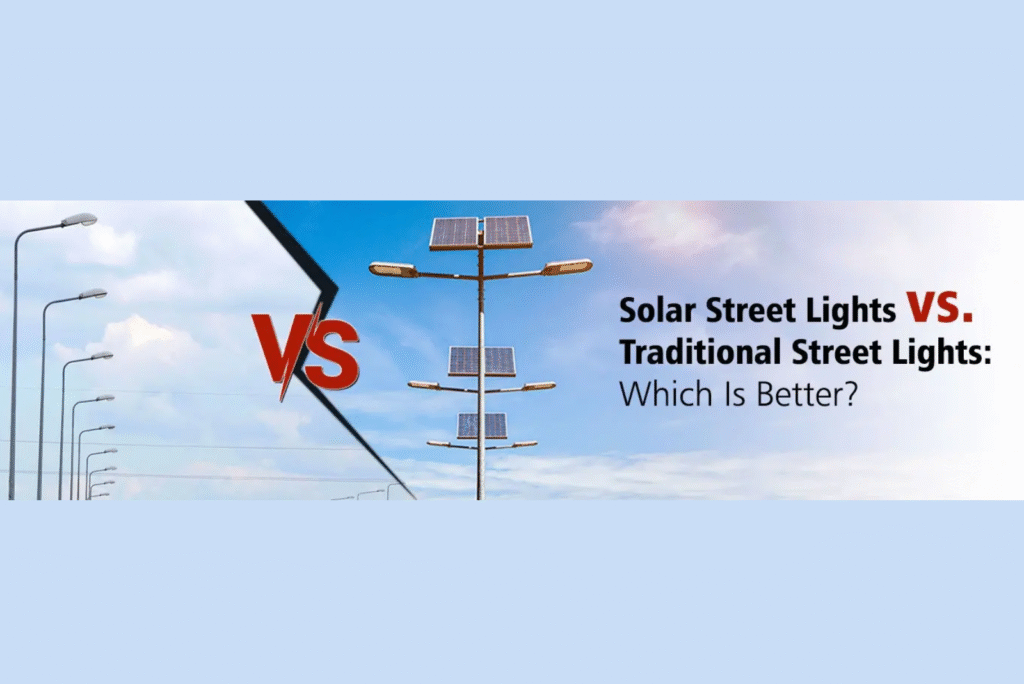
Solar Street Lights vs. Traditional Street Lights: Which Is Better? Home Blogs Street lights do more than just light up our roads. They make cities safer, help reduce accidents and make life after dark much easier. But as the energy prices rise and environmental concerns grow, many are turning to sustainable options. One such solution is the solar street light. It’s not only powerful but also an eco-friendly option. However, there are still some questions regarding solar street lights and traditional street lights. In this blog, we’ll understand which one provides better value and long-term benefits. How Do Solar Street Lights Work? Knowing how a solar street light works is the first step in making the right choice. Let’s see what the working process is that sets the solar lighting system apart from traditional lights. 1. Solar Panels Absorb the SunlightYou already know that without solar panels, no solar street light can function. These panels trap the sunlight to convert it into electricity. So this is why installing these panels in a place where sun rays fall in abundance is necessary. 2. Batteries Store the Energy Now, the solar panels only generate electricity during the daytime. But there’s a need for solar street lights only during dark hours, so batteries become important. These act as a power bank and store energy for use during nighttime, ensuring there’s no issue. 3. Automatic Lighting at Dusk There are built-in light sensors for solar street lights. As the sun sets, these sensors detect low light and automatically turn on the solar street light and vice versa. This feature makes them really effective and convenient. 4. Batteries Power the LED LightsThe LED lights are operated by batteries that store energy. The lights are an excellent option due to their brightness and low power usage. Homes and streets are kept well-lit by these bright lights. Cost Comparison: Solar vs. Traditional Street Lights 1. Initial Light CostSolar: Prices range from ₹4,000 to ₹13,000 (depending on features and brand).Traditional: Typically between ₹900 and ₹8,9992. Installation CostSolar: ₹7,000 – ₹15,000.Traditional: ₹5,000 – ₹10,000.3. Annual Electricity CostSolar: ₹0 (powered by solar energy).Traditional: ₹2,000 – ₹5,000 (depends on local electricity rates). Energy Efficiency of Solar Street Light When it comes to energy efficiency, Solar street lights don’t fail to impress. As these lights depend on the sun for power, there’s no issue of power supply. The solar panels do their magic during the day and absorb the sunlight to convert it into electricity. So, during the nighttime, the same energy powers the LED lights. LEDs have low energy consumption yet shine the brightest. They convert most of the energy into light. This is better than older street light technologies, which lose most of their energy. The solar lighting system has one more amazing feature: a light sensor. These sensors are responsible for switching these lights on and off automatically. This increases their efficiency to a large degree. Solar street lights also avoid the use of an electricity grid since they solely depend on the sun for power. This makes it excellent for regions where there is low grid connectivity. Maintenance Requirements: Solar vs. Electric Street Lights Maintenance is a major concern that arises when deciding between solar street lights and traditional streetlights. Individuals tend to opt for the system that needs less maintenance since it is cost-effective and saves time. With the rise of outdoor solar lighting, most individuals are changing their minds. Therefore, when it comes to street lights, what are the maintenance needs that make one superior to the other? Let’s see. Aspect Solar Street Light Traditional Street Light Wiring Needs There is no wiring required as these lights are completely off-grid and independent. Traditional street lights need underground wiring and grid connection. These wires are prone to faults and damage. Bulb Lifespan Solar street lights come with LED bulbs that are long-lasting. These last typically 10-15 years. The use of bulbs like halogen or sodium vapour raises the need to change them every few years. Cleaning Requirements The solar panels require occasional cleaning to maintain their efficiency. The fixtures may require routine cleaning. Battery Maintenance The batteries usually last 8-10 years (depending on brand and type). However, these are easy to replace. There’s no battery requirement as the power comes from the grid. Repair Complexity The solar street light only requires simple repairs. These repairs are usually limited to the unit. Traditional street light repairing is usually complex and may require rewiring. This is more time-consuming and expensive. Overall Maintenance Cost Low because of fewer replacements and no electricity bills. Higher because of regular inspections and repairs. The electricity bill is high too, based on consumption. Which Street Light Is More Environment-Friendly? Are you still wondering which street light is more environmentally friendly? Well, the solar street light takes the spot because these street lights are better in all aspects. Let’s understand how. 1. Powered by Clean, Renewable Solar EnergySolar street lights rely completely on solar energy, and you know that the sun is a renewable and green energy source. So what makes them wonderful and eco-friendly is that there’s a constant use of sunlight. Solar street lights ditch fossil fuels and other non-renewable energy sources which are often harmful to the environment. 2. Zero Carbon EmissionsThis is the greatest benefit of solar street lighting. These lights do not release carbon dioxide and other harmful greenhouse gases. The utilisation of sunlight makes these lights a green, clean source, offsetting climate change as well. 3. Increased SustainabilitySolar energy is sustainable and abundant. With the use of solar street lights in home or other areas, the use of oil, gas or coal is reduced. Traditional street lights, on the other hand, require constant consumption of non-renewable resources, making them unfit for the environment’s health. 4. High Energy EfficiencySolar street lights come with amazing features like motion and light sensors. These detect low light and motion and automatically turn on and off. This makes them great for use as these lights
What is Green Energy?
What is Green Energy? Home Blogs In today’s world, where environmental concerns are dominating current topics, green energy emerges as a beacon of hope. It comes from natural sources such as wind, water and sun. These green energy sources are a solution that is not only eco-friendly but also reliable. In this blog, we’ll understand green energy types and their benefits. You’ll know what makes them ideal for long-term energy solutions! Types of Green Energy Sources The amazing thing is that there are many green energy types that contribute to the betterment of the environment. Solar Energy Solar energy is the most useful form of green energy due to its availability. For as long as the sun keeps shining, we’ll get clean power. Solar panels make use of this amazing energy by converting it into heat or electricity. A better energy choice with long-term benefits! Wind Energy This green energy source is harnessed with the help of wind turbines. The turbines move to generate clean energy. Wind farms supply electricity to thousands of homes. Read more here – Can wind power and solar energy work together effectively? Hydropower Hydroelectric energy is another term for it. As the water passes through the turbines, electricity is produced. This is one of the oldest and most reliable types of renewable energy. Geothermal Energy This environmentally friendly energy source harnesses the heat that exists deep within the Earth. Both direct heating and electricity generation are possible with this heat. Biomass Energy This green energy source uses organic materials like crop waste, wood and animal waste to create fuel. Benefits of Using Green Energy There are many reasons to choose green energy. A few of them are: 1. Cleaner Air and WaterGreen energy production doesn’t cause any harm to the environment. There will be no release of harmful pollutants. This means using green energy sources offers a healthier and safer environment for everyone! People will get cleaner air to breathe and safer water to drink! 2. Reduced Greenhouse Gas EmissionsGreen energy types are a key to balancing climate change. You know how traditional energy sources like coal, oil and natural gas release greenhouse gases into the environment. These gases contribute a lot to the environment. So, using green energy like wind and solar helps slow down the effects of global warming. Also Read: Wind vs Solar Energy. 3. Long-term Savings The initial investment is always a bit higher but the savings will be worth it. Who doesn’t want a reduction in electricity bills and amazing savings? Once you start using green energy sources, there’s no going back. 4. Energy Access to All There are many places in India where there’s no reliable power access to date. Green energy types like wind and solar are reaching off-grid places. This will offer reliable energy access to remote places. 5. More Jobs and Local Growth This new shift to green energy is creating thousands of jobs. This renewable energy sector creates new opportunities for people. These jobs support families and local economies. How Does Green Energy Work You may be wondering how this cool and amazing energy works. Each green energy type functions differently, using different methods. Here’s how some of them work: 1. Solar EnergySolar panels are placed on rooftops or areas where there is sunlight in abundance. These panels absorb the sunlight and turn it into electricity. The electricity is then used to power homes, lights and other appliances. 2. Wind EnergyWind turbines consist of long blades that spin when the wind blows. The blades help the generator generate electricity. The electricity can then be sent to homes, businesses and even cities. 3. Hydropower Dams or rivers direct the flowing water towards turbines. The force of the water spins these turbines. The fast spinning motion is what generates electricity that powers homes and cities. 4. Geothermal EnergyHeat that is trapped under the surface is brought to the surface using pipes and wells This heat is then used to create steam. The steam spins the turbines, generating electricity. Green Energy Vs Renewable Energy There is some misunderstanding about green energy and renewable energy. Although they are not always the same, people frequently mistake them for renewable energy. Green energy is eco-friendly and renewable. This indicates that the environmental effects of this energy are small. Renewable energy sources comprise all the sources that replenish easily. However these sources also include the ones that can affect ecosystems. So, by now you might have understood that all green energy types are renewable, but not all renewable energy is green. Examples of Green Energy in Daily Life Heating and Cooling in Homes and Buildings – Green energy can be used for more than just producing electricity. Heating and cooling are two more uses for it. It is made possible by amazing innovations like solar water heaters and solar air conditioners! Transportation and Public Transit – Transportation is the fastest growing area for green energy use. Many cities have adopted electric buses and metro trains. By using renewable electricity, transportation will cause less air pollution. Agricultural Areas – Farming has seen a great change with the introduction of green energy. Solar water pumping systems have been helping the agriculture sector greatly. Farmers can irrigate fields without relying on unreliable and polluting sources. Rural and Off-grid Power Areas – Where traditional electricity is still finding a way through, green energy is taking its place. In remote areas and locations, proper grid connectivity is still a far-fetched dream. Green energy sources are improving lives in such areas. Future of Green Energy in India India is taking major steps towards a greener and cleaner future. Green energy has been in focus and is seen as a reliable source of power in India. This country also proposed a major goal during the COP26 summit. It was to get 500 GW of clean fuel based energy by the year 2030. The best part is the support from the government of India. Various programs and schemes are supporting the already growing use of renewable
Solar Kusum-C: Benefits, Eligibility & Application Process

Solar Kusum-C: Benefits, Eligibility & Application Process Home Blogs The main concerns for farmers across India are unreliable power supply, high electricity and diesel costs. And the grid-connected solar pumps rely on the unreliable power supply. An unreliable power supply means delayed irrigation. However, with the Solar Kusum-C Scheme, everything becomes much easier, efficient, and sustainable. This blog will help you understand all about the Solar Kusum-C Scheme. Let’s get to know what the benefits are and how you can apply. What is the Solar Kusum-C Scheme? Like the Solar Kusum-B Yojana, the Solar Kusum-C Scheme is a component of the PM-KUSUM program. Solarizing the current water pumps is the primary goal of this component. This scheme is managed by the Ministry of New and Renewable Energy (MNRE) in partnership with state renewable energy agencies. The government of India shares the cost of solarizing the existing water pumps. This makes the solar water pumping system affordable for even small farmers. The solar water pumps are amazing as they run on sunlight and replace traditional diesel or electric pumps. The goal is to help farmers access clean energy to irrigate their farms. Solar Kusum-C Yojana also encourages the use of renewable energy resources that help both humans and the environment. Top Benefits of the Solar Kusum-C Yojana for Farmers The solar Kusum-C Yojana does much more than just offer solarized pumps. It brings tons of benefits for farmers that make farming easier, cheaper and reliable. Some of the top advantages of this scheme are: Low Electricity Bills Once the solar system is installed, farmers won’t have to worry about the rising electricity bills. As solar energy is free, the irrigation becomes almost cost-free after setup. This way farmers will save a lot of money on electricity!. No Reliance on Diesel You already know how expensive diesel actually is. And not only that, it’s also harmful to the environment. So with the help of a solar water pump, installed under Solar Kusum-C Yojana, farmers will be able to cut out diesel completely. Reliable Power Supply In remote areas, power cuts are frequent especially when farmers need water the most. Solar pumps are what help in such cases. They are a reliable source of power and can supply water whenever needed. Low Maintenance Diesel pumps are complex and come with heavy parts. So when farmers switch to solar pumps, they are bringing home machinery that is low maintenance with fewer moving parts. These pumps need very little time and money for repairs. Extra Income Opportunity Here’s something that will help farmers generate extra money: selling electricity. Yes, the solar system usually generates more energy than is required. This extra energy can be sent back to the grid. This will help farmers earn income! Who is Eligible for the Solar Kusum-C Scheme? Individual Farmers Any farmer using a grid-connected pump is eligible to apply for the PM KUSUM scheme. Water User Associates (WUAs) A group of farmers that share irrigation infrastructure can also benefit from this scheme. Farmer Producer Organisation (FPOs) FPOs that manage operations for multiple members are eligible to apply for the same too. Primary Agriculture Credit Societies (PACS) PACS operating shared irrigation systems are also eligible to apply for the Solar Kusum-C Scheme. Community or Cluster-Based Irrigation Systems The large irrigation systems that are used by the villages or farming communities also qualify for the scheme. Step-by-Step Guide to Apply for Solar Kusum-C Yojana Online Applying for this scheme is simple if you follow the right steps. Here’s how you can do it online: Go to the official PM-KUSUM portal. You’ll find the section for Component C on the main page of the portal. Click on it. Register with your basic details. Once you find the section, you can fill in the details like name, Aadhaar number, land details, pump details and contact information. Upload the required documents. Once you’ve filled out the necessary details, you’ll have to upload the documents. These usually include a copy of your Aadhaar card, land documents, passport-size photo and recent electricity bill (if any). Submit your application. After reviewing your details and documents, you can click on submit. You’ll receive a confirmation message after your form is submitted successfully. Wait for approval Officials will review your application and if it gets approved, you’ll be contacted for further instructions. Subsidy and Financial Support Under Kusum-C Scheme One of the biggest reasons to apply for this scheme is the financial support. The government provides a huge subsidy, so the farmer only pays a small part of the total cost. Here’s how the cost-sharing typically works: 60% of the cost is paid by the central and state governments together. 30% can be taken as a loan from banks or financial institutions. Farmers only need to pay 10% out of their pocket. How to Track Your Solar Kusum-C Application Status After you apply for the Solar Kusum-C Yojana, we understand your concern and eagerness. You can check your application status on the official portal you’ve applied to. You’ll need: Applicant number/Aadhaar number or Registration Id Mobile Number and other details Once you’ve gathered all the details, simply log in through the website and look for the “Track Application” or “Application Status” option. Click on it, you’ll be able to review your application status there. However, if you face any issue, you can simply call the helpline num Conclusion The Solar Kusum-C Scheme is a golden opportunity for farmers to solarize their existing pumps. This will help them switch to clean and green energy that is low-cost and reliable. Also, with the help of the right solar solutions from trusted companies like KLK Ventures, farmers are going to benefit a lot! The transition to solar is easy, affordable and hassle-free with Solar Kusum-C Yojana. So don’t wait to apply! FAQs Who is eligible for the PM solar scheme?Any Indian farmer, individual or group who uses land for agriculture and needs a pump can apply. Cooperatives and panchayats can also apply. What is PM Kisan eligibility?PM-Kisan