
Solar Inroof System: Using Solar Panels as a Roof
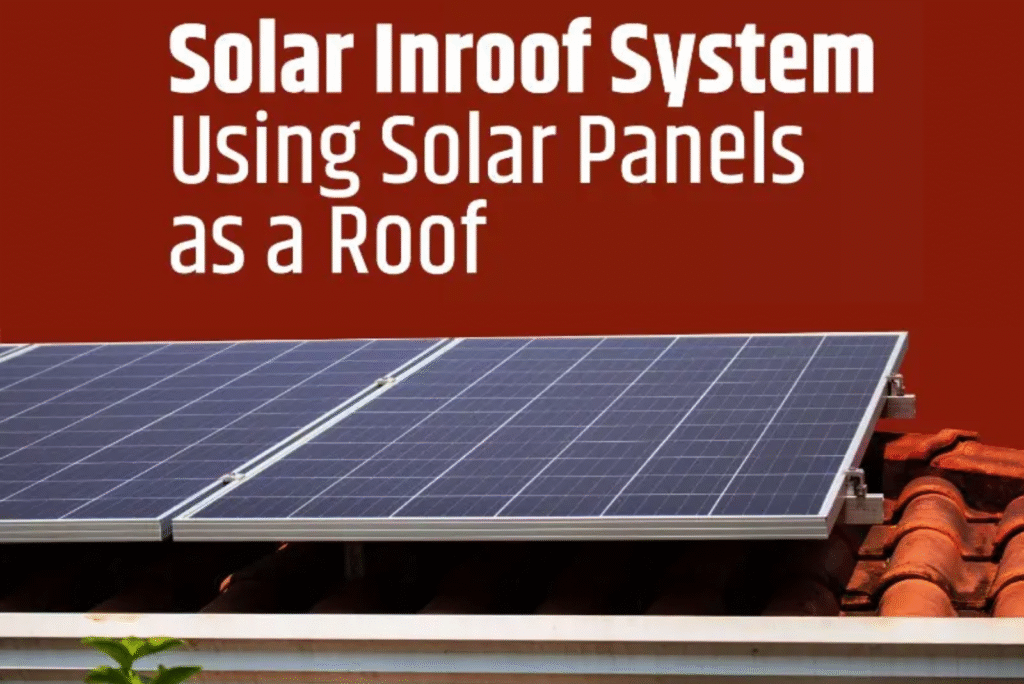
Solar Inroof System: Using Solar Panels as a Roof Home Blogs The modern world has been revolutionized by the concept of utilizing solar energy, with numerous options available for homes and businesses to take advantage of it. Solar energy not only provides homeowners with the opportunity to save money, but it also allows them to play a role in maintaining the environment. Using solar panels as roofs does not only protect the building, but also helps in the sustainability of the environment. Solar roofing refers to replacing regular roofing materials with solar panels. Unlike traditional systems that mount panels over an existing roof, this approach incorporates solar panels into the structure itself. With this new technology, the aesthetics as well as energy expenditure of the building are maximized making optimized use of the roof space. Benefits of Using Solar Panel as a Roof When a solar panel doubles as a roof, it is a revolution for businesses and homeowners alike. It fosters energy production alongside structural functionality, leading to cost efficiency and sustainability. With the focus on renewable energy sources, this solution is rapidly gaining acceptance globally. 1. Creates Electrical Energy Without Compromising Home ProtectionA solar roof serves the dual purpose of protecting your home while generating electricity from sunlight. For the energy-sensitive homeowners, this feature alone makes it a worthwhile investment. 2. Improved Solar Energy GenerationCommonly homeowners refrain from the idea of installing solar panels on the roof because they tend to look very chunky. With the new blend of solar panels and roofing, panels have a sleek modern appearance that will appeal to many more homeowners. This flexibility makes solar roofs more effective. 3. Maximizes Roof Surface Area Solar panel installation as a roof replaces the conventional roofing concept. In rest-mounted installations, the solar panels eat up a lot of space. Integrated solar roofing uses the entire space without needing any additional equipment, mounting hardware, and other solar panel accessories. If you want to know more about how solar panels work please read this blog – How do solar panels work? 4. Enhances Energy Efficiency In-roof solar panels reap the most sunlight compared to conventional solar panels. In roof solar panels consume a lot of solar energy since they do not have any shading issues coming from conventional roof structures like gables and hips. Unlike in-roof solar panels, standard panels get placed at angles that do not face the sun directly, reducing energy production due to suboptimal exposure. 5. Reduces Costs Over a Long Duration A solar roof is typically seen as more expensive, but in the long term the return is worth it. Having a clean energy generation system lowers the electricity bill significantly and dependency on grid power decreases. Other than that, there are propositioned benefits from various governments making solar roofing a very appealing option. 6. Increases Property Value Real estate agents claim that the home energy rating system associated with solar panels and roofing integrated systems tends to lure energy-smart buyers. This translates to increased resale value in the long term due to the added solar system. 7. Endures Severe Weather Conditions Compared to traditional roofs, solar roofs have a better longevity. Prolonged harsh rains, hail, strong winds, and even snow do not affect the functionality of the panels. The rugged design these panels possess means they withstand the elements without wearing out. In-Roof vs. Traditional Roofing Solar Panels Comparison Feature In – Roof solar panel Traditional solar panel Installation method Integrated into the roof by replacing conventional roofing materials. Installed on top of the existing roof using mounting brackets. Visual effects Sleek, modern look that blends with the architecture. Bulky appearance that may affect the aesthetic of the building. Space efficiency Maximizes roof space without extra hardware. Requires additional space for mounting systems. Cost comparison Higher upfront costs but better long-term savings and value. Lower initial cost but may incur higher maintenance over time. Things To Consider Before Installing A Solar Roof If the roof receives sunlight for a large part of the day, energy generation will be significantly higher. South-facing roofs are ideal, but east and west-facing roofs also yield good results. One of the most important inventions nowadays is solar energy and how it can be utilized. Not only does it help to save money for the homeowners but helps in conserving the environment. It also allows the installation of solar panel roofs which helps in the sustaining of the environment. Budget and Financing Options Even though the initial payment is expensive, there is an array of financing options available. These include solar loans, leasing schemes, and even government subsidies. Such aids make the cost of installing solar panels on roofs more feasible. Energy Requirements Before going ahead with the installation, assess how much electricity you consume in a day. Doing so will enable the determination of how big the solar roof needs to be so that it meets your energy requirements. Conclusion For modernists looking to cut expenses and become more cost-effective, using a solar panel as a roof is and will always remain, ŝ a smart investment. In addition to the myriad of benefits it brings, it’s a compact solution for saving space, visually appealing as well, making it stand out in comparison to traditional solar panels. Financial incentives paired with growing environmental concern will make mountable solar roofs the go-to choice. Switching to solar panels and roofing will help regain control over energy expenditures while paving the way toward a cleaner surrounding. If you wish to embrace renewable energy sources while going green, start by looking at your options today.
What is an On-Grid Solar System?
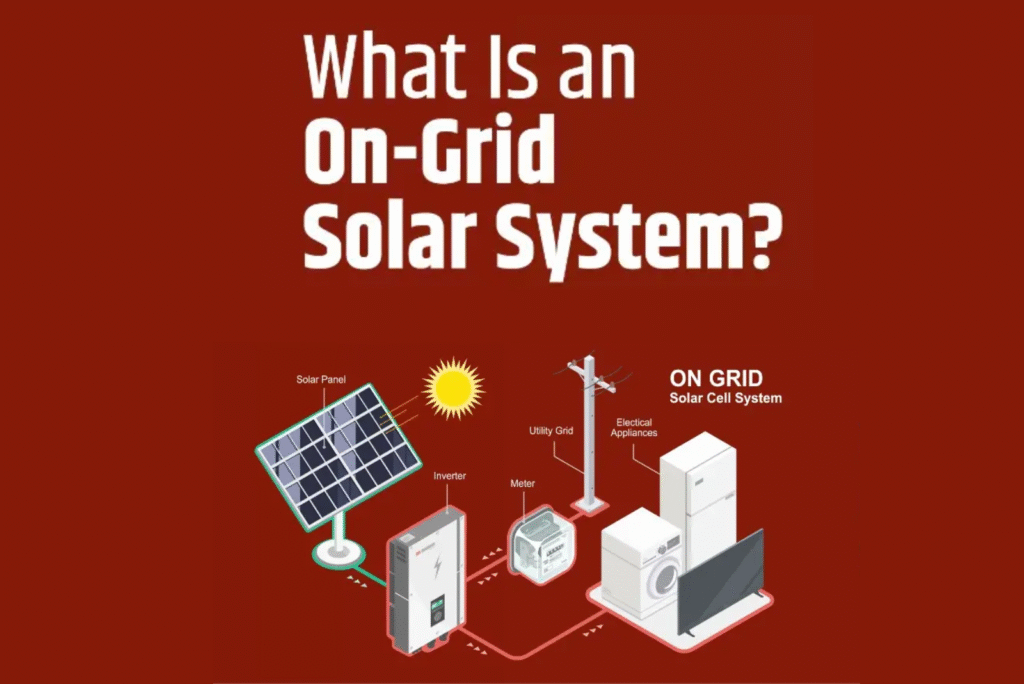
What is an On-Grid Solar System? Home Blogs An on-grid solar system uses sunlight during the day to power your home 24/7. This is a cutting-edge system that is connected to the local grid. This not only lets you produce your own clean energy but also gets backup from the grid on cloudy days or nighttime. Curious about the way this eco-friendly, cost-effective solar solution can change the way you power your life? Read on. How Does an On-Grid Solar System Work? With the help of photovoltaic panels, an on-grid solar system converts solar energy into electricity. Let’s look into the process that is carried out 1. Solar PanelsSolar panels (PV panels) are one of the vital components of an on-grid solar system. When the sunlight hits the surface, the solar cells react and generate an electric current. It’s direct current (DC). Read more here: How photovoltaic panels create power. 2. InverterNow, solar panels create electricity in DC that can’t be used by your home appliances. An on-grid solar inverter is what helps make alternating current (AC) electricity out of direct current. The AC electricity then powers your home appliances. 3. Grid ConnectionLike an off-grid solar system, the on-grid solar system usually doesn’t have solar batteries attached to it. Instead, it’s directly connected to the local utility grid. Which means any excess electricity can be sent back into the grid. And the best part is receiving credits through Net Metering. This helps reduce your electricity bills to a great extent. Advantages of On-Grid Solar Systems There are benefits of installing an on-grid solar system. Let’s go through a few of them. 1. Lower Electricity BillsOn-grid solar power systems greatly lower electricity bills. As you know, solar panels generate electricity throughout the day to power your home, you don’t have to rely on external energy sources. And the excess energy fed to the grid earns you credits lowering your bills further. 2. No Need for BatteriesUnlike off-grid solar systems, an on-grid solar system can function well without solar energy storage. With its connectivity to the grid, during cloudy days or nights you can rely on the grid for power. It’s an affordable option too, because batteries cost a lot. 3. Eco-FriendlyThere’s no harm in properly using solar energy. And when it comes to producing electricity, on-grid solar power systems are a clean and green medium. Getting an on-grid solar system installed won’t just end your use of fossil fuels but also reduce your carbon footprint. 4. Easy Installation and MaintenanceThere is no complexity involved in the installation process of an on-grid solar system. These solar systems are easier to install considering the simple components. They also require very little solar maintenance services, just the periodic cleaning of the panels will do! 5. Financial IncentivesWith the increase in financial incentives and subsidies, these on-grid solar power systems are gaining popularity. The subsidies for the installation make the investment a lot more affordable. Installation Process of an On-Grid Solar System The cost of installing an on-grid solar system can vary due to several factors involved. You need to consider everything, the size of the solar system, components, and also location. Cost BreakdownSmall Systems (1 kW – 2 kW): ₹50,000 to ₹1,00,000Medium Systems (3 kW – 5 kW): ₹1,50,000 to ₹3,00,000Large Systems (Above 5 kW): ₹3,50,000 and aboveWe know the amount mentioned above might seem high, but there’s an upside. The best part about investing in on-grid solar power systems is that you get a better return on your investment. You won’t regret going solar with the subsidies the Government of India provides. Government Subsidies for On-Grid Solar Systems in India The Indian Government is constantly working towards the betterment of the environment and the future by encouraging the use of solar energy. With the help of subsidies, the installation process gets a lot easier and affordable. 1. PM Surya Ghar Muft Bijli YojanaThis is the most amazing scheme for people looking to install on-grid solar systems. You will receive a subsidy of up to 60% on solar systems up to a capacity of 2 kW and 40% for systems between 2 kW and 3 kW. The subsidy makes solar panel installation affordable for homes. 2. Grid-connected Rooftop Solar ProgrammeUnder the Ministry of New and Renewable Energy (MNRE), this scheme offers financial assistance (CFA) for residential and commercial solar systems. It covers 40% of the 3kW system costs and 20% of 3kW to 10kW systems. People can also avail of the incentives for communal facilities in housing societies! 3. State-level SubsidiesAt the local level, state governments have taken it upon themselves to promote solar systems. Their plans include provisions for subsidies and incentives so that you can make a good choice without feeling financially burdened. States such as Rajasthan, Uttar Pradesh, Bihar and others, have such interesting solar energy programs. They encourage locals to go solar at the most affordable prices. Conclusion By now, you must be all aware of how amazing an On-Grid Solar System actually is. Being smart, cost-effective, and most importantly, sustainable, these on-grid solar systems are an excellent choice for anyone looking to upgrade their homes or businesses. You can contact KLK Ventures in case of any additional queries or doubts. Get expert guidance on on-grid solar solutions today!
What Is an Off-Grid Solar System?
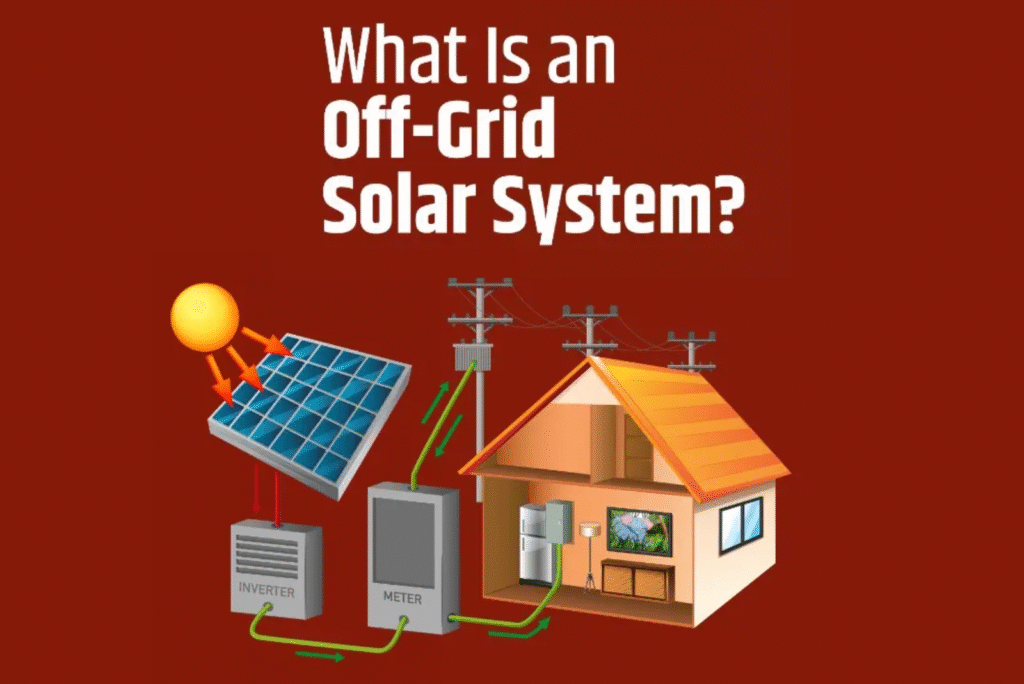
What Is an Off-Grid Solar System? Home Blogs Sunlight by day becomes the electricity that keeps the night bright. No need to rely on outside energy sources, no high electricity costs, and no frequent power outages. An off-grid solar power system’s magic lies in that. An off-grid solar system is one that doesn’t require a connection to the local electricity grid. It works independently of the grid, hence the name. In this system, solar panels harness solar energy. Either households or appliances use the generated energy instantly or it goes to solar batteries for later use. The best part about off-grid solar power systems is the solar batteries they come with! These make the systems useful even when the sun is not shining. Are you curious about the amazing off-grid solar system and want to understand it better? Read on. How Does an Off-Grid Solar System Work? You may often wonder how an off-grid solar system works so efficiently. The magic happens with the help of the key parts of the off-grid solar power systems. Let’s learn how a solar power system makes the appliances run. 1. Solar PanelsSolar panels or PV panels are the heart of an off-grid solar system because of their function. The amazing job of converting the warm sunlight into electricity is done by these panels by the means of the photovoltaic effect. The electricity that these solar panels produce is direct current electricity. Learn more in detail about the solar panel components and how photovoltaic panels create power. 2. Charge ControllerLike all things in life need balance, similarly, an off-grid solar system needs it too. A charge controller makes sure of it. It controls the amount of solar energy that reaches the batteries. Incorrect charging can cause damage and low performance from your batteries. 3. Solar BatteriesOff-grid solar power systems are only able to produce electricity when the sun is shining, as you are already aware. The panels won’t be able to receive sunlight to produce electricity after the sun goes down. Here’s where the concept of solar energy storage enters the picture. You can, in this way, power your house and appliances without relying on the main power grid and also during power cuts or bad weather. 4. InverterThe appliances in your home require alternating current (AC) to function. And because the off-grid solar power systems generate direct current (DC), your system won’t work without an off-grid solar inverter. The inverter converts the DC electricity into AC electricity. Let’s go through the process again: sunlight → solar panels → charge controller → batteries → inverter → appliances. Simple, right? Benefits of Off-Grid Solar Power Systems Are you thinking that saving electricity bills is the only thing an off-grid solar system does well? Well, you’re in for a surprise. Let’s go through all the benefits of off-grid solar power systems. ● Complete Energy IndependenceRelying on the local electricity grid can at times prove to be tiresome. Who wants to face unexpected power cuts and unreliability? No one! With an off-grid solar system, you’ll be free of such worries as you’ll be able to generate your own electricity. For people living in rural areas, this energy independence is a boon! ● Reduced Electricity BillsYour money will be saved with the installation of an off-grid solar system. The initial cost will be a bit high, but after that get ready to save your pocket. Off-grid solar power systems generate electricity using the sun as the main source. And the solar power is free of cost which makes the solar system cost-effective. The continuous use of off-grid solar systems will reduce electricity bills to a great extent. ● Sustainable and Eco-FriendlyWhen it comes to development, the environment faces all the challenges. An off-grid solar system will lift your worries about the environment and the future. The minimal negative environmental impact is what makes these systems so popular. You already know that solar energy is a clean and green source and when people use solar power systems to harness the same energy, it benefits a lot. First, there’s a reduction in the reliance on fossil fuels, and second, these off-grid solar power systems contribute to a greener and sustainable future. ● Ideal for Remote LocationsThere are areas where proper grid connectivity hasn’t been reached yet. And laying down the whole electricity grid may not be a feasible option, such places can benefit from the off-grid solar power systems. The power will be supplied constantly with the help of solar energy. This method is not only eco-friendly but also wallet friendly! ● Low Maintenance, High DurabilityAn off-grid solar system requires very minimal care. They do function pretty well but you’ll be surprised to know how low-maintenance they actually are. Most solar panels are designed to last up to 25 years, and batteries can last up to 10 years. With the necessary services, your off-grid solar power systems will keep running for years and prove to be a fruitful investment. ● Boost Property ValueThere are so many benefits of off-grid solar systems for homes. Whether you live in it or decide to sell it. Potential buyers are drawn to properties with solar panels because they are considered valuable and appealing. Everybody desires a house with small carbon emissions and low energy expenses. Therefore, installing an off-grid solar system can significantly increase the value of your home! Installation Process of an Off-Grid Solar System The installation process can be a bit complex when you compare it to setting up traditional home appliances. Let’s break it down for you. Step 1: Site and Energy AssessmentThe first step before installing an off-grid solar system is always to analyse your own energy needs. And then the power your home consumes. You have to first assess your energy consumption in order to determine the amount of power you need to generate. Step 2: Choosing the Right ComponentsEach component makes up a whole solar power system. And for the good-quality and efficient one, you’d need to select the right solar
What are the Main Components of a Solar Panel?
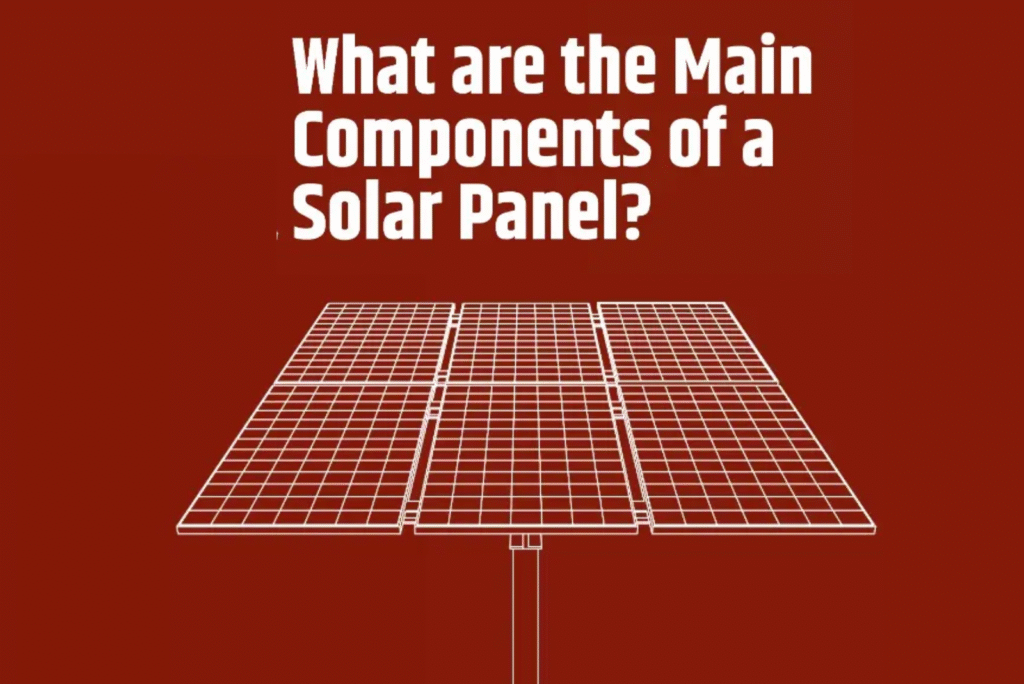
What are the Main Components of a Solar Panel? Home Blogs Have you ever wondered what makes a solar panel so amazingly efficient? Solar energy has been gaining popularity, but the magic happens inside a solar panel. The glossy surface of the solar panels has an intricate system of many components. These components of solar panel work together to harness the sun’s amazing energy. Understanding these components isn’t just for curious people, but also for people who are looking to invest in solar power systems. In this blog, we’ll break down the solar panel components and explore their importance. Main Components of a Solar PV Module Before we move on to the components of solar panel, we ought to clear up a common misconception. A solar PV module is made up of several solar cells that combine to produce electricity by means of the photovoltaic effect. And when the modules are linked together, they form a solar panel. Learn more here: Cells, Modules, Panels, and Arrays. 1. Solar CellsYou can call solar cells the heart of the system. These cells are what allow a solar panel to function; they are composed of silicon, a semiconductor material. One of the main components of solar panel is solar photovoltaic cells. The electrons in the panel are excited by the sun’s rays and produce direct current electricity. There are two types of solar cells: Monocrystalline solar cells and Polycrystalline solar cells 2. Solar GlassThe top layer and another important components of solar panel is glass. This transparent cover sitting on top of the solar cells offers protection. The fragile solar panels components need the protective shield of solar glass. It protects the solar cells against harsh weather while letting abundant sunlight reach them. The tempered glass’s main function is to maximize the light transmission and protect the photovoltaic cells. Solar glass is what helps increase a panel’s energy absorption. 3. EVA (Ethylene Vinyl Acetate)With all the protection they require, we can say solar cells are really fragile. Apart from the protective layer of solar glass, solar cells require EVA, one of the main components of solar panel. This encapsulation layer offers safety to the cells from dust and moisture while also binding the glass and solar cells together. It holds everything together and prevents the degradation of solar cells. All of this makes EVA one of the vital solar panel components. 4. BacksheetBy now, you already know how high-functioning solar panels require protection. One of the important components of solar panel is the back sheet. It protects the solar cells and other components from environmental factors like dust, moisture, and UV radiation. It’s made of polyvinyl fluoride (PVF), a durable material. Do you know what would happen without a backsheet? Your solar panel will become weak and ultimately, dysfunctional! 5. Aluminium FrameYou can call the frames a support system for the solar panels. The aluminium frame, one of the most important components of solar panel, supports the panels structurally and also helps maintain the efficiency of solar panels. These are a great help, along with different types of solar mounting structures. Because it resists corrosion, the aluminum frame is thought to be perfect for outdoor settings. The efficiency of the solar panel will drastically decrease in the absence of an aluminum frame. 6. Junction BoxOn the backside of the solar panels, you’ll find one of the best and crucial components of solar panel, the Junction Box! This box is where all the important wiring happens to ensure the flow of current to the inverter. The diodes inside the junction box prevent the reverse flow of current and enhance the efficiency of a solar panel system. This also reduces the potential risk of damage. 7. InterconnectorsSome sites and businesses require large solar installations, and interconnectors are what help in such cases. Many solar modules need to be connected together in order to get maximum output. Small electrical connectors link these modules in a series, creating a network. Interconnectors are one of the most crucial components of solar panel. Because of them, solar panels produce electricity in large amounts. 8. InvertersInverters are also considered the main components of solar panel due to their function. You already know solar panels generate direct current (DC) electricity, which most households can’t use. An inverter converts direct current into alternating current (AC). With the help of inverters, a solar panel becomes really useful for generating usable electricity. Other Components of a Solar Panel Include:● Solar Battery – When solar panels aren’t working, a solar battery can be used to store extra electricity. ● Sealants – A substance applied to the edges of solar panels to keep them safe. It provides support and protection to the components. ● Anti-reflective Coating – This layer reduces light reflection and increases sunlight absorption. Helpful in maximising the energy output. Why Components of Solar Panel Matter By now, you’d have a clear picture of solar panel components and their function in your mind. Each part of a solar panel has different purposes, and when they come together, they form your amazing solar power system. All the elements used in a solar cell are responsible for the amazing function that solar cells offer. Solar cells convert sunlight into electricity. And the protective solar glass protects solar cells and other solar panel components. The quality of the components of solar panel is what matters a lot too. For example, a high-quality EVA layer protects the solar cells from moisture and dust accumulation. And a good frame supports the solar panels. These solar panel components are what actually make solar systems powerful and efficient. By understanding their functions, you’ll be able to make a good choice regarding the kind of system for your home or business. Conclusion The initial investment in solar panels is a lot, but worth it if you invest in the right system. And that’s exactly why a better understanding of the components of solar panel is necessary, to decide on the right